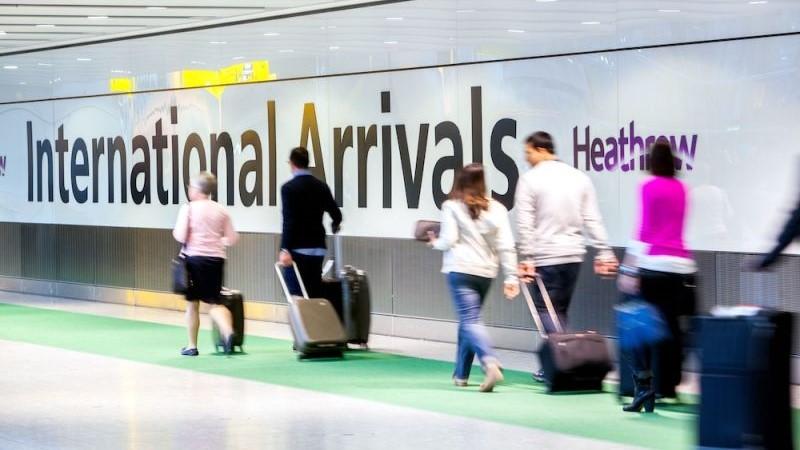
UK airports are using artificial intelligence to help keep passengers moving.
AI-powered systems are helping to cut delays, especially in ground transport to and from airports, by tracking inbound flights and predicting late arrivals.
Aviation technology research suggests these systems can reduce airport ground transport delays by up to 20 per cent during disruption.
The impact is most visible in airport mobility, where timing failures can cascade quickly.
The technology gains come as major UK airports like Heathrow, Gatwick and Luton approach pre-pandemic passenger levels, putting further pressure on ground transport coordination.
1ST Airport Taxis, based in the UK, is among the firms using proprietary AI-supported technology that links real-time flight data to vehicle dispatch.
The AI system reduces airport pickup times by predicting delays, monitoring live flight data and adjusting dispatch in real time.
It also keeps drivers and passengers updated about road conditions and disruptions.
This results in more reliable and efficient airport pickups, particularly during peak travel periods.
Experts say as traffic continues to grow at the UK’s busiest airports, predictive technology is becoming central to maintaining reliability for time-sensitive travellers.
The Civil Aviation Authority confirmed that passenger numbers are nearing pre-Covid-19 figures at major hubs.
Top airport technology trends set to shape the future of airport operations in 2026
International Airport Review takes a look at the technologies that are set to transform airport processes in the next year to more efficient, sustainable and resilient operations.
As the aviation industry continues to recover, and faces mounting pressure to deliver on climate goals while managing growing demand, 2026 is poised to be a defining year for the sector’s sustainability and digital transformation. Success will be measured by safer airports, shorter queues, greener operations and a seamless traveller experience. At the heart of this progress lies rapid technological adoption across sustainability, digitalisation, security and air traffic management.
The accelerated shift towards airport decarbonisation technologies
Airports are evolving from isolated operators to collaborative ecosystems united by a shared mission: decarbonisation. In 2026, technology will be critical to turning climate pledges into measurable outcomes.
Many airports are already pursuing energy self-sufficiency through large-scale renewable projects. Istanbul and Athens International Airports, for example, are approaching full electricity independence thanks to vast solar farms integrated into their operations. Similar projects are proliferating across Europe, the Middle East, and Asia, enabling airports to reduce emissions and energy costs simultaneously.
Microgrids that integrate solar technology, battery storage and advanced inverters are transforming airports into energy hubs capable of maintaining resilience during power disruptions. Predictive energy management systems, powered by Internet of Things (IoT) sensors and artificial intelligence (AI), allow terminals to optimise energy use in real time. London City Airport, for instance, modernised its electrical infrastructure to connect solar panels, storage and smart controls into one unified network. The airport was able to double its electricity capacity.
On the ground, electrification continues to accelerate. Electric ground support equipment and vehicles are now standard at many major airports, with operators investing in charging infrastructure to enable fully zero emission airside operations. At the same time, airports are preparing for a new fuel ecosystem — one built around sustainable aviation fuel (SAF), hydrogen and e-fuels. Copenhagen Airport, for example, is part of a consortium developing hydrogen refuelling capabilities to support the next generation of low carbon aircraft.
Digital identity and biometrics for seamless travel
With global air travel projected to reach 18.9 billion passengers by 2047, airports are under immense pressure to deliver frictionless, secure passenger journeys. Digital identity and biometric technologies are emerging as key enablers of this transformation.
IATA’s One ID initiative is advancing the vision of a paperless journey where passengers control their own digital identity from check-in to boarding. Several leading airports, including Singapore Changi, Heathrow and Atlanta are deploying biometric boarding and facial recognition to streamline processing times while maintaining stringent security standards. In the United States, the Transportation Security Administration has expanded its Digital ID programme to more than 250 airports, allowing travellers to use mobile driver’s licences for identity verification. Apple has recently announced that it will soon introduce a feature to their Apple Wallet allowing U.S. users to create a digital ID using their passport which can then be used at select TSA checkpoints for domestic travel.
The conversation around AI in aviation is moving fast, but there is a significant difference between “automation” and “autonomy.” On 18 March, International Airport Review and SITA are hosting an exclusive breakfast briefing to bridge that gap. We’re moving past the industry buzzwords to look at the actual architecture of the future: Agentic AI.While many are in London for PTE World that week to discuss the current state of the industry, this briefing is dedicated to what comes next. We will explore how autonomous systems can independently set goals and resolve complex operational tasks—from mitigating disruption to hitting sustainability targets. So, if you’re already in London, why not join us at the Crowne Plaza for breakfast? Space is limited to ensure a focused environment for discussion. Please confirm your attendance at your earliest convenience. Register here. Why you need to be there:The Blueprint: Understand how Agentic AI acts as an autonomous layer within your operations.The Evidence: Explore high-value use cases that are ready for implementation now.The Network: Join a select group of airport leaders and visionaries for high-level peer exchange.Start your morning with a clear-headed look at the technology that will define airport resilience for the next decade.
Event Details:📅 Date: 18 March 2026⏰ Time: 07:30 – 09:30 (Breakfast served from 07:30)📍 Location: Crowne Plaza London Docklands
The 25th Airport Show will mark a major milestone, bringing together the world’s leading airport suppliers and service providers, along with top aviation leaders and regional decision-makers to showcase the most transformative technologies shaping the future of the industry. This special edition celebrates 25 years of accelerating airport innovation and partnerships.
With its co-located Global Airport Leaders’ Forumand the Women in Aviation Middle East Conference and Awards—this landmark three-day event will host global exhibitors and thousands of aviation professionals from 12-14 May 2026 at Dubai World Trade Centre.
Don’t miss this milestone of Airport Show—where the future of airport innovation starts.
Denver International Airport participated in a pilot program to test new security screening technology that uses artificial intelligence. The HEXWAVE System was created by Liberty Defense.
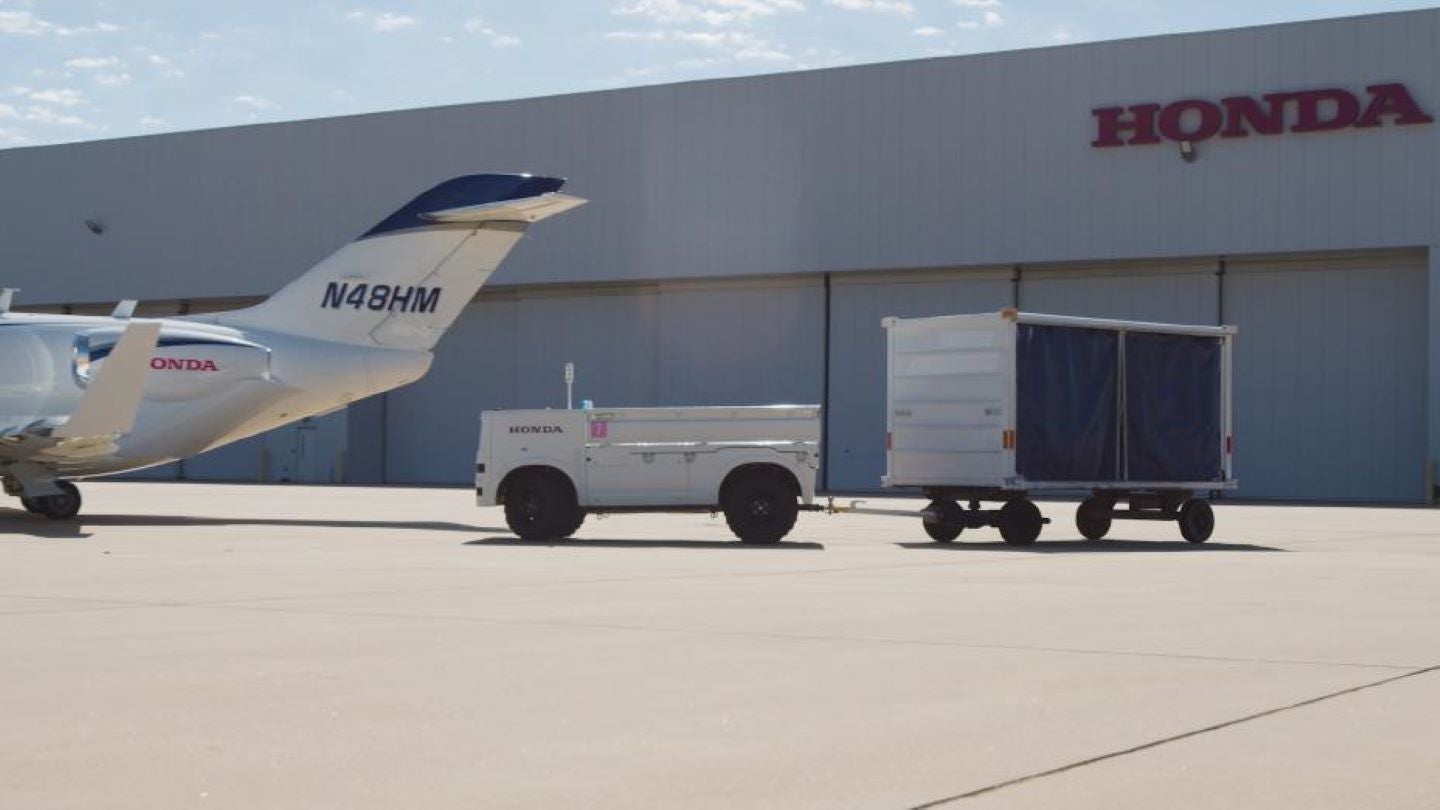
The demonstration featured an autonomous fence inspection with applications including perimeter security analysis, aircraft equipment hauling and baggage cart towing.
According to Honda, the AWV is now aiming for commercialisation and is looking for partners to field test the system for future airfield operations.
The off-road vehicle is set to navigate its own inspection routes through the use of Honda’s software system, which will oversee the vehicle moving around worksites by setting start and stop points. The system can also work manually through the use of a remote control.
Additionally, the AWV features a variety of sensors that enable its autonomous features, including GPS for location, radar and lidar for obstacle detection and stereoscopic 3D cameras for remote monitoring.
Jason VanBuren, systems engineering manager at Honda, emphasised the further collaboration opportunities expected between the manufacturer and airside operators.
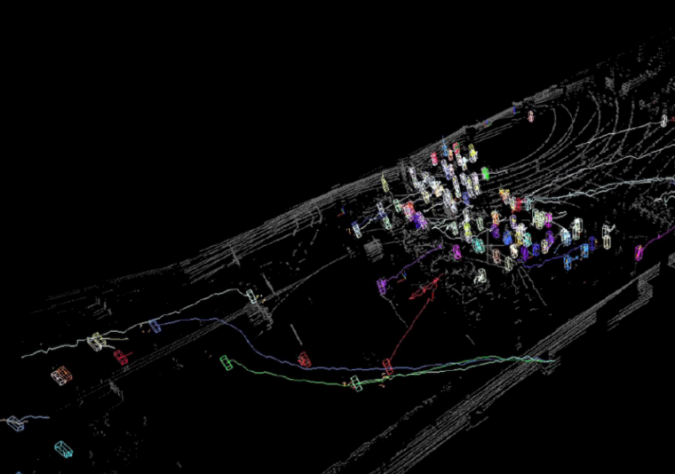
Veovo, a prominent player in airport management solutions, has introduced Lidar technology into its Intelligent Airport Platform. This game-changing addition is poised to advance airport operations and elevate the overall passenger experience by significantly enhancing situational awareness.
The integration of Lidar technology reinforces Veovo’s solution for managing passenger flow. This solution has the capacity to cover extensive areas within and outside the airport, including low-light conditions. It is adaptable to various airport layouts, making it suitable for spaces with varying ceiling heights, long corridors and open areas. Beyond its primary function of anonymously measuring passenger movements, Lidar can effectively track a wide range of moving objects within the airport environment, from luggage to vehicles. This adaptability caters to the diverse needs of both passengers and airport authorities.
Comprehensive ecosystem
What sets Veovo’s Lidar technology apart is its seamless integration with their cloud-based analytics platform and other sensors like 3D cameras and people counters, forming a comprehensive ecosystem. Veovo CEO James Williamson highlights the significance of this integration: “With Veovo, airports are no longer bound by hardware limitations. Now operators can choose the perfect mix of sensor technology including Lidar, for their infrastructure, measurement and budget needs. They can even incorporate their existing sensors to protect their investments.”
Veovo’s platform, powered by machine learning, delivers real-time and historical data on queues and passenger movements. It goes further by predicting passenger arrivals and behaviors in the future. This innovation provides an efficient and cost-effective means of tracking and predicting wait times, monitoring occupancy and managing queues, even in unstructured or wide areas of the airport. Consequently, airport operators can make informed decisions regarding resource allocation and planning, thus improving efficiency and enhancing the overall passenger experience.
The integration of Lidar technology reinforces Veovo’s solution for managing passenger flow. (Image courtesy: Veovo)
This webinar will examine the progress being made and challenges being faced by the business aviation community as it pursues environmental strategies to meet the sector’s commitment to achieve net zero greenhouse gas emissions by 2050. It will explore the big issues of the day, examining the pressure the sector is facing from green protest movements and potential exclusion from some airports on environmental grounds; the progress business aviation is making on Sustainable Aviation Fuels and Book & Claim; and discuss the technological and operational progress being made to reduce emissions. It will feature leading players to explain developments to date and what to expect in the coming year. Speakers Kurt Edwards Director General, International Business Aviation Council Kurt Edwards joined IBAC as the Director General in 2012 and leads business aviation advocacy through IBAC’s 15 member associations located across six continents. He has overseen IBAC’s increased outreach to industry, greater engagement with the International Civil Aviation Organization, growth of IBAC’s codes of best safety practices for business aircraft operators and ground handlers, and redoubled commitment to environmental programs. Prior to IBAC, Mr. Edwards held various senior-level positions in the U.S. Federal Aviation Administration (FAA) responsible for liaison with European authorities and for global environmental matters. Scott McElvaine Vice-President Business Development & Commercial Services, Pratt & Whitney Canada Christopher (Scott) McElvaine was named Vice President, Business Development & Commercial Services at Pratt & Whitney Canada in January 2022. Drawing on his knowledge of trends and market factors, he provides leadership in planning, directing and managing our next product and service strategy transformation. Scott Cutshall Senior Vice-President Strategy & Sustainability, Clay Lacy Aviation Scott leads strategic development activities and directs marketing, sustainability, and workforce development initiatives across Clay Lacy’s diverse line of business jet services. He is a third-generation pilot whose business aviation expertise spans a wide spectrum of disciplines. His passion for aviation started early. Upon receiving his B.S. in business management from Biola University, he became a Certified Flight Instructor with instrument and multi-engine instruction privileges. In 2000 he began working as a dispatcher for an aircraft management and sales organization with four aircraft that grew to over 75 business jets in 25 cities in the U.S. and China. During his 14-year tenure he served as operations manager, sales director and then vice president of marketing and aircraft management. Ève Laurier Vice President, Communications, Marketing and Public Affairs Ève Laurier is Vice President, Communications, Marketing and Public Affairs at Bombardier. A seasoned professional and senior executive leader, Ève brings more than 20 years of knowledge and experience in public relations, communications, corporate marketing and branding to Bombardier. Bombardier is a global leader in aviation, focused on designing, manufacturing, and servicing the world’s most exceptional business jets. Bombardier’s Challenger and Global aircraft families are renowned for their cutting-edge innovation, cabin design, performance, and reliability. Bombardier is also a leading force in making business aviation more sustainable. Ève’s mandate is to steward the brand journey internally and externally, around the world, and lead the company’s community engagement, employee and customer outreach. She is known to be a leader who shows genuine care for her teams and peers, and her accomplishments and strong involvement towards philanthropy and her community have contributed to her recognition as a role model for future generations of women. Based in Montréal, Québec, Ève holds an Executive Master of Business Administration from McGill and HEC Montréal and a Bachelor of Commerce degree from Concordia University.