Intelligent trolleys could improve the passenger experience from security check to gate.
Many things are ‘smart’ these days, so why not airport trolleys? Danish company Exruptive will present an ‘intelligent’ trolley and an innovative security check system.
Queues at security check points are stressful for passengers, and consume time they could be spending in the duty-free area or eating and drinking. Exruptive has therefore developed a scanner and trolley combination that allows passengers to place their hand luggage in the trolley before they join the security line, and then feed the whole trolley into the scanner without having to take out electronic devices.
The trolley is then conveyed through a multi-energy x-ray scanner, for which proof of concept will be obtained early this year, prior to ECAC C3 certification.
After security, the trolley becomes the traveller’s personal guide through duty free and to the boarding gate. A touchscreen tablet integrated into the trolley provides the passenger with real-time wayfinding, updated boarding information, personalised promotions and a recharge point for their phone. Meanwhile, it feeds back data intelligence and a unique marketing opportunity for airport operators and shops.
The smart trolley offers an alternative to airport-centric apps, which remain unpopular with many passengers. Exruptive believes providing the device and the software makes passengers more likely to engage with the technology, resulting in more opportunity for targeted marketing and more source data about passenger flow and behaviour.
Field tests in airports are planned for later this year, with the system ready for market in early 2019.
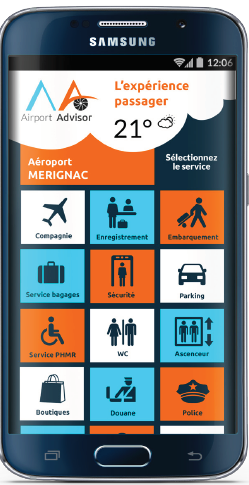
Airport Advisor is a mobile app which gives to traveller opportunity to express their customer experience at Airports… Airports will get the opportunity to find out what travelers thinks about their installations and services. Airports can get through the app a wonderful opportunity to get Data about their terminal’users and be more occurate in their commercial offers and get more loyalty … in the big time of a fierce hub’ concurrency. Don’t waist time.. We are waiting for airports to become our customers and deliver them this.. Airport Advisor is available for Android and Ios in 14 languages.. A worldwide “Première ” For IOS here : here For Android : here
Top 10 Essential Gadgets To Make Air Travel Better..
travel gadgets! These smart tools that have forever changed the way we experience the world are life-savers for today’s. The best travel gadgets for your next trip. From backpacks to suitcase to pillows and everything in between.
is a goal that is shared by every airport and technological developments are presenting new opportunities to improve efficiency across the board. FTE recently paid a visit to Gatwick Airport, where we caught up with Cathal Corcoran, Chief Information Officer, and Abhi Chacko, Head of IT Commercial & Innovation, to find out how a raft of technologies are being leveraged to optimise OTD.
Corcoran and Chacko are working on numerous projects but one that could have the biggest impact on operations is the use of machine learning and big data to more accurately predict the target off-block time (TOBT). At present, the ability to accurately predict the off-block time at the time of an aircraft’s arrival stands at around 50%. However, working with ConvergentAI, the airport has found that the use of machine learning can increase this accuracy by a further 20%. The technology is being trialled in parallel with real world operations, so Gatwick can compare how it performs versus the traditional human-led approach.
“We want the accuracy to go up to 85% or 90% and we’re confident that it will, because the initial trial was based on the use of only 12 months’ worth of data and limited variables,” Corcoran explained. “As more data is fed into the system including passenger volume, bag volume, allocated stand, aircraft type, destination and weather info, and as we enable the use of historical data dating back a full year or more, the levels of accuracy should naturally start to increase.
“This is probably the thing I’m excited about the most, the reason being if you’re in innovation you want to work on the biggest problems the business has got. The issue we have – being the world’s busiest single-runway airport – is that any time we have any level of disruption, be it inbound or outbound, it has knock-on effects. This can help to overcome that. The Gatwick operations team have already done a huge amount of work to improve OTD by way of optimising people, operational processes and how we work with our Gatwick Family partners. To get after further improvements, now is the right time for advanced technology to play its part.”
Chacko added: “We think you can get about an hour’s worth of advantage if you have this prediction done through machine learning. You can then use that hour to recover from the impact of any potential flight delays.”
Gatwick Airport’s innovation team is also exploring how chat platforms can help to optimise efficiency during the aircraft turnaround process. Around two years ago, Gatwick – an FTE Startup Hub Corporate Partner – launched the Community App, which is a multi-airport app designed for the airport campus workforce. The app, developed by AirportLabs, is now used by more than 10,000 workers across the airport campus. Gatwick is now complementing this by tapping into a WhatsApp-like chat platform for ground staff to communicate during the turn process.
‘Passengers beyond security’
The “passengers beyond security” tool allows staff to see if and when passengers have passed through the security checkpoint. If a late-running passenger won’t be able to make it to the gate on time, the gate agents can decide to close the flight to help ensure on-time departure.
Another initiative that is high up on the list of priorities is what Chacko labelled “passengers beyond security”. This allows staff at the boarding gate to see on their electronic devices which passengers have not yet passed security. This can help to ensure that a flight departs on time if a late-arriving passenger has no chance of making it to the gate in time.
“At the time of closing the flight the boarding agents have a decision to make; whether to delay the flight a bit more to allow time for late passengers to walk to the gate, or to close the flight,” Chacko explained. “This solution will allow them to get real-time information from the security gates so they know how many passengers have crossed the line and who has actually crossed when. If someone crossed the security gate one minute ago and you know you’ll have to wait another 10 minutes for them to walk to the gate, you can decide to close it.”
Corcoran explained that he is “very surprised that very few airports already do this”. “This may seem like a relatively small project but it’s about continuous improvement,” he said.
Bag image query tool
The “bag image query” tool makes it easier for ground handlers to identify checked bags, which speeds up the bag offload process.
If a passenger misses their flight, there is a chance that they will have checked in a bag that will have to be unloaded, and this is another area that Gatwick is working on. The bag image query tool allows ground handlers to quickly retrieve a photo of a specific bag based on the tag or the passenger name record (PNR). At the moment, this only applies to bags checked in in the self-service bag drop areas. The idea at the heart of the project is to speed up the bag offload process, which in turn contributes to an on-time departure.
“This is pretty simple, but it’s helpful and powerful,” Corcoran said. “We already capture the image of the bag but we don’t do anything with it. If the handler knows the shape, make, size and colour of the bag it makes the offload process much easier and quicker.” He added: “We’re only able to make it available to ground handlers easily because they already have the Community App.”
Internet of Things
The Internet of Things (IoT) is another big theme, and Gatwick is tapping into the power of IoT and sensors in an effort to realise efficiencies in a variety of areas. Plans are in place to install sensors across the airport to measure everything from seat occupancy to temperature and noise levels, but there are many operational use cases. These include knowing in real time when aircraft fuelling has started and stopped, when the ground power for an aircraft was turned on or off, when an aircraft engine is running and when it’s not, and when a bag is placed on a conveyor belt, for instance. Gatwick is looking at introducing a turn tool, which will integrate this sensor data to give real-time visibility of the turn process to the relevant stakeholders.
The airport is currently looking at LoRaWAN, which is appealing because of the low number of base stations needed and its wide-reaching radius. “The use cases to begin with aren’t very sexy – ‘is the bin overflowing?’ or ‘is the buggy where it needs to be?’ – but the benefit of starting with these is you prove out the concept before you start to get into the more critical use cases related to the aircraft turn process. That’s where this can make a big difference,” Corcoran said.
The list of technology-focused projects that can help improve OTD goes on and extends to the introduction of “soft radio”, which enables communication through Gatwick Airport Limited’s digital radio system from any location worldwide and essentially enables staff to use a smartphone as a radio. Furthermore, real-time queuing information is now available on staff handsets which is particularly useful during times of disruption, drones are being explored for foreign object debris (FOD) detection and runway inspection, and Amazon Alexa use cases for the ground operations team are being explored.
Clearly, Corcoran and Chacko are leaving no stone unturned in their efforts to establish just how far technology can go to help improve efficiency. While improving OTD is a shared goal for airports around the world, few, if any, can be doing more than Gatwick in this space.
Gatwick Airport CIO Cathal Corcoran was named #4 on the 2017 FTE Airport Innovation Power List. In addition to all of the initiatives mentioned above, FTE is aware of a number of other unique, technology-focused projects that Gatwick is currently working on, all of which will be considered during the judging process for this year’s Power List. Keep your eyes peeled for the 2018 Airport Innovation Power List and please get in touch if you know of a forward-thinking C-level airport innovator who should be in our thinking.
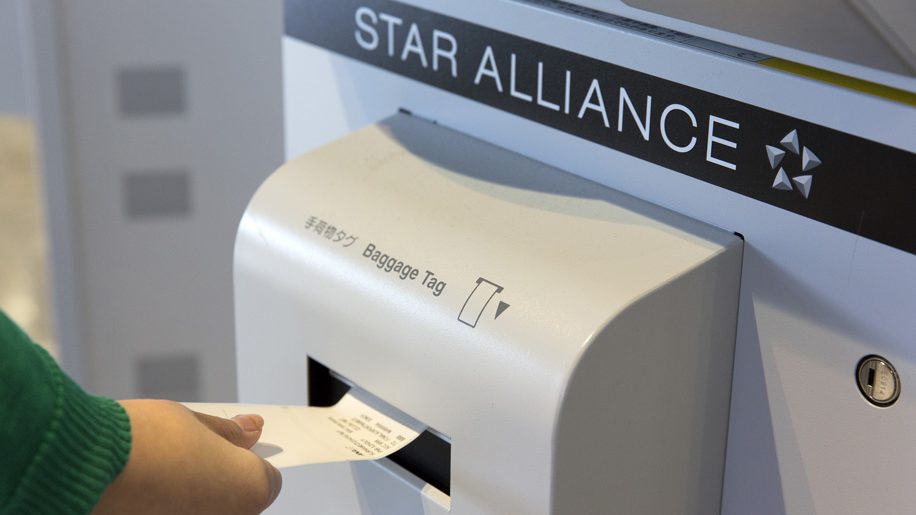
Star Alliance has launched a new Digital Services Platform (DSP),
aimed at helping member carriers share data when customers are travelling with several airlines.
The alliance said that the longer-term aim of the platform is to “allow customers to use any member airline’s website or mobile application to obtain all the information they need for travel on several Star Alliance member airlines”.
Examples given of future use across the alliance include:
Seat selection for an entire flight at the time of ticket reservation, for journeys where more than member carrier is operating flights. United Airlines was the first to launch this service on February 2, allowing an eligible customer to select a seat on, for instance, a Singapore Airlines flight booked via united.com or the United app.
Baggage tracking on journeys including more than one Star Alliance carrier. Lufthansa is already using the DSP technology to track bags via the Star Alliance Baggage Hub, which “collects relevant baggage information from a wide-range of sources and makes it available to all member carriers included in a passenger’s itinerary”.
Commenting on the new platform Star Alliance CEO Jeffrey Goh said:
“Most frequent travellers have a ‘home airline’ in our network and would prefer to control their entire travel experience through a single app or website.
“We are therefore working to create central capabilities that can be shared for use by our individual members.”
The alliance said that DSP was part of a wider strategy to “place the customer at the centre of its activities” – for example by the end of this year member carrier FFO websites will allow customers to check flight availability and book redemption seats online for flights operated by all 28 Star Alliance member airlines.
Emirates Airline president Sir Tim Clark warned of disruptive changes in the airline industry that new technologies are going to bring in the near future, saying that airlines must put data and technology at the centre of their business. For years, the Emirates boss has been eager to bring his company into a modern digital landscape and now he has his sights set on blockchain technology.
In his latest interview Clark told The Business Insider that there is a “storm” awaiting the industry and if airlines do not make changes to the way they deal with emerging new technologies and digital trends they “will perish”.
“It’s not a question about using advanced technology to increase the way you do your business like ancillary revenue streams because that’s a given,” Clark said. Airlines need to deconstruct their businesses internally and rebuild them on digital platforms, which means including advanced technology as a core element of the business.
Emirates is already doing that and the impact is supposed to be “revolutionary”. According to the airline’s boss, the company has put data and technology at the centre of the business. “There is no compromise on the spend on technology and digital. Data is key – if you don’t embrace data, you will perish,” Clark stated.
Vision for the future
Over the years, the Emirates boss has been outlining a visionary map of the future for airlines, stating that their thinking seems “Jurassic” and urging the airline industry to reshape the way they do things. According to him, digital disruption was “staring them in the face”, warning that airlines ignore it at their own “peril.”
Back in September 2016, at the annual Aviation Festival in London (UK), Clarke discussed how digital disruption will come along and redesign the digital platform, which will streamline what businesses do “by as much as 50 percent.” In his view, which he presented at a panel for Apex, the issue was not just about customer-facing systems, but also the back-of-house systems and the distribution systems.
At the same festival in 2017, Clark reiterated that the way airlines go about assembling the resources, and how they use their back-of-house systems, are going to be completely transformed by digital technology. He stressed that new platforms in which future processes are going to sit will be “fundamental” to the future of the industry which is why “deconstructing and reconstructing” companies in the digital environment is what everybody must do, OpenJaw Technologies reported.
Technology for profit and efficiency
In October, 2015, the Emirates Group announced it will embark on an enterprise-wide transformation strategy, with the goal to make the Emirates and dnata, the air services provider, the leading technology enabled travel experience enterprises.
The aim of the initiative was to place data at the core of the organization. In order to do that, the airline was going to examine new technologies and ideas, everything from big data and predictive analytics to artificial intelligence, machine learning, robotics, crowd sourcing and collaboration.
Clark explained to The Business Insider that technology such as artificial intelligence or robotics can be deployed to reconstruct the enormous amount of processes necessary for operations to work in a manner that would create greater levels of efficiency.
Currently, the airline industry is restricted by the constructs of the many systems in place, and so is the mindset of the workforce. Efficiency for an airline would come through the simplification of the task and the ability to handle more tasks with the same amount of effort.
And, those working in the airline business who think they would lose their jobs by being replaced by an AI or robotics, Clarke says are “wrong, wrong, wrong”. The aviation executive thinks that “As the wealth is created and the systems are improved we will be able to do so much more.”
Revolution by blockchain
Clark has made it clear in recent years that he is keen on the future of blockchain technology. Although today, it is most widely associated with transactions involving cryptocurrencies like Bitcoin, Emirates boss says that is where his airline sees most potential.
“Blockchain is a revolution within a revolution,” Clarke stated in the interview with The Business Insider. “It is going to transform everything we do and how you and I interact with each other and things around us.”
What is important is not how much money people make by mining bitcoin, but how it is constructed and the many applications it has beyond cryptocurrencies. Blockchain could soon find its way into other sectors such as law enforcement or healthcare.
Clark is most interested in how it can be adapted for use in the airline industry. One such application could be the International Air Transport Association (IATA) Clearing House (ICH) – a platform where international airlines settle up their bills using a variety of currencies.
“In the end, blockchain will drive everything we do in the next five or 10 years. Make no mistake about it,” Clark once told an Apex panel.
In a bid to enhance passenger convenience at airports, the AAI has placed an order worth over USD 50 million with global leader Smiths Detection for hold-baggage scanners, which will be installed in nine airports across the country.
The in-line baggage screening system means air travellers will no longer have to queue-up near the X-ray machines to scan their baggage before check-in and will also result in smooth passenger flow at these airports.
“Smiths Detection won the bid to install and integrate high-speed explosives detection systems (EDS) for hold-baggage screening at 11 sites of nine airports across India,” according to a statement from Smiths Detection.
The scanners will be installed at nine airports, including Chennai and Kolkata, it said.
“Smiths Detection is honoured to partner with the AAI — supporting the airports to stay ahead of the evolving threat landscape with a technological solution that is fully- compliant with regulatory requirements,” Jerome de Chassey, general manager of Smiths Detection in India, said.
The CTX 9,800 high-speed explosives detection system can scan 1,800 bags per hour and is certified by the US Transportation Security Administration and the Civil Aviation Administration of China.
London-based Smiths Detection has installed over 4,000 hold-baggage solution units worldwide at some of the world’s 100 largest airports.
THE Hongqiao International Airport has deployed robots and streamlined the security process to ensure passengers get through faster during the Spring Festival travel period.
The robots have been put up at the security counters and remind passengers to leave behind all forbidden items from their carry-on luggage. Each of them has a tray to collect lighters and other banned items.
“An increasing number of passengers, especially seniors or those flying for the first time, tend to carry banned items like homemade sauces, tools and even raw eggs in their carry-on luggage,” said Wu Na, a team leader of the No. 1 security check team at the Hongqiao International Airport. Many of the items are festive gifts, Wu said. They can either go back to the airlines’ counter and put them into the check-in baggage or deposit it at the airport for 30 days without charge, she said.
There are also passengers who forget or lose their identity cards. Wu said the airport police has opened a counter that issues temporary ID cards to these passengers.
Passengers are advised to spare longer time for security check during the travel period.
Under the optimized security check process, six personnel are assigned to every security channel, Wu said. Passengers are checked for their identity cards or passports, bags screened in X-ray machines and a full body check with handheld scanner.
Airlines have begun sharing real-time passengers’ number with the airport authority so that more security channels are opened and more personnel are assigned.
There are about 250 security personnel working at the 40 security channels at the Hongqiao airport. They work in two shifts — from 5am to noon and from noon to midnight.
Passengers have to wait for about 15 minutes to get through the security checks.
Hongqiao is expected to handle 4.4 million passengers during the Spring Festival travel period.
About 738 flights take off and land at the airport every day, carrying 111,500 passengers.

 www.airport-advisor.fr