Getting an artificial intelligence bot to work for your Airport

Artificial intelligence has been around for a long time.

However recent advances in machine learning and access to cloud computing have allowed organisations to implement effective AI solutions.
In 2016, Dan Olley, famed CTO of Elsevier said: “If CIOs invested in machine learning three years ago, they would have wasted their money. But if they wait another three years, they will never catch up.”
In the airport sector AI bots have a wide variety of valuable uses from reserving and paying for parking, to delivering micro-targeted marketing messages. Download ebo’s whitepaper to discover how AI Bots can revolutionise customer communications, cut costs and drive growth for airports.

Download now from source : https://tinyurl.com/yaa5gexw

SITA to install baggage handling system at 15 airports in India

The Airports Authority of India (AAI)

has expanded its agreement with air transport IT provider SITA that will allow the company to install its baggage management solution, BagManager, at 15 airports across India.

Once installed, BagManager will provide the airports with real-time data on the status of passengers’ baggage, reducing the possibility of baggage mishandling.

The 15 airports where baggage handling systems will be installed are Trivandrum, Calicut, Mangalore, Tirupati, Chennai, Madurai, Kolkata, Goa, Lucknow, Jaipur, Amritsar, Leh, Chandigarh, Trichy and Ahmedabad.

Under the terms of the expanded agreement, the AAI will also install SITA Airport Management Solution at Goa and Lucknow airports, bringing the total count of Indian airports using this technology to 12.

Airports Authority of India chairman Guruprasad Mohapatra said: “As passenger traffic increases across India, we need to be smarter in the way we manage our airports and smart technology is the answer.

“SITA’s experience in India and its solutions make it possible to manage our network of airports in a more efficient and effective way, delivering a better service to our passengers while accommodating rapidly rising passenger numbers.”

Featuring a suite of integrated software applications, SITA Airport Management Solution supports and enhances airport operations from landside to airside and throughout landing and take off.

The latest move follows the implementation of SITA’s BagManager at Kolkata and Chennai Airports in 2015. The deployment of the baggage solution will also enable AAI’s customer airlines to comply with IATA Resolution 753 by tracking bags across important points in the journey.

The AAI, which manages 126 airports, continues to invest in new airport infrastructure and technology across the country to meet increasing passenger traffic.

source : https://tinyurl.com/y9d7tl9v


FAA sets up website for drone operators

Wondering when and where you can legally fly your drone?

The Federal Aviation Administration has set up a site with answers as well as links for registering drones and applying for a Remote Pilot Certification.

https://twitter.com/twitter/statuses/976895880728018944

The FAA requires the certification for people who want to fly drones as part of their work or business and, in some circumstances, if they fly them recreationally. Drone operators have to register their Unmanned Aircraft Systems regardless of whether they’re flying them for fun or profit.
People who already have a pilot’s license can complete an online course to get their remote pilot certificate. Everyone else has to take a test at one of the FAA’s approved testing sites. Locally, that mainly comes down to two sites at the Allegheny County Airport in West Mifflin. A complete list of testing sites is available on the FAA site.
The site also includes a study guide and sample questions to help people prepare for the test.

A holistic approach to a seamless passenger experience

Passenger experience is being left behind in the technological revolution that is streamlining most other sectors of airport operations. Human Recognition System’s Simon Meyer tells us more about what the passenger wants and how airports can meet their demands.

Passenger experienceSTRESSFUL SITUATION: A lack of information can make the passenger feel like a pawn in a game of chess between airlines and airports

In order to react to the challenge of processing growing passenger numbers through the existing airport infrastructure, the aviation industry requires significant change. Global passenger traffic is expected to double by 2035, reaching 6 billion passengers1, so it’s no surprise that airport technology is one of the fastest developing aspects of the entire industry. But despite the surge in innovation, very few of the changes being made focus on improving the passenger experience.

Despite passengers being the main reason for the existence of airports, most have come to expect long queues, delays and, more often than not, a stressful experience at the airport. In addition, with a backdrop of enhanced security requirements, unpleasant passenger experiences are on the increase. Lack of information provided by the airport can make the passenger feel like a pawn in a giant game of chess between the airport and the airline.

The commercial impact of stressed, time-poor passengers is a reduction in their likelihood to spend in the airport environment, resulting in lower revenue for the airport owners.

Adapting to ‘The Information Age’

To improve the passenger experience, communication between airport, airlines and passengers will have to improve. In this digital, hyper-connected world – described as ‘The Information Age’ – customers expect real-time updates. Consider the level of service offered by other companies, like Amazon, who offer personalised customer journeys that provide experiences and content that not only informs, but engages customers at every stage. Despite this increasing expectation, customers of airlines and airports are subjected to an impersonal and chaotic ‘one-size-fits-all’ service. Airports are going to need to up their game as passengers increasingly seek a seamless, personalised and hassle-free travel experience.

The recent IATA Global Passenger Survey2 of 10,675 people across 153 countries revealed that passengers are quite specific about the technological enhancements they wish to see prioritised. They expect technology to give them more “personal control over their travel experience.” This is unsurprising, echoing the levels of personalised service that customers are used to receiving from other service oriented businesses.

A specific improvement the survey highlighted was the need for real-time information to be sent directly to personal devices. Passengers want more information to help them plan their journey through the airport, with 51 per cent wanting to be kept informed of wait times at security and border control, and 58 per cent wanting to be kept informed of wait times at arrival customs. However, airports and airlines can only directly inform them about parts of the journey, which begs the question; does the passenger want alerts from the agent, airport and every airline they fly with?

Greater automation of airport processes was also high on the wish list, particularly at security and border control, which are described by respondents as “the biggest pain points”. Additional requested developments include a single identity token for all travel processes with biometric identification being the favoured solution for 64 per cent of respondents.

Creating a digital identity

So how do we go about delivering on the demands of the 21st Century passenger? Airlines and airports currently operate as separate entities, resulting in two alternative views of the passenger journey which is hindering industry progression in terms of customer service.

The integration of airline and airport data through passenger automation technology is imperative to markedly improve the situation. Data-sharing enables a holistic view of the passenger’s end-to-end journey, which can be used to maximise operational efficiency through a reduction in queues and delays, and, perhaps most importantly, improve customer satisfaction – a valuable end goal for all parties.

This goal can be achieved through utilising the ‘Passenger Operational Database’ (PODB) -data automation technology that holds information in real-time about each passenger. Through this ‘digital passenger’, airports are able to treat the passenger as an individual and offer a truly personalised service. In turn, this provides increased scope to enable on time departures.

Using this data management system, airports and airlines can proactively engage with the passenger. Take a standard journey of a passenger through an airport. The PODB will pick the passenger upon entry to the airport, warn them of queues in security and which gate they will need to go to, help direct them through the airport smoothly to maximise their time in the retail environment at the airport and even encourage spend with special offers. Armed with more information, the passenger can decide how to spend their time in the departure lounge rather than queuing. The challenge here is overcoming the ownership issue of the passenger, do they belong to the airport or the airline or both? Deciding to jointly own a passenger will improve services and feedback for both parties.

Insight will lead to industry transformation

Ultimately, the industry needs to re-think its current customer service strategies in line with what the passenger expects. The service industry is moving quickly to personalise every step of the process but the aviation sector is a step-change behind. For the industry to progress, passenger data must be shared between the airline and the airport to provide in-depth insight into passenger preferences and expectations and bring the digital passenger to life. The projects Human Recognition Systems has and continues to work on will help drive standards, as well as providing both acceptance and evidence that this transformational change of approach ultimately benefits the airline, the airport, and most importantly the passenger.

source : https://tinyurl.com/ycgb2ttk

Why China Has the Fastest Growing Airports in the World

Over the next 20 years, the Asia-Pacific region will account for more than half of all new passengers, according to a new forecast. This passenger growth will likely transform airports — particularly in China and India — to accommodate tens or even hundreds of thousands of new passengers.

Of the 20 fastest growing airports in the world (in terms of passengers), 11 were located in China, according to Routesonline. Across China, people are more eager to travel: The China National Tourism Administration reported a 3.7-percent growth in inbound and outbound visits in 2017, for a total of 270 million.

Zhuhai Jinwan Airport, serving the city of Zhuhai in China’s Guangdong province, is slated to see the most future growth after handling 37 percent more passengers in 2017 than it did the previous year.

Analysts from aviation consultancy ASM said that China’s rapid growth could be attributed to the fact that air travel is becoming “easier and cheaper” across the country as new airlines enter the market and established airlines expand their reach.

Two airports from India — Netaji Subhas Chandra Bose International Airport in Calcutta and Pune International Airport — also appeared within the top 20.
Outside of Asia, the “easier and cheaper” trend holds true. Budget airlines have helped small airports transform into attractive destinations. Iceland’s Keflavik Airport, Naples in Italy, and Sofia Airport in Bulgaria all ranked in the top 15 fastest growing airports.


UMANG App: How To Trace Complaints Of Lost Items On Airports

UMANG or Unified Mobile Application is an app launched by the Government of India to provide access to various government services.

Now, you can lodge complaint of lost items on Indian airports to Central Industrial Security Force (CISF) and also track it through UMANG app, stated official twitter handle of Ravi Shankar Prasad, Minister of Information Technology- @rsprasad. UMANG or Unified Mobile Application is an app launched by the Government of India to provide access to various government services (central, state and regional) at one place, as mentioned on the official website of UMANG- umang.gov.in. According to a report of IANS, passengers can now directly register and get status of the complaint immediately via UMANG. Also, the user can request for technical consultancy, the report added.

The EDP Cell of Central Industrial Security Force (CISF), in collaboration with UMANG team of National e-Governance Division (NeGD), has developed this new facility in the application, reported IANS.

Steps to lodge and trace complaints of lost items on Indian airport via UMANG:

1. Open your UMANG app in your device and go to ‘All services’

2. Now, click on CISF services

3. Users can find 3 services under this- Lost and found, complaint status and consultancy

4. Go to lost and found. Under ‘Lost’ section, users can place their contact information along with the details of items left behind at airport and proceed. Under ‘Found’ section, users can check the list of items left at airport and also check contact information of concerned person.

5. Users can check the status of complaint under ‘Complaint status’ by entering the number generated while putting details in lost and found section

6. Under consultancy section, CISF offers security solutions, like- threat perception and risk analysis, access control and perimeter protection, assessment of manpower requirements, security systems applications, security and fire audit, document security, procedures for material security, internal intelligence, fire protection measures, crisis management schemes, executive protection, crowd control and management procedures and others. In order to avail these services, there are certain fees charged by the CISF.

source : https://tinyurl.com/yahgg9yz


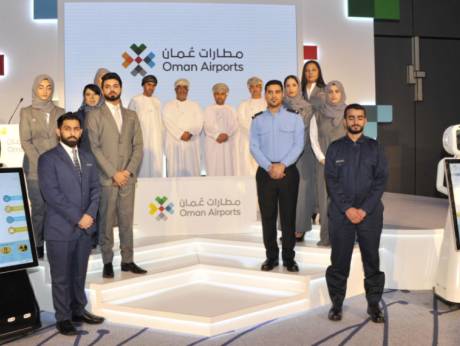
Robots to guide passengers at Oman airport

Muscat: Two robots will be guiding travellers inside the new Muscat International airport

after its March 20 inauguration, in the first such instance anywhere in the world. They will impersonate airport staff, the Oman Airports Management Company (OAMC) said. No further details have been given about the robots.


Additionally, passengers have been asked to report at least three hours before departure at the new airport on March 20.

The first flight will land at the new airport at 5.30pm while the first flight will depart at 6.50pm.
Those who need to cancel their visas have to report four hours before departure, according to a notice issued by Board of Airline Representatives to all travel agents.
The revamped Muscat International Airport is expected to have the capacity to handle more than 12 million passengers a year, and 48 million passengers after the completion of the four-phase construction projects.
The first stage covered 580,000 square metres and features 86 check-in counters, 10 baggage claim belts, 40 gates for both departure and arrival, 29 lounges, 29 aircraft stands with jet-bridges as well as a new control tower.
The new terminal will have the capacity to handle large aircraft such as the Airbus A380 and the Boeing 747. The existing terminal will be used for low-cost carrier operations.

source: https://tinyurl.com/y9mp2s5s

The extraordinary scientific legacy of Stephen Hawking

Airport Benchmarking could not avoid to have a special though for a such special person….

A part of humanity brain has gone ….

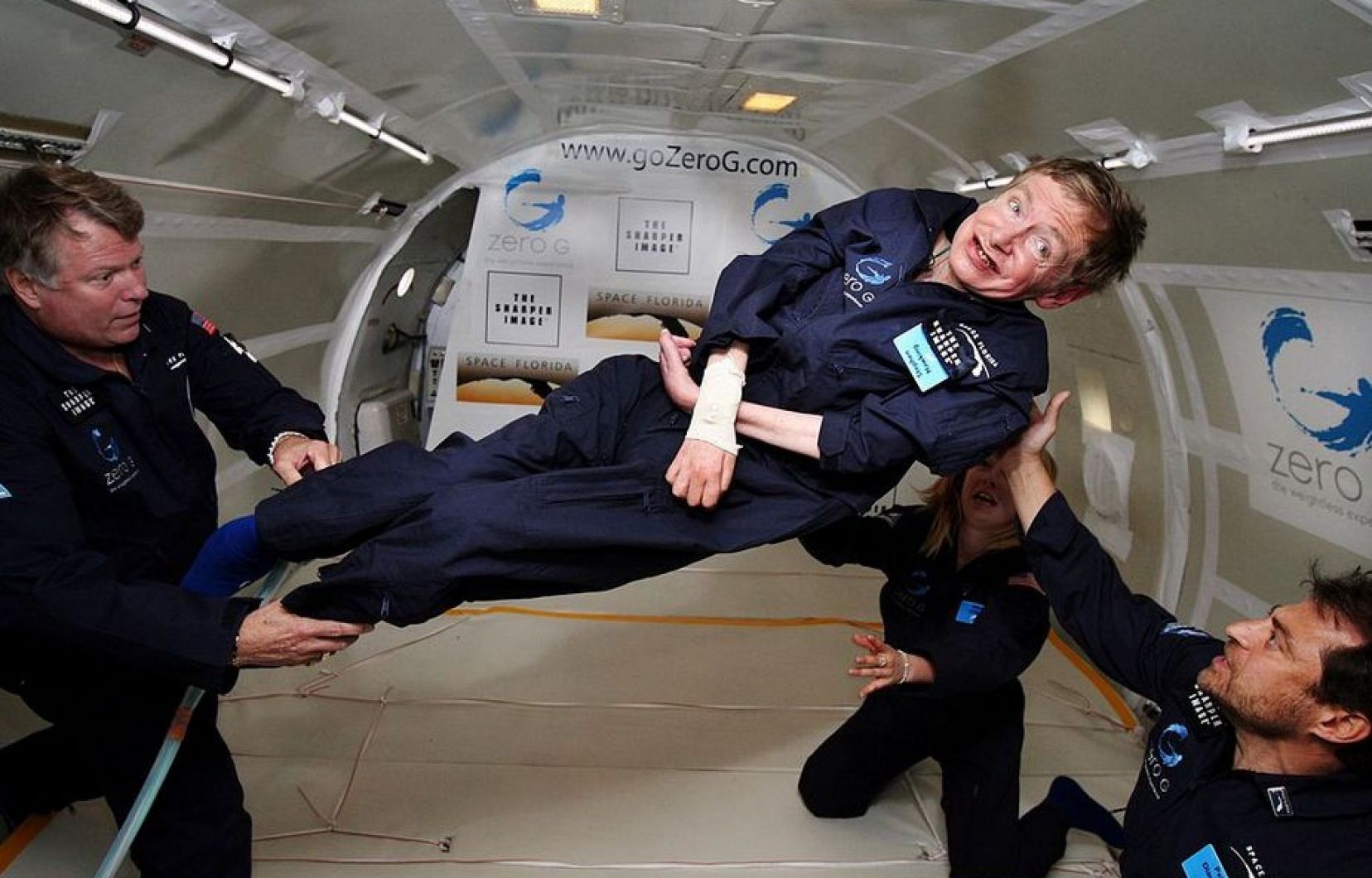
Professor Stephen Hawking passed away in the early morning on March 14, 2018, when he was 76 years old. Celebrated for accomplishments in physics and popularizing scientific thinking, Hawking also worked on numerous other projects, including space travel.
The British theoretical physicist and cosmologist was acclaimed for his work with mathematician Roger Penrose on gravitational singularity theorems and the theoretical prediction that black holes emit radiation, now often called Hawking radiation.
Aside from his accomplishments in physics, Hawking also worked on numerous other projects, including space travel. Emphasizing the need for the human species to evolve into interplanetary species, Hawking devised a project to send tiny human spacecraft to Alpha Centauri. It is the second-closest star to Earth approximately 4.37 light years away.
The project Starshot Initiative, backed by Russian billionaire Yuri Milner and Facebook founder Mark Zuckerberg aims to build nanocraft that could travel at the fifth of speed light. In 2017 a number of project’s prototypes took flight becoming the smallest spacecraft ever flown.
The prototype “Sprites” was a tiny fully functional space probes of 3.5 cm by 3.5 cm built on a single circuit board successfully achieved Low Earth Orbit, Forbes reported. Eventually the nanocraft is planned to be scaled down to one centimeter which can use 10 gigawatt light beams to be propelled to speeds of up to 100 million miles per hour. If successful, the spacecraft could reach Alpha Centauri in 25 years after taking off.
When speaking about the project, Hawking noted that “such a system could reach Mars in less than an hour, reach Pluto in days, pass Voyager [the space probe launched in 1977] in under a week, and reach Alpha Centauri in just over 20 years,” the Independent reported.
Hawking has always emphasized the importance of space travel for humankind, speaking about the importance of interplanetary travel. According to the scientist, humankind has approximately a century left on Earth before it either evolves into interplanetary species, or seizes to exist. Hawking explained that the human species will eventually be wiped out by epidemics, climate change, asteroid strikes or overpopulation.

World renowned scientist
Hawking’s first major scientific breakthrough came in collaboration with Roger Penrose – they revealed that if the universe obeys the general theory of relativity, then it must have begun as a singularity , an infinitely dense point of space-time.
His most significant scientific breakthrough concerned studies in black holes. He was the first to show that black holes are not entirely black and in 1974 he presented his theory that black holes emit radiation, now known as Hawking radiation. While a controversial theory at the time, eventually after publication of further research it was accepted as a major breakthrough in the scientific community.
By the late 1970s Hawking was widely recognized as one of the great minds in modern science. In 1979 he was appointed as Lucasian Professor of Mathematics at University of Cambridge – one of the most prestigious academic posts in the world, formerly held by Isaac Newton and other great scientists. He held the post for 30 years. Throughout his life, the professor continued his research in black holes.
Throughout his career, the physicist was showered with numerous accolades including 13 honorary degrees and a plethora of awards and medals. In 1982 Hawking was awarded CBE and Companion of Honour seven years later. In 2009 professor was awarded with the Presidential Medal of Freedom the highest civilian award in the United States.
Despite numerous accolades, Hawking never received a Nobel Prize. Even though his discoveries were groundbreaking, theoretical scientific discoveries have to be confirmed by observational data before there’s a possibility of winning a Nobel. And black holes are nearly impossible to observe. In comparison, Einstein’s theory of gravitational waves in space, which were proposed back in the 1920s, was only proven in 2016.
Hawking was also known for his willingness to state controversial ideas which ranged from Artificial Intelligence (AI), time travel to how the world would end. Despite his outrageous predictions about the future, the professor was highly regarded as the one of the great minds of modern science.
The scientist expressed his fears about the future of AI, stating that it will be so advanced that it will replace humankind altogether. Not only would AI replace people in middle class jobs, potentially leaving millions without work, he also called for a ban on offensive autonomous weapons in an open letter by the science community including Elon Musk, Steve Wozniak and other notable persons.
Acclaimed author
While he was considered to be an accomplished scientist for years, Hawking’s worldwide fame came in 1988 when he released his popular science book on cosmology A Brief History of Time. The book explains complex scientific concepts for the general public. The book went on to be the most popular science book of all time as it was translated into 40 languages and sold more than 10 million copies. It was also jokingly dubbed “the most popular book never read”. The professor has written 15 books in his lifetime.
Hawking became one of the most recognizable scientists of all time, his cameos ranging from The Simpsons to Star Trek. His life was recently immortalized in a 2014 biographical film The Theory of Everything.
Numerous tributes have been outpouring from scientists, astronauts and celebrities noting his impact, sense of humor and intelligence throughout the day.

source : https://tinyurl.com/y7afl69j


Air Transport Agency devises measures to protect airports against drones

Moscow’s Domodedovo Airport is ready to participate in drafting a bill to protect the territory of the airport against drones. 

MOSCOW, March 14. /TASS/.

The Federal Air Transport Agency (Rosaviatsiya) has devised measures to ground the unmanned flying vehicles (UAV) flying into the territory of airports, the agency’s head, Alexander Neradko, told the Izvestia daily on Wednesday.
“This authority will possibly be given to special services of the airports. The necessary equipment may be arranged along the perimeter of the facility. Drones will be either grounded or returned to the point of their departure,” Neradko said.
“Moscow’s Domodedovo Airport is ready to participate in drafting a bill to protect the territory of the airport against drones. The company has already sent letters to the concerned agencies,” an airport’s representative said.
Last year, Rosaviatsiya put the number of violations with the use of drones at 70 in 2016-2017. The authority says the biggest danger for the safety of flights comes from unsanctioned launches of UAVs near the airports. It drew attention to a need to take preventive measures and to inform the owners of the drones about the legislation and recommendations from the International Civil Aviation Association.

Source : https://tinyurl.com/yadmp99v