Delhi Airport poised for growth with technology leading the way


Last year, Indira Gandhi International Airport (Delhi, India)

hit an important milestone by handling 63.5 million passengers. In fact, it is now ranked among the top 20 busiest airports in the world. But, with these great numbers, also come great challenges. How can we maintain passenger convenience and comfort amidst this growth? How do we modernize verticals while improving check-in and baggage handling? Most importantly, how can we delight our customers? Technology plays a key role in all these aspects.

If you look at the Indian aviation landscape, you’ll see it has to evolve still in terms of getting into systems automation and installing the required hardware. Automation needs to be implemented in phases – this is how we initially implemented Amadeus Airport Operational Database, which is already at the heart of our IT environment. It has provided us with a state-of-the-art, fully scalable solution, combining a high level of security and great performance. Because of initiatives such as these, we have been able to secure numerous accolades including being ranked number 1 in the ACI Airport Service Quality Awards 2017.

One of our big priorities in the future, after optimizing our runways, is optimizing our check-in counters. We want to be flexible enough to share check-in counters between airlines. Currently, we feel they are under-utilized. This is a big challenge we need to tackle and we’re looking to do this through the optimization and automation of the whole check-in process.

We want the entire airport experience to be a positive one for our passengers. This means making it a memorable one for the right reasons. Innovation will be crucial in this process, helping us successfully take on the check-in process and much more. We’re confident that partners like Amadeus will be there working hand-in-hand with us during this journey.

Airlines back creation of global drone registry

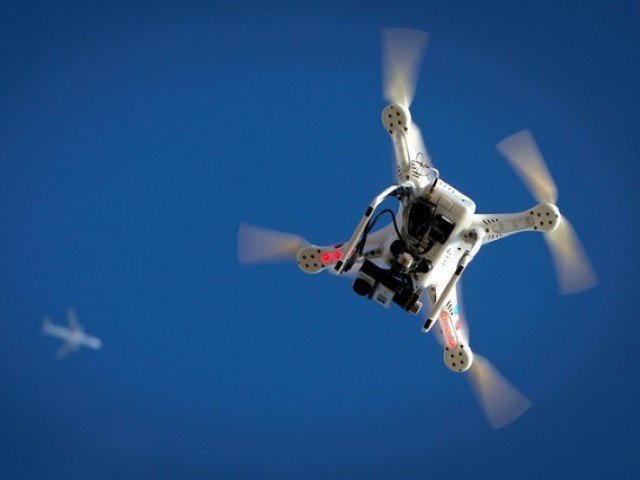
An airplane flies over a drone during the Polar Bear Plunge on Coney Island in the Brooklyn borough of New York, US, January 1, 2015. PHOTO: REUTERS

MONTREAL/SINGAPORE: 

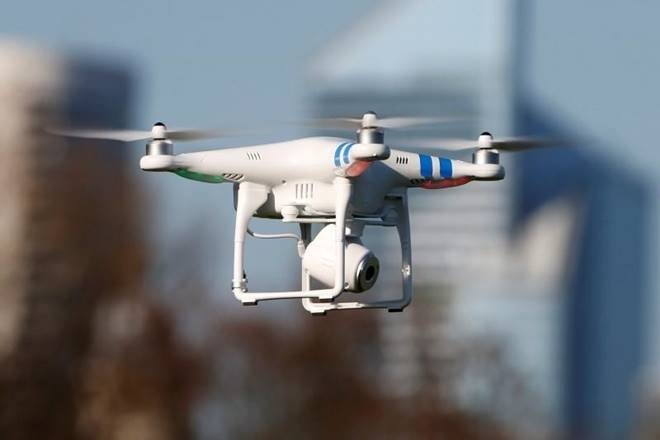
The world’s airlines are backing the development of a United Nations-led global registry for drones, as a rise in near collisions by unmanned aircraft and commercial jets fuels safety concerns, an executive of their trade group said on Tuesday.

The International Air Transport Association backs efforts by the United Nations’ aviation agency to develop such a registry, which could also help track the number of incidents involving drones and jets, said Rob Eagles, IATA’s director of air traffic management infrastructure.

Australia lifesaving drone makes first rescue

IATA would consider collaborating with the International Civil Aviation Organization (ICAO) to use the registry for data analysis to improve safety.

ICAO is developing the registry as part of broader efforts to come up with common rules for flying and tracking unmanned aircraft.

“One of the important things we would like to see on a registry as well is the compilation of data which would include incident and accident reporting,” Eagles said in an interview on the sidelines of IATA’s Safety and Flight Ops Conference in Montreal.

Airlines and airport operators are looking to drone registries, geo-fencing technology and stiffer penalties for operating drones near airports. They hope these steps will ensure flying remains safe as hobbyists and companies like Amazon.com Inc use more drones.

In Britain, the number of near misses between drones and aircraft more than tripled between 2015 and 2017, with 92 incidents recorded last year, according to the UK Airprox Board.

Air New Zealand said last month a flight from Tokyo with 278 passengers and crew on board encountered a drone estimated to be just five meters away from the Boeing 777-200 jet during its descent into Auckland.

A single registry would create a one-stop-shop that would allow law enforcement to remotely identify and track unmanned aircraft, along with their operator and owner.

“The intention at present is to merge this activity into the ICAO registry for manned aircraft, so that the sector has a single consolidated registry network,” said ICAO spokesman Anthony Philbin by email.

The manned aircraft registry is operated by Aviareto, a joint venture between Switzerland-based aviation technology group SITA and the Irish government.

World’s first passenger drone makes maiden public flight in China

SITA CEO Barbara Dalibard said her company wanted to build a blockchain-based global drone registry and had been working with Geneva Airport on tests of a geo-fenced zone around the airport where drones listed in the registry would not be able to fly.

“The data is connected to the airport system,” she said during an interview in Singapore on Tuesday.

“The drone is approaching the airport and it says ‘No, go back’. If everything is connected you can ask the drone to change its flight plan or to readjust in order to get out of the danger zone,” she added.

source : https://tinyurl.com/ybnkkqzd


Food delivery app AtYourGate aims to fulfil travellers’ cravings in airports

P.J. Mastracchio is used to dashing through airports only to arrive at his gate and have a terrible feeling start to sink in: hunger pangs.
The frequent business traveller’s routine rush often leaves him with no time to grab a bite. Now, he’s betting his experience is so common it will help get his recently-launched airport delivery service AtYourGate off the ground.

AtYourGate is currently only available at San Diego International Airport, but it has ambitions to roll out across Canada as it tries to tackle what could be the next frontier for delivery apps: airports.   (Doug Ives / THE CANADIAN PRESS)

The delivery service, powered by Montreal-based mobile platform GOLO, allows travellers to place orders from restaurants or convenience stores in the airport through the AtYourGate app. The items get delivered to the passenger’s gate, cutting out the need to wait in line for food or walk far distances through the airport to fulfil cravings. For those tight on time, orders can be scheduled in advance to arrive just as you board or deplane.
So far AtYourGate is only available at San Diego International Airport, but it has lofty ambitions to roll out across Canada as it tries to tackle what could be the next frontier for delivery apps: airports.
AtYourGate faces competition from app-based food delivery pioneer Uber Eats, as well as smaller startups and even airports themselves.

Uber Eats Canadian general manager Dan Park said it is experiencing an increase in orders made to airports, though the company can’t make deliveries past security yet. Airport Sherpa launched at Baltimore/Washington International Airport in July. And a spokesperson for the Edmonton International Airport said it hopes to launch a similar offering and the Halifax International Airport Authority said it has explored such a service, but doesn’t have anything in the works.

The idea of delivery services at airports is growing in popularity and something travellers could find very useful, said David Soberman, a University of Toronto marketing professor.

“(Airports) are crowded, often the stores aren’t where your gate is, and it can be challenging, especially if you are a family travelling with kids or if you are an older person. There are all kinds of people that would find this convenient,” he said.

Airlines back creation of global drone registry – IATA

Concerned by a rise in near-collisions by unmanned aircraft and commercial jets, the world’s airlines back the development of a UN-led global registry for drones, an executive of the airlines’ trade group said on Wednesday.

The International Air Transport Association (IATA) backs efforts by the United Nations’ aviation agency to develop such a register.

The efforts could also help track the incidents involving drones and jets, said Rob Eagles, IATA’s director of air traffic management infrastructure.

IATA would consider collaborating with the International Civil Aviation Organization (ICAO), using the registry for data analysis to improve safety.

ICAO is developing the registry as part of broader efforts to come up with common rules for flying and tracking unmanned aircraft.

“We will like to see one of the important things on a registry and the compilation of data.

“Such compilation will include incident and accident reporting,’’ Eagles said in an interview on the side-line of IATA’s Safety and Flight Ops Conference in Montreal.

Airlines and airport operators are looking to drone registries, geo-fencing technology and stiffer penalties for operating drones near airports.

They hope these steps will ensure flying remains safe as hobbyists and companies like Amazon.com Inc. use more drones.

In Britain, the number of near misses between drones and aircraft more than tripled between 2015 and 2017, with 92 incidents recorded last year, according to the U.K. Airprox Board.

Air New Zealand Ltd said last month a flight from Tokyo with 278 passengers and crew on board encountered a drone estimated to be just five meters away from the Boeing 777-200 jet during its descent into Auckland.

A single registry would create a one-stop-shop that would allow law enforcement to remotely identify and track unmanned aircraft along with their operator and owner.

It’s not yet clear what kind of drones would be listed in the registry.

However, IATA would support the inclusion of most drones, including large unmanned aircraft and smaller ones used for commercial and industrial purposes, Eagles said.

source : https://tinyurl.com/y95w9j8h


Global Commercial Airport Baggage Handling Systems Market

Global Commercial Airport Baggage Handling Systems Market Growth Evolution Forecasted for the Period till 2025

A latest research report titled as Commercial Airport Baggage Handling Systems Market – Global Industry Analysis, Size, Share, Growth, Trends, And Forecast 2012 – 2018” has been recently added to the vast portfolio of Market Research Reports Search Engine (MRRSE) online research offerings. This report is a professional and in-depth analysis on the present state and future prospect for the global market. It provides valuable information to the industry insiders, potential entrants or investors. It includes an exhaustive enquiry with the reliability of logic and the comprehensiveness of contents.

Click here For Free Sample Report @ https://www.mrrse.com/sample/319

This market is primarily driven by the growing number of new airport terminals and upgradation of existing airport infrastructure. The upgrades can be due to existing systems turning obsolete on the basis of technology used, or due to increase in the handling capacity of the airport. Irrespective of the factors affecting the market demand, the global market is experiencing a surge in demand, attributed to rise in airline passengers, airline operators, and the airport as an independent unit.

The requirement of a BHS (Baggage Handling System) is primarily driven by the need for efficient systems, which are able to manage the movement of customer/airline baggage in and out of the check-in and checkout points at the airports. The roles of a BHS have increased significantly, with developments of new technologies and improved systems.

A typical BHS performs the following tasks in the current market scenario – movement of baggage from the check-in point to the air-craft loading point or cart, movement of baggage from one aircraft to another (in case of transit flights), and moving baggage from an inbound aircraft to the baggage claim section of the airport.

Some advanced BHS additionally perform functions such as baggage screening, and tagging as well as sorting. Geographically, the Asia-Pacific region holds a high potential for market growth, due to large number of airports, high demand of airport upgrades, and a rise in the number of new upcoming projects and those under consideration. Also, the Asia-Pacific region, which accounts for the largest share for number of inbound and domestic travelers, is a probable market for high capacity BHS.

The scope of BHS in railways is also a probable market, and holds new opportunities across some of the busiest networks. However, the concept is new in the market, and might take time for global acceptance. The key challenges faced by the commercial airport baggage handling systems are on-time movement of baggage from one point to another and efficient performance during peak and non-peak hours.

Industry players are continuously working on technologies to improve the overall performance of the entire system. Features such as remote controlled operation, which can be integrated with smart handheld devices or smart phones, are new concepts and are expected to drive the market growth.

With a rise in the number of travelers, airline operators, and security challenges, the demand and operational challenges for baggage handling systems is expected to go up. These factors are already being explored by leading players in the market, who are developing advanced systems. Some of the market players in the airport baggage handling systems market are Siemens AG, Daifuku Webb, Vanderlande Industries B.V., and Glidepath.

To Know The latest Trends and Insights Prevalent in This Market, Click the link below @ https://www.mrrse.com/commercial-airport-baggage-handling-systems

This research report analyzes this market depending on its market segments, major geographies, and current market trends. Geographies analyzed under this research report include

North America

Asia Pacific

Europe

Rest of the World

This report provides comprehensive analysis of

  • Market growth drivers
  • Factors limiting market growth
  • Current market trends

Market structure

  • Market projections for upcoming years

This report is a complete study of current trends in the market, industry growth drivers, and restraints. It provides market projections for the coming years. It includes analysis of recent developments in technology, Porter’s five force model analysis and detailed profiles of top industry players. The report also includes a review of micro and macro factors essential for the existing market players and new entrants along with detailed value chain analysis.

Reasons for Buying this Report

  • This report provides pin-point analysis for changing competitive dynamics
  • It provides a forward looking perspective on different factors driving or restraining market growth
  • It provides a technological growth map over time to understand the industry growth rate
  • It provides a seven-year forecast assessed on the basis of how the market is predicted to grow
  • It helps in understanding the key product segments and their future
  • It provides pin point analysis of changing competition dynamics and keeps you ahead of competitors
  • It helps in making informed business decisions by having complete insights of market and by making in-depth analysis of market segments
  • It provides distinctive graphics and exemplified SWOT analysis of major market segments

Make An Enquiry @ https://www.mrrse.com/enquiry/319

About Market Research Reports Search Engine

Market Research Reports Search Engine (MRRSE) is an industry-leading database of Market Research Reports. MRRSE is driven by a stellar team of research experts and advisors trained to offer objective advice. Our sophisticated search algorithm returns results based on the report title, geographical region, publisher, or other keywords.

MRRSE partners exclusively with leading global publishers to provide clients single-point access to top-of-the-line market research. MRRSE’s repository is updated every day to keep its clients ahead of the next new trend in market research, be it competitive intelligence, product or service trends or strategic consulting.

source : https://tinyurl.com/ycezrrq7

Siemens, Dubai Airports ink deal to enhance passenger experience at DXB and DWC

 Enhancing passenger experience has become a priority for Dubai Airports

that operates two major aviation hubs, Dubai International Airport (DXB) and Dubai World Central (DWC).

With this, the airport operator inks MoU with Siemens Postal, Parcel & Airport Logistics (SPPAL) to explore potential areas of collaboration in the fields of data management and digitalisation.

As part of this deal, the companies aim at utilising IoT technology and infrastructure as well as analytics capabilities, establishing a standardised and secure way to exchange quality-assured data across different stakeholders at the airports in real-time. For the digital technologies, Siemens is using MindSphere, its open, cloud-based operating system for the Internet of Things.

“By employing advanced data analytics and machine learning, a great deal of added value can be derived from data. Through this agreement, we would seek to help Dubai Airports improve ultimately the overall customer experience by analysing various elements of airports processes, including passenger flows and interactions with airport facilities and existing bag and cargo flows,” said Michael Reichle, CEO of Siemens Postal, Parcel & Airport Logistics.

“Our ongoing focus is to use data, analytics and technology to boost service, throughput and efficiency across the board simultaneously,” said Michael Ibbitson, executive vice president of Technology and Infrastructure at Dubai Airports.

Among other things, the activities of collaboration covered under the MoU are joint opportunities for pilot studies as well as research and development. The companies will examine opportunities ranging from intelligent passenger flow management, maintenance cost reductions, power supply efficiencies and predictive asset management.

In its push towards strengthening its digital presence, Siemens also plans to set up two MindSphere Application Centers in the United Arab Emirates. The company has made a commitment to setting up 20 of these MindSphere Application Centers in 17 countries. Each of the centers spans multiple locations and specializes in a particular industry in which Siemens is active. At these centers, around 900 software developers, data specialists and engineers work together with Siemens customers to develop digital innovations for data analysis and machine learning. These new solutions are being developed on MindSphere.

In the United Arab Emirates, the two new centers will be located in Dubai and Abu Dhabi. The Dubai centre will handle airports, logistics and cargo to co-develop innovative approaches that improve the movement of people and goods. The center will optimise the efficiency of logistics by leveraging advanced analytics and IoT solutions provided by Siemens.

On the other hand, the Abu Dhabi centre will cater to process industries, mainly focusing on oil and gas as well as water and waste water, helping customers to reduce their costs across the whole value chain.

source : https://tinyurl.com/y958nf7x


Coming soon, regulations for use of drone technology in India

The government today said it would soon come out with a set of norms for implementation of drone technology and favoured an ‘international drone alliance’ with the active support of France for tapping its diverse use.

The regulations would be unveiled after extensive consultations with the security agencies, the manufacturers, the global regulators and innovators, Minister of State for Civil Aviation Jayant Sinha said.

The government today said it would soon come out with a set of norms for implementation of drone technology and favoured an ‘international drone alliance’ with the active support of France for tapping its diverse use. The regulations would be unveiled after extensive consultations with the security agencies, the manufacturers, the global regulators and innovators, Minister of State for Civil Aviation Jayant Sinha said at an event today.

The minister’s remarks came in the wake the Government last week setting up a 13-member task force under Sinha’s chairmanship to prepare a roadmap and recommendations for the central and state governments, besides the industry and research institutions for rollout of the technology.

“We are shortly issuing a set of regulation after extensive consultations with security agencies, the manufacturers, global regulators and innovators,” the minister said at the Indo-French Defence and Aerospace Cooperation meet here organised by CII.

“Why don’t India and France take up the leadership as far as drones are concerned where standards, technology, control parameters has to be harmonised and perhaps create international drone alliance where we can come together and figure out how the standards can be harmonised,” he suggested.

A battery of leaders from the defence and aerospace industries of both India and France attended the event. French Ambassador to India Alexandre Ziegler was also present.

The alliance, the minister said, can be worked out much on the lines of the successful international solar alliance pioneered by India.

Seeking active French support for the flourishing civil aviation sector in the country, Sinha said India can be a production platform for French manufacturers, who can reap from the unique requirements of the country like the development of growing demands of turboprop aircraft for the regional connectivity programme.

He said the potential of the collaboration and business linkages between the two countries is extraordinary and foresaw a time when the joint collaborations could see the development of ‘air rickshaws’ in India, reducing the travel time between Delhi to Gurugram to just 30 minutes.

The minister also stressed upon the French side to have a perspective plan for India going beyond 50 years in keeping with the country’s fast pace development and “indianisation” of operations to succeed in Indian market as well as become a global player.

The aviation sector, he said is growing at a rate of 20 per cent and over 900 planes would be added to the Indian sky in the next 10 years from 550 aircraft at present. One billion trips per annum is also the target of the government with supporting infrastructure and hence the opportunities in the airport ecosystem in immense, he said.

https://tinyurl.com/ybh78apl


TSA using robots to help screen bags at Love Field

The Transportation Security Administration is now using robotic carts at Dallas Love Field to make screening suspicious bags more efficient.


DALLAS—The Transportation Security Administration is now using robotic carts at Dallas Love Field to make screening suspicious bags more efficient.
According to the TSA’s website, 1.3 million checked bags are screened across the country each day.
Officers inspect those bags because something inside triggered an alarm during initial scans.

At Dallas Love Field, if a bag triggers an alarm—it gets to meet some new artificial intelligence.

Since November, TSA officers have been utilizing robotic tables (mobile inspection tables) to help them screen and inspect luggage.

The tables move on a magnetic track and take suspicious bags to stations where officers are standing, so they can be searched for any illegal items.

Once a bag clears inspection or prohibited items are removed, it’s put back on the robotic table which then dumps the bag back onto a conveyor belt that leads to its plane.

Before, officers would just yank suspicious bags off of those belts. With the new robots, the TSA says work injuries may be a thing of the past.

“You can imagine working a shift down here would be very exhausting,” Assistant Federal Security Director of Screening Jeffrey Tyler said.

“We’re not lifting, pushing, or even pulling the bag.”

Tyler said that the robotic tables also cut down on luggage backups during heavy travel days, putting the bags in a queue instead of forcing officers to just deal with them as they come.

He said that the system was initially implemented before Thanksgiving and Christmas of last year and was a major help.

“It gives us plenty of time and opportunity to clear that bag efficiently and effectively—and send it on for travel,” Tyler said.

Chris Perry, Dallas Love Field’s Communications Manager, told WFAA that the airport deals with 15,000 to 16,000 bookings a day.

It’s the first airport to use this kind of automation to screen all checked bags.

Detroit Metropolitan Airport and Cleveland Hopkins International Airport use the robotic tables too, but not for all terminals.

“If we can get those bags through safely and efficiently, we’re always happy to do that,” Perry said.

To be able to say that we have robots moving bags around, that’s the fun part for us.”

Perry couldn’t go into exact costs for the tables because he said the system was purchased as part of the Love Field Modernization Program.

He stressed that any money the airport uses comes from its enterprise fund—and not the city’s general fund.

source : https://tinyurl.com/yddb34da


Airports Turn to Smart Windows to Improve Passenger Experience

New study demonstrates View Dynamic Glass improves airport passenger experience;

increases revenue; reduces operational expenses.

View®, the leader in dynamic glass, today announced the results of a study on the impact of in-terminal passenger experience and its correlation to higher revenues and reduced operational expenses. The study, conducted at Dallas Fort Worth International Airport (DFW), found that terminal windows fitted with View Dynamic Glass overwhelmingly improved passenger comfort over conventional glass, resulting in an 83 percent increase in passenger dwell time at a preferred gate seat and a 102 percent increase in concession spending. The research study was conducted by DFW Airport, View, Inc., and an independent aviation market research group.

“DFW is the world’s largest carbon neutral airport, and we are constantly evaluating new technologies and solutions throughout the airport to identify improvements for customer experience and sustainability,” said Sean Donohue, CEO at DFW Airport. “The results of this study confirm that dynamic glass can reduce cooling costs and support DFW’s commitment to minimize our carbon footprint. We were very pleased to see the positive effect on the customer experience and how the glass changed customer behavior with less glare and cooler temperatures.”

Airports continuously work to identify solutions to improve the passenger experience, reduce operational expenses and improve revenue streams. View Dynamic Glass reduces glare and unwanted heat within the terminal, providing a more comfortable environment for passengers and airport employees while also enabling airports to reduce their carbon footprint. View has installed dynamic glass at several airports including: Boston Logan International Airport (BOS), Charlotte-Douglas International Airport (CLT), San Francisco International Airport (SFO), and Seattle-Tacoma International Airport (SEA).

Key findings from this study include:

  •     Seating with a view matters.

Passengers prioritize access to light and views of airplanes ahead of proximity to electrical outlets, restrooms and televisions – second only to locations with empty adjacent seats. With dynamic glass installed, 84 percent of passengers sought a better view, preferring to sit close to (dynamic glass) windows.

  •     Dynamic Glass increases passenger comfort by keeping the heat out.

Infrared imaging showed that dynamic glass reduced surface temperatures by 10 to 15 degrees on seats, carpets, passenger clothing and skin compared to the gate with conventional glass. This improvement in thermal comfort promotes greater passenger delight and enables reduced use of HVAC systems for cooling.

  •     Comfort at the gate translates to longer passenger dwell times and increased revenue.

Survey results found that passengers seated by dynamic glass stayed 83 percent longer than passengers seated next to conventional glass. After dynamic glass was installed at the Twisted Root restaurant at DFW Airport, the restaurant saw a 102 percent year-over-year increase in concession sales, over a six month period.

“Every airport is now investing in facilities that enhance the passenger experience. All modern designs incorporate multi-story glass facades that bring more natural light and provide dramatic views; however, this very feature is also creating significant passenger discomfort through increased glare and heat,” said Dr. Rao Mulpuri, CEO of View, Inc. “View Dynamic Glass uniquely solves this problem and delivers to the design intent of creating delightful passenger experiences. This study validates the reasons why View Dynamic Glass is being adopted in airports at an accelerating pace.”

To view the full findings from the recent study, please visit http://bit.ly/2JQoNCE, and to learn more about View Dynamic Glass, visit http://www.viewglass.com.

Methodology
The study, led by Dr. Alan Hedge, a professor in the Department of Design and Environmental Analysis at Cornell, was conducted at two locations at DFW Airport during October 2017 after a public bid process, with View replacing existing conventional insulated glass at DFW’s Gate A28 and in the bar section of a nearby restaurant, both of which are oriented East and experience significant morning sun and heat. The study utilized Gate A25, which is similarly oriented to Gate A28 and fitted with conventional insulated glass, as a control for comparing passenger seating, behavior and dwell time in boarding areas and previous month and year sales history to analyze impact on the restaurant’s business. Over the period, more than 30 flights were monitored and evaluated using video footage, and surveys were conducted with over 500 passengers.

About View
A leader in building innovation, View Inc. is the first company to successfully advance the large-scale commercialization of dynamic glass. Situated at the intersection of human wellness, smart connectivity, and energy efficiency, View manufactures View Dynamic Glass, a new generation of architectural glass that intelligently transitions through multiple tint states to control the sun’s energy, providing an enhanced occupant experience, optimum natural light and superior thermal comfort. View has completed over 400 commercial installations, with another 200 in progress.

For more information, visit: http://www.viewglass.com.

source : https://tinyurl.com/y74jqacl