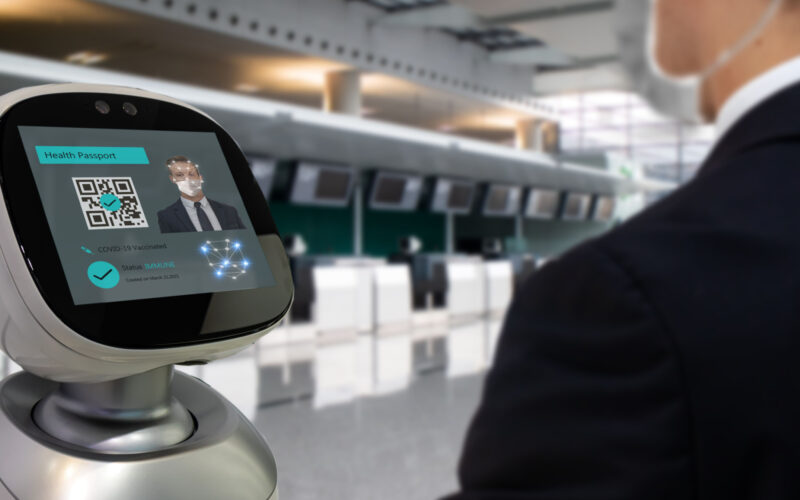
Discussing new airport technology at Edmonton International Airport

By Ramki Doraiswami

21 June 2023

Discussing new airport technology at Edmonton International Airport

International Airport Review’s Editor Holly Miles caught up with Ramki Doraiswami, Director of Technology Solution Delivery at Edmonton International Airport (YEG) to hear all about the airport’s development.
airport technology

What is your airport currently working on?

When I started my role with Edmonton International Airport, COVID-19 struck, so for my first year, I couldn’t focus on passenger processing or airport operations. Our focus was instead on supporting the remote workplace, and looking at how our staff could work from home and what technology was required to support them.

I was given a mandate to start looking at how we could modernise our technology. If you look at the airport space, certainly in North America, the technology is very old, legacy in fact. We see airport operations technology untouched for a long time because it was quite resource and money intensive. So, the first thing we did was bring in a technology partner to take care of all our networks, our infrastructure. Then we looked at our baggage system, which hadn’t been touched in 12 years and have worked with the RFP process to find the right partners.

We are now working modernise our check-in passenger processing areas by replacing the kiosks and giving a new interface to airline agents to enable them to do their check-ins and boarding gating process. In addition, we are looking at various other technologies to improve the passenger experience. So overall, that has been our focus lately, to modernise all the technologies we have from the past – and that’s my current workload.

Just to touch upon the working from home, is that something employees are still doing? Are they back to working at airports?

We want to continue with the hybrid model of working. When I talk to our staff, we have those who’ve worked in-house for 30 years and never from home. This is a new thing for them, but they’re okay with it – in fact, more than okay, they’re liking it. Therefore, we are now reducing office space and giving these spaces to airlines and other partners.

To allow staff to pre-book their spaces, we have a portal desk model. This allows them to prepare for when they come into the airport. There aren’t any dedicated desks (aside from those dedicated to VP’s) and we’re doing a three-day at work, two-day at home hybrid model. This is not only working well, but managing costs for the floor.  

Working from home potentially creates a bigger target for cyber-security. Is that something you are concerned about?

Of course, especially since airports are considered critical infrastructure for the country. Cyber is front and centre of all the work we do. It is critical we deploy the right technology for our staff when they’re working from home so we provide them with devices, and any secured tools for remote connectivity.

How do you strike the right balance between implementing new seamless, touch-free technology and keeping a human touch for passengers?

It’s good to automate everything, but when it is needed, the human touch is very, very important. We are looking at an idea to improve user experience at a commonly-used area of the airport; the arrivals area.

Once you complete your security, let’s say you want to know if there is a mailbox in the airport. Is there a post office? How do I find out?

Some might go to a website to find out, but not everybody will. A passenger will try to look for a guest services staff, but won’t have access to it since they’ve already crossed security.

We are thinking of pasting a QR code throughout the airport. This would enable passengers to scan the code with their phone, prompt a live agent and receive assistance. We are calling this a virtual information booth and ideas like this could include the human touch in various technologies. It’s a technology enabled human touch, I say.

In terms of your baggage handling system, lots of airports have very old-fashioned baggage handling systems. What is it that you’re modernising?

When you look at a baggage system, there are three layers. One is the upper layer with all the software control. Then you have the middle layer of your controlling systems, sensors and programming logic controllers. Then you have the belts and the conveyors; that’s the last (third) layer, which is the nuts and bolts and the electromechanical control.

We are starting with the top layer because our software is out of date, so this is the first thing to modernise. We are implementing new software, which can be used by the airport operations centre. Then we are going to modernise the middle and bottom layer. Our long term strategy is to get rid of the conveyor belt system and move into technology called DCV, which is designated coded vehicle.

It’s like a tub; you put in a suitcase, and the DCV knows where to take it by use of robotics.

What technology do you think will be disrupting the airport space most in 2023?

I would say biometrics including artificial intelligence (AI), machine learning (ML), all the modern technologies that make up that term. Since COVID-19, everybody is becoming more and more digital. I think biometrics are going to be a big game changer for passenger experience.

Are there any technologies you are excited about which haven’t yet made their way to the airport space?

There are a few airports starting to do more in the space of object analytics, which I believe some airports are piloting.

When travelling, the security checkpoint is a big bottleneck. When we conduct surveys, people tells us security is often the reason which makes them not want to fly, especially when travelling with the family or travelling with disabled passengers or in large groups. So, we ask ourselves, how can we make it easier? Biometrics can help to finish check-ins and the gating process, but security check is still a manual process.

I think Dubai is the one that built a tunnel where you walk through the tunnel, you don’t have to remove anything, just walk through. I haven’t seen it yet, but something like that is what I’m visioning. We build a tunnel with millions of cameras in it that directs everything, and you just let them walk through. This sort of process enables the passenger’s experience on a very different level.

I am excited about a greater use of robotics. You can’t put a lot of staff to help the passengers everywhere, but you could put robots. Let’s say I’m in the gate, but the food I want to order is in a different terminal, then the robots can deliver to you in the gate. Once again, this technology is focused on the passenger.

I think we can do a lot of things with radar, LIDAR and that kind of object analytics technology. They’re coming.

What are your challenges when implementing new technology? You must have a lot on your wish list, but what are the considerations you have to take into account?

Well, the airport does not own the passengers. The passenger’s main touchpoints are with the airlines, not with the airport. Let’s say we want to release an airport app. While everybody is ready to download an airline app and use it, what’s the incentive to download an airport app? If an airport wants to be a technology leader, how do we introduce this technology to passengers? How do we connect with them, is always a challenge. I think the more we start to do, the more information we can put out there.

For example, this year we are releasing our own app which will help you to gain points. It’s called YEG rewards. You park in our parking lot, you gain points. You buy food in our restaurants in the airport, you gain points. Then what can you do with the points? Go to a lounge. Use it in the lounge to buy a lounge pass. We are going to work with the airlines in the future to redeem the points to buy tickets.

Are you using OpenAI in any way?

We are looking at things like chatbots. Chatbots has been a discussion for a while now. I think OpenAI enabling chatbots will be an awesome tool. If we can put it on our website, we can put it on our app, if passengers have questions like, “do I have a non-stop flight from our airport to Los Angeles?” They can just ask the chatbot. They can ask about parking and it can also suggest to them, to click the link to pay and park, for instance. There are so many applications we can do.

For you and your personal to-do list for 2023, what is on your personal agenda?

Well, my background is not aviation. I come from a higher education oil and gas industry in the past as my IT work experience. It’s been a three-and-a-half-year journey in aviation. Learning more about this industry and attending shows like this is a big eye-opener for me. I understand more about the technologies available, about airport operations and how these technologies work. Greater understanding of this exciting sector continues to be high on my personal agenda.

source : https://www.internationalairportreview.com/article/185048/new-airport-technology-edmonton-international-airport/

evoBOT® am Flughafen München

INDUSTRIAL MOBILE AMR ROBOT – EVOBOT

The Evobot industrial AMR (Autonomous Mobile Robot) robot allows the movement of heavy loads up to 2000 kg (towing and lifting) thanks to an on-board navigation system.

It is provided with a complete natural navigation solution which calculates the position of the vehicle (location), controls its movement and can be interfaced directly with the vehicle’s safety laser scanners allowing:

  • a simple and reliable localization
  • an optimal control of the vehicle
  • a total security of robot movements

To guarantee a natural cohabitation between the EVOBOT robot and humans, the signaling of movements has been particularly studied:

  • a set of LEDs signaling start-up and movements of the robot,
  • a bluespot at the front and rear signaling the arrival of the vehicle even at a blind angle by projecting a blue spot on the ground,
  • an audible signal can be programmed in a sensitive area.

The Evobot mobile robot is supplied with a feeding station allowing the robot to charge automatically and frequently. This task can be carried out between each mission or at the end of the exercise. The action can be triggered by an operator or carried out automatically by the robot (defined beforehand).

It is available in different configurations by adding additional equipment (lifter, cobot, conveyors, etc.).

source : https://www.mgtech-group.com/en/mg-tech-moove/agv-aiv-industrial-robots/industrial-mobile-amr-robot-evobot

Autonomous Robotic EV Chargers Will Arrive on US Airports Soon

ANGELA B. TECH 06.02.2023 03:JUN AM EDT

Electric vehicles are slowly catching up with combustion-engined cars, which explains why EV charging stations are already being built all over the US. Airports are starting to adapt to the EV industry as well as they add autonomous robots that can charge your EV right where you parked.

ZiGGY

(Photo : EV Safe Charge)

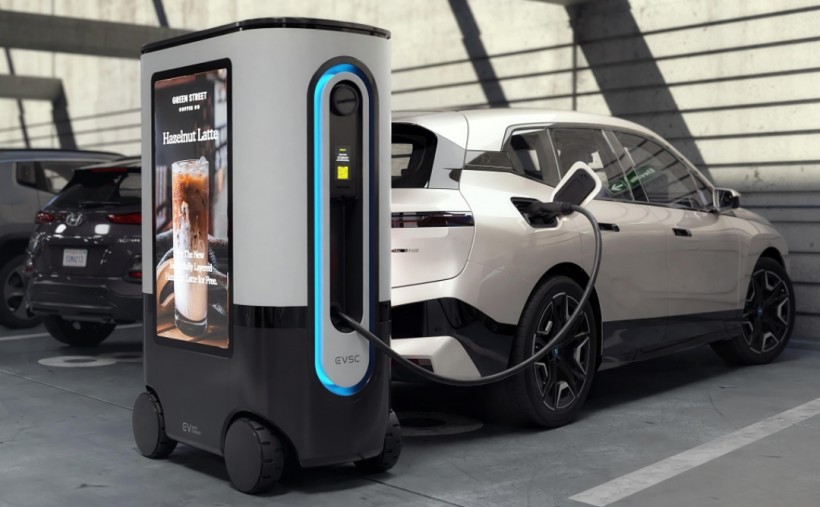
ZiGGY the EV Charger

The advanced mobile EV charging robot will be placed in airports in the US, with the Dallas Forth Worth (DFW) International Airport being the first to soon have them. This allows for a more convenient way for EV owners to charge their vehicles while on a flight.

Through the EV charger’s phone app, drivers can book a robot for them to use, which will then guide them to the parking spot they selected. As they head to the marked location, the robot will also save the parking space for the user to keep it from being occupied.

It will do so by rolling through to the spot reserved and waiting for the driver to arrive. Once the driver is near the booked space, the ZiGGY robot will simply roll out so the EV could take its place, and the EV charger would position itself behind the car.

Once the driver has parked, they would then have to confirm the activation. Based on the demonstration video, it can be done through a QR code. Once that’s done, the driver can start charging, and the robot will alert them through the app once the car is fully charged.

ZiGGY is developed by the company EV Safe Charge. Its founder and CEO Caradoc Ehrenhal stated that due to the robot’s innovative flexibility to reach every car in a parking lot, DFW chose to display the tech, as reported by Interesting Engineering.

DFW Executive Vice President of Innovation, Paul Puopolo expressed that the airport is aware of EVs becoming a part of their future, and so they are finding the right technology solutions to meet the future challenges, which he stated was a major focus for their team.

Given that ZiGGY is portable, it’s likely that it or other technologies like it will be seen in other places as well aside from airports. They can be useful for parking spaces in retailers like Walmart, which already has plans to install EV charging networks in several locations.

Why Portable EV Chargers Might Be Better

EV charging stations are already being set up in various locations to accommodate EV drivers who need a quick boost in the middle of a trip. However, there are parking structures that don’t have enough space for the equipment.

Since a portable EV charger can just roll to the parking spot, there’s no need to worry about allotting space for the charger. A mobile robot will also solve the limitations that a stationary charging station will have.

The robot itself will return to its station once the electric vehicle has already been charged completely. This means that other EVs won’t have to wait for the vehicle parked in a charging spot to leave before they get their turn.

source : https://www.itechpost.com/articles/117776/20230602/autonomous-robotic-ev-chargers-will-arrive-airports-soon.htm

How can LiDAR improve passenger’s experience in Airports

According to the New York Times, the cumulative wait time in airport queues is 37 billion hours. LiDAR Software can help.

Apr 6, 2023 Benjamin Lombard

Needless to say, airports are facing a real challenge in terms of flow management and operational efficiency.

Among other actions, they need to rethink their facilities to optimize the passenger experience within their infrastructure.

LiDAR technology, used with the right software, can unlock a whole new approach to passenger flow management by providing differentiated solutions to traditional imaging technologies.

Live view of one of Outsight’s underlying algorithms that allows automatic queue detection and measurement

Dynamic Queue Management

As of today, the most commonly deployed technologies to study the flow of people within terminals are often limited to cameras or Bluetooth measurements.

Unfortunately, the data generated by this type of sensor does not allow for a precise and dynamic analysis of the evolution of unstructured queues which, by definition, are unpredictable.

One of the advantages of LiDAR technology is that a small number of sensors can cover an area as large as an airport terminal with unparalleled accuracy. 

Coupled with spatial perception software like Outsight’s, a LiDAR installation gives you access to real-time 3D data to analyze the evolution of passenger traffic within defined areas.

Our software includes an overflow management module that indicates the actions to be taken – such as opening a new ticket office – in order to respond dynamically to traffic fluctuations.

This not only reduces the waiting time for passengers but also ensures a hassle-free experience for those who might face difficulty moving around due to overcrowded queues.

Discover how LiDAR is transforming airport right here :

https://www2.outsight.ai/insights/why-3d-lidar-is-a-transformative-technology-for-airports

Passenger flow analysis

In order to optimize passenger flows within airports, you must first understand them.

And this understanding requires not only being able to analyze the journey of thousands of passengers simultaneously and continuously, from their entry into the airport perimeter (station, parking lot, drop-off point, etc.) to their boarding of the plane, but also to understand at each stage of this journey what the friction points are that need to be resolved.

What is currently impossible with traditional imaging technologies such as cameras or radars becomes a reality with LiDAR.

Initially designed for the autonomous vehicle market, LiDAR technology has an excellent capacity to identify and differentiate between multiple objects simultaneously.

With the right software solutions, you can not only track large groups of passengers throughout their journey through the airport, but also cross-reference the generated data with other identification technologies (such as ticket scanners) to be able to track a specific individual’s actions in a non-intrusive way.

The advantage of such technology is that with the right software, you can take real-time measures to optimize the flow of your passengers (opening of counters, detection of breakdowns, detour following an incident, etc.), but also study the stored data in order to identify certain trends that impact the operational efficiency of your various resources.

Passenger flow analysis spikes your interest? Read this article :

https://www2.outsight.ai/insights/flow-monitoring-in-airports

Improving service delivery

Beyond terminal automation process, Airports operation and the passengers experience rely on service delivery where the presence of technicians is often necessary to ensure the comfort and safety of passengers.

Programmed for this purpose, a LiDAR installation can measure and recognize several criteria within certain key areas of a terminal, such as traffic flow or the presence of objects.

In case of variation or detection, operators are alerted in real time and can take the necessary measures, such as dispatching a maintenance team to clean certain facilities, notifying a technician to check the functioning of an automatic kiosk or identifying a lost/immobilised baggage and alerting a security team.

The deployment of these procedures allows to meet the requirements of passenger comfort as well as to limit significant delays or even a complete halt in operations.

The data collected can then be analyzed to determine the relevance of these services, and to precisely adapt their implementation within the infrastructure, thus guaranteeing optimal operational management.

Optimizing resource deployment

During their journey through a terminal, passengers will use the resources and assets provided by the airport, such as seats or luggage trolleys.

Thanks to its ability to analyze passenger flows in an extremely comprehensive and accurate manner, a LiDAR installation and its software will allow to better understand the use of these resources, and ensure that they are properly distributed within the infrastructure.

This can include adding or removing furniture, placing trolleys where they are most likely to be used, or installing automatic kiosks to ensure a relevant and quality passenger experience at every stage of the journey.

You’re keen on learning the applications of LiDAR software in Airports? Read this article :

https://www2.outsight.ai/insights/lidar-software-helps-airports-to-manage-increased-traffic

Whatever the level of maturity of a LiDAR installation project, we do our utmost to facilitate the democratization of this technology in order to accurately respond to the problems of airport flow analysis, and thus enable them to optimize the passenger experience.

The first step of any project being planning what type of hardware to use and its precise setup, we built the very first multi-vendor LiDAR installation simulator that allows to select the type and number of sensors adapted to each project.

Thanks to Outsight’s LiDAR-based 3D perception solution you can now unlock the full potential of LiDAR technology.


Discover how LiDAR can improve passenger’s experience in Airports by reading our latest whitepaper:

https://www.outsight.ai/download-your-whitepaper-for-airports

source : https://www2.outsight.ai/insights/lidar-helps-improving-passenger-experience-in-airports

Artificial Intelligence in Airline Industry for Efficient Airport Operations

By IE Author – May 15, 2023

artificial intelligence AI
Source : freepik

Artificial intelligence (AI) has become a game-changing technology in an array of industries. The aviation industry is no exception. AI is transforming airport operations because of its capacity for processing massive volumes of data, analyzing patterns, and making smart decisions. Artificial intelligence in airline industry solutions is transforming the future of airports by boosting security and enhancing passenger experiences. 

Airlines are therefore looking into how artificial intelligence might assist them in meeting customer needs and enhancing operational effectiveness, speed, and overall experience. Let’s take a closer look at some of the primary ways AI is affecting airport operations and promoting a more comfortable, effective travel experience.

What is artificial intelligence?

artificial intelligence
Source : mavink.com

Artificial intelligence (AI) is the simulation of human intellect in computers. It has been designed to imitate and duplicate human cognitive processes like learning, reasoning, problem-solving, perception, and decision-making. With the help of artificial intelligence (AI), robots (machines) can carry out jobs that would normally need human intelligence. AI-enabled machines can process massive volumes of data, spot patterns, and make predictions or even take actions based on that knowledge.

Smart Security

The use of Artificial Intelligence is revolutionizing how airport security is implemented, which is a key priority. Security camera data can be analyzed by AI algorithms in real-time, automatically spotting suspicious activity and potential threats. AI-powered facial recognition technology enables airports to precisely identify passengers and improve the security screening procedures. AI can also scan a lot of data from many sources, such as passenger IDs and travel records, to find high-risk people or suspicious patterns, which helps security efforts.

If you are planning to travel from USA to India, Indian Eagle flight booking is one of the most affordable ways of getting cheap air tickets. So, book your itinerary and get ready to travel through world-class airports that have smart security for seamless boarding.

 Maintenance Planning

To guarantee continuous operations, efficient maintenance of airport equipment and infrastructure is essential. AI-based predictive maintenance systems may track and examine data from multiple sensors integrated with important machineries, such as escalators or baggage handling systems. Artificial Intelligence can forecast maintenance requirements by seeing patterns and anomalies, averting equipment breakdowns, and cutting down on downtime. This proactive approach aids airports in cost-saving, operational efficiency, and seamless passenger experience.

Also Read: What is Online Check-In

Advanced Baggage Handling

Airports and travelers both experience great inconvenience as a result of lost or damaged luggage. The entire procedure, from check-in to retrieval, may be automated with AI-powered baggage handling devices. Artificial Intelligence can precisely detect, track, and classify luggage using computer vision and machine learning algorithms, guaranteeing that they arrive at their intended location. Airports can improve passenger experiences and streamline their operations by reducing mistakes and delays.

Personalized Passenger Experiences

Airports may now offer individualized services to the demands of specific passengers thanks to Artificial Intelligence. AI-powered virtual assistants can communicate with travelers and give them real-time flight updates, gate information, and airport directions. AI chatbots can respond to frequent questions, cutting down on wait times at customer care counters. Artificial Intelligence may also evaluate passenger information, including travel history and interests improving the overall trip experience. Flight booking websites can also use it to help passengers find cheap flight deals and also help with their queries. 

Ticketing Systems

The cost of an airline ticket is determined by a number of factors, including fuel prices, travel distance, date of purchase, competition, peak season, airline brand value, and others. Some factors, such as fuel costs, change daily, causing the ticket price to fluctuate over time. The best solution to this issue is an AI algorithm. It will assist airlines in determining the most cost-effective prices for every flight, enabling them to continue operating profitably and providing customers with competitive costs.

Artificial intelligence in airline industry has transformed airport operations and has made considerable improvements in security, maintenance, and other areas. The fad has only started. AI has the ability to improve airports by making them more cutting-edge, effective, and passenger-focused centers, changing the face of air travel for the better. 

If you intend to travel to the USA soon, use Indian Eagle to get cheap flights to USA. Don’t wait any longer! Plan your trip wisely and get the best airfare online to maximize your savings.

Indian Eagle deals will let you have a budget-friendly trip no matter when you plan to travel. Indian Eagle is an online ticket booking company that has been offering cheap flight tickets between USA and India for 15+ years. It also offers excellent customer service. From resolving queries like can I change a flight booked on Indian Eagle to finding the cheapest flight, customer support executives are available to assist you 24/7.

source : https://www.indianeagle.com/traveldiary/artificial-intelligence-in-airline-industry/

The common goal between all travellers

Ayman Aboabah, CEO KAIA – Keynote interview, “The common goal between all travellers.”

At Aviation Festival Asia, Mr Ayman Aboabah, CEO King Abdulaziz International Airport (KAIA) joined renowned travel industry analyst Henry Harteveldt for a keynote interview. During the conversation, Aboabah discussed the airport’s plans for a seamless passenger journey which focuses on innovation as well as financial and environmental sustainability. In line with Saudi Arabia’s Vision 2030 goals, the airport is preparing for a rapid scaling up of demand expecting to grow over 2.5 times within the next seven years. A significant component of this demand comes from religious travellers. Approximately 40 per cent of the predicted passenger traffic is formed of religious travellers, with the airport acting as a gateway for pilgrims to the Holy Mosques (Hajj and Umrah). The interview highlights the varying requirements and expectations of religious travellers, many of whom may be first time flyers, people from small towns, and some who do not engage with technology on the same level as the average traveller. Consequently, this presents KAIA with a range to consider when crafting the best travel experience for all passengers. Aboabah explains during the conversation that despite these travellers speaking hundreds of languages, coming from all over the world, harbouring differences in education and mindset, they all share a common goal; the desire for seamless travel.

For more information see: https://wp.me/pdIrRr-5Kp

Five airport innovations that will make travel easier in 2023

BYJEAN CARMELA LIM 2023-03-10

MONOPOLY919 / Shutterstock.com

We have often wondered what airports will look like in the future. But with the fast development of new technology, the future airports that we envisioned seem to be gradually becoming a reality.

From advanced biometric capture software and shoe scanners to immersive retail experiences, AeroTime takes a closer look at five newly implemented innovations that are coming to an airport near you.

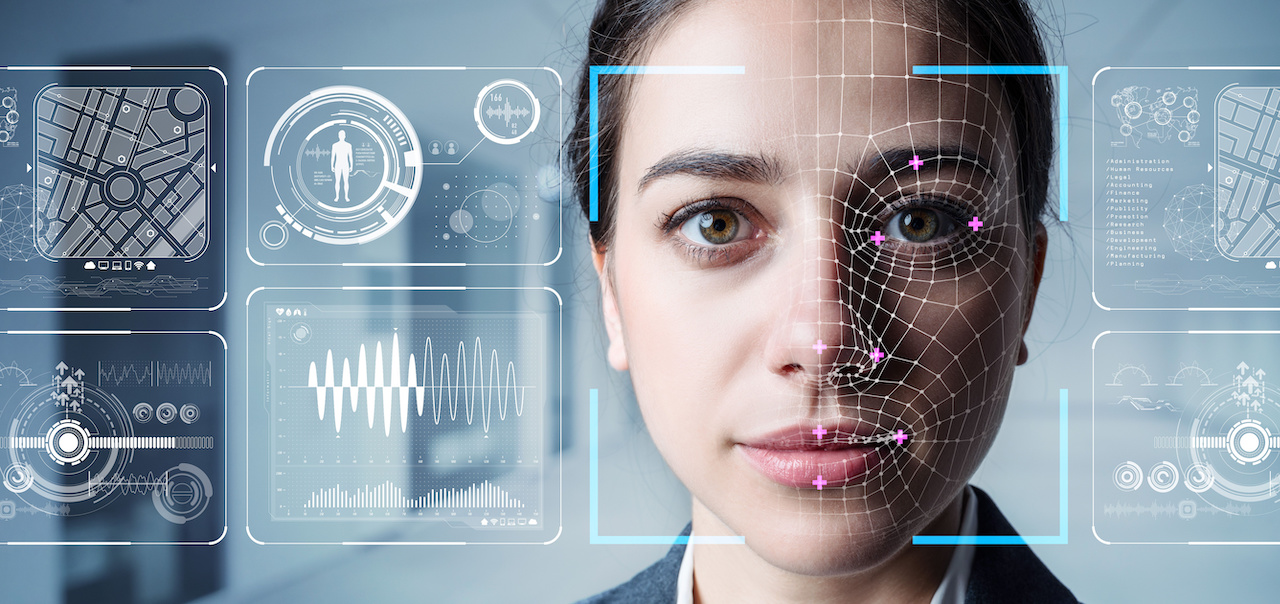
Biometric technology 

Image credit: metamorworks / Shutterstock.com

Biometric technology has been around since 1969 when the Federal Bureau of Investigation (FBI) pushed for the use of automated fingerprint identification. The first fingerprint scanners were introduced in 1975, and in the 1990s and 2000s, biometric security authentication is commonplace in companies and institutions. 

In 2001, United States legislation mandated the use of biometrics at airports for entry and exit following the 9/11 attacks. Since then, the use of biometrics, particularly hand and fingerprint scanning, have been widely used in airports worldwide. 

The pandemic accelerated the development of non-contact biometric authentication to facilitate a more hygienic and seamless experience for passengers. The International Air Transport Association’s (IATA) 2021 global passenger survey showed that 73% of passengers were willing to share their biometric data to improve airport processes (up from 46% in 2019).

According to the Société Internationale de Télécommunications Aéronautiques (SITA) 2021 Air Transport IT Insights, nearly a quarter of airports worldwide had begun to invest in biometric solutions and airline investment in biometric boarding is expected to rise 60% by 2024. 

Two notable airlines that use contactless biometrics for its passenger processing are Emirates and British Airways.

Emirates’ biometric path at Dubai International Airport (DXB) launched in October 2020 and is open to Emirates passengers traveling from and through DXB airport. 

Using the latest biometric technology, a mix of facial and iris recognition, Emirates passengers can now check in for their flight, complete immigration formalities, enter the airline lounge, and board flights, simply by strolling through the airport. Biometric data can be collected without the need for passengers to even stop. 

In November 2022, British Airways launched a “smart technology trial”, where a group of passengers were invited to scan their faces, passports and boarding passes on their smartphone or tablet ahead of travel. The information was kept safe and secure. 

When the trial passengers arrived at London Heathrow’s Terminal 5,  Smart Bio-Pod cameras verified their identity in under three seconds, allowing them to keep their passport safely in their pocket until they reached their destination. 

Mobile passport control app 

Image credit: Jacob Lund / Shutterstock.com

Some of the latest airport security innovations can literally be kept in the palm of a hand.

Launched in March 2023, the US Customs and Border Protection’s (CBP) Mobile Passport Control (MPC) program is now a mobile phone app that allows eligible passengers flying to the US from Canada to avoid the customs queue. 

According to the CBP, travelers who successfully use the MPC app will no longer have to complete a paper form or use an automated passport control (APC) kiosk. As a result, travelers may experience shorter wait times, less congestion and more efficient processing.

The app can be downloaded for free from the Apple App and Google Play stores. This technology is made possible because of secure information sharing. Travelers will be prompted to create a profile with their passport information, including the traveler’s name, gender, date of birth, and country of citizenship.

 It is currently available for eligible travelers to use upon arrival at MPC approved sites.

Next generation explosives trace detection

Image credit: Suppawit Rmmabut / Shutterstock.com

The MIT Lincoln Laboratory is a US-government funded research and development center chartered to apply advanced technology towards national security. 

In February 2023, the lab announced that its researchers are working to develop an explosive detection system that would work in tandem with a canine fleet to improve current airport security systems. 

Researchers are developing a machine that can mimic canine abilities to detect concealed explosives, a ‘superpower’ of four-legged friends that airports have relied on for decades.

The team’s research builds on the laboratory’s ongoing work to create and use a mass spectrometer to help train bomb-sniffing dogs, a project that is supported by the Department of Homeland Security’s (DHS) Science and Technology Directorate (S&T) Detection Canine Program. 

Researchers are using the spectrometer to measure explosive vapors in order to understand the requirements for creating an operational explosive detection system. This system would then work in tandem with the canine fleet to improve current airport security systems.

The laboratory’s end goal is to build a non-contact explosives detection instrument through vapor detection. 

This technology will certainly be useful, especially when passengers check in baggage that contains explosives. 

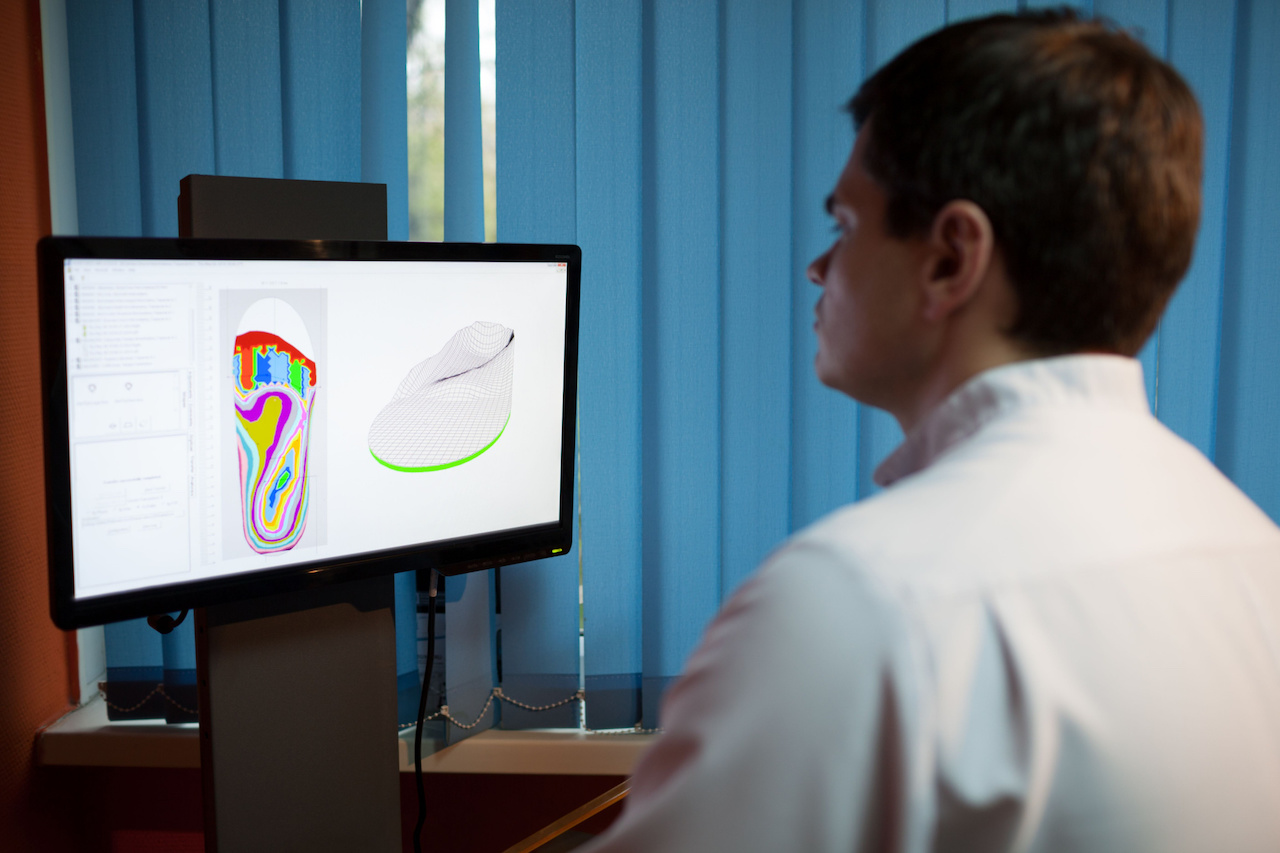
Shoe scanner technology

Image credit: d13 / Shutterstock.com

While the technology is still in development, it is one that many will be relieved to see implemented in real life.

In 2010, a CNN survey showed passengers dreaded removing shoes at airport security the most. Although the survey is more than a decade old, passengers in 2022 still find pat-downs and shoe removal at airport security to be a humiliating experience.  

The US Department of Energy’s Pacific Northwest National Laboratory (PNNL) has licensed technology for a shoe scanner developed in 2021 to Liberty Defense Holdings, a concealed weapons detection company based in Georgia.

According to the developers, the scanner allows shoes to be screened without the need for passengers to remove them. The millimeter-wave scanners use advanced imaging to detect concealed objects in footwear. Passengers will be asked to step on a low-profile imaging platform for two seconds while electromagnetic waves generate an image of their shoes.

The PNNL said that the shoe scanner could improve wait times at security kiosks by as much as 15% to 20% by eliminating the time it takes for travelers to remove their shoes.

Immersive retail experiences

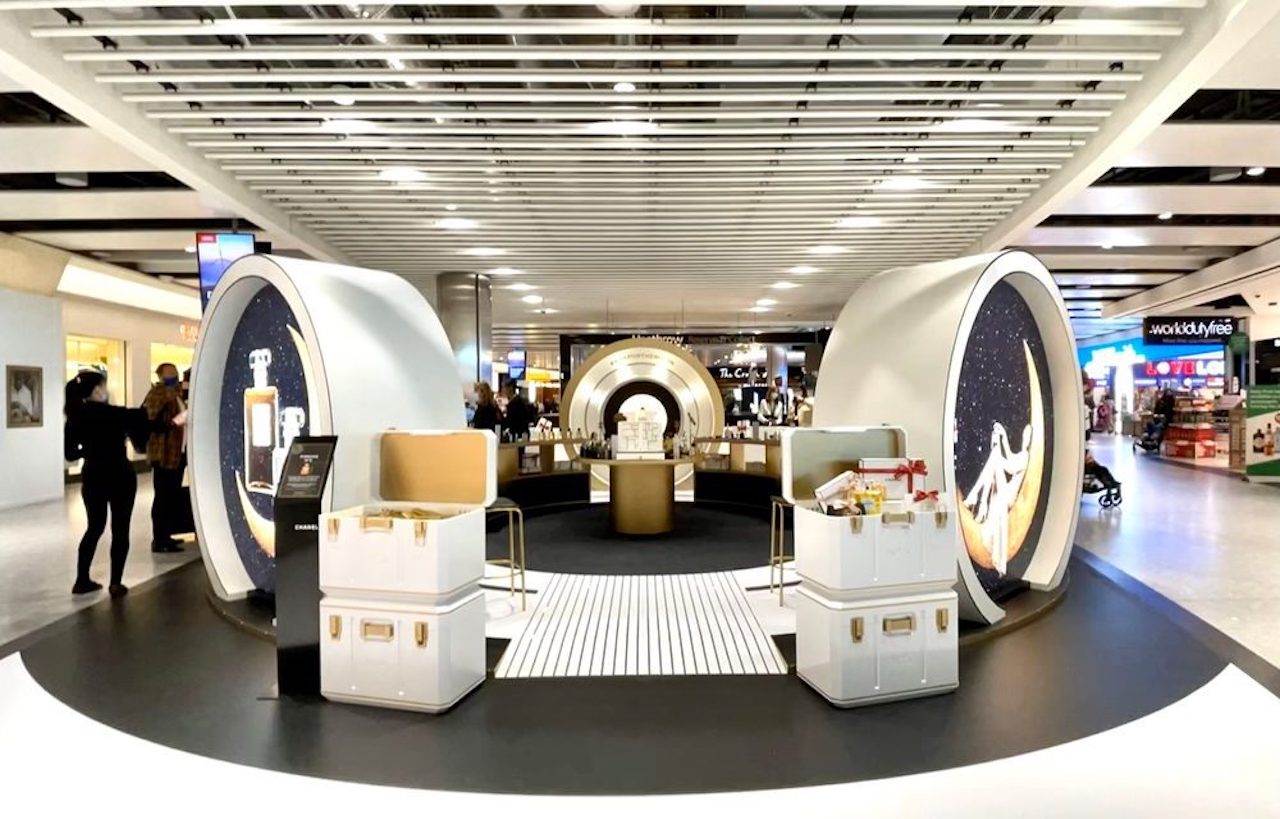
Image credit: globalcosmeticsnews.com

Passengers can expect more immersive retail experiences at airports with the use of Virtual and Augmented Reality technology. 

2017 study carried out by the University of Southern Mississippi showed that emotions are involved when people shop at airports. Leisure travelers often feel happy and buy souvenirs to share with friends back home and also to give themselves a reminder of their holiday. Boredom at the airport can also bring passengers to shop in order to kill time.

So airport retailers are taking advantage of advanced technology to further improve conversion and sales. In November 2021, ahead of the holiday season, LHR airport partnered with Chanel, Dufry and JCDecaux to launch a No 5 Spaceship activation in the departure lounge at Terminal 5.

The immersive experience included a “Find No 5” game for customers, which sells the brand’s fragrance line as well as a curated offering of skincare and cosmetics. 

An augmented reality (AR) digital screen also allowed shoppers to virtually try on products.

According to Future Travel Experience, old-fashioned “bricks and mortar” shopping is in decline and such experiential retail tactics could be the answer to increasing conversion and yield at the airport. 

source : https://www.aerotime.aero/articles/five-airport-innovations-that-will-make-travel-easier-in-2023