
Gatwick taking part in weekend-long airport ‘hackathon’
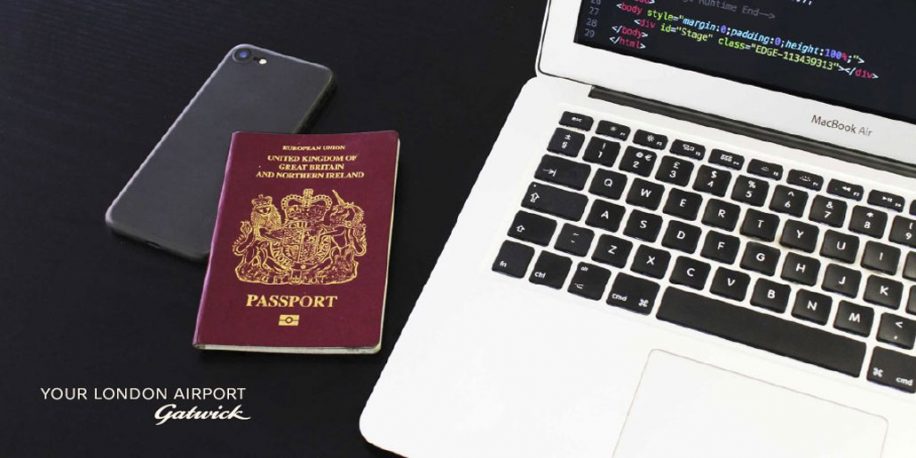
Gatwick airport is taking part in a 48-hour ‘hackathon’ this weekend,
aimed at encouraging programmers and computer coders to develop ideas for new travel apps.
Organisers Amsterdam Schiphol will be joined by Gatwick, Stockholm, Frankfurt, Geneva, Munich and Copenhagen airports at the event in Berlin.
The airports will share flight and waiting time data with developers, who will be challenged to develop ideas for new apps that could improve passengers’ travel experiences.
The {Re}coding event will be divided into four main themes covering different aspects of the airport travel experience – Life before the airport, Life at the airport, Life in between airports and Life after the airport.
Developers will be split into teams, with ideas being presented before a judging panel and prizes being awarded to the winners of each theme.
Commenting on the initiative Schiphol’s innovation manager Christiaan Hen said:
“{Re}coding aviation represents the first time in history that so many international airports have joined forces by opening up access to data for the development of innovative applications.
“The challenges faced by every airport have been made central to the themes, and this ensures that the solutions developed by the participants will be widely applicable.”
Last month Gatwick announced it had installed 2,000 indoor navigation beacons, with the aim of enabling third parties, airlines and the airport itself to develop augmented reality wayfinding tools within their apps.
source : https://tinyurl.com/ydh54jx5
Canopy Park at Jewel Changi Airport
The top level of Jewel Changi Airport will feature the Canopy Park.
At approximately 14,000sqm (equivalent to the size of 11 Olympic-size swimming pools), designed to be a world-class, lifestyle leisure attraction, Canopy Park promises a gamut of experiences with unique offerings such as play attractions, gardens, walking trails, and dining outlet.
ACI Europe Best Airport Award winners for 2017 announced
The 13th Annual ACI EUROPE Best Airport Awards were announced last night during the Gala Dinner of the 27th ACI EUROPE General Assembly, Congress & Exhibition, hosted by Groupe ADP.
Credit: ACI Europe
This years’ judging panel for the ACI Europe Best Airport Awards was drawn from a well-respected group of independent experts including the European Commission, European Civil Aviation Conference (ECAC), FlightGlobal and Air & Cosmos. ACI Europe counts over 500 airports in 45 European countries among its membership and this year’s competition saw a high level of entries in the competition in each category.
The Awards cover 4 categories of airport and aims to recognise achievement in core activities such as customer service, facilities, retail, security, community relations and environmental awareness and operations.
IN THE ‘UNDER 5 MILLION PASSENGERS’ CATEGORY
The first award, recognising airports in the ‘under 5 million passenger’ category, went to Cork Airport. The judges valued the improvement of the airport facilities and use of innovative technologies (e.g. advanced parking solution, queue measurement system) along with its investments in safety and staff recognition schemes. The airport’s success in attracting new routes, most notably the achievement of securing the first low cost Norwegian transatlantic service and its innovative approach to airlines customer service through the “Coalition of the Willing” initiative, also impressed the jury.
Olbia Costa Smeralda Airport was highly commended in this category.
IN THE ‘5-10 MILLION PASSENGERS’ CATEGORY
The winner of the ‘5-10 million passenger’ category was Naples International Airport. The judges singled it out for the airport’s excellent combination of smart airport management working with tourism development, recognising the airport as a great economic driver of regional tourism. The judges also appreciated the airport’s significant improvements to the passenger experience.
The highly commended airport in this category was Bristol Airport.
‘10-25 MILLION PASSENGERS’ CATEGORY
This year’s award in the ‘10-25 million passenger’ category went to Alicante-Elche Airport. The airport has recorded a remarkable performance: its customer service to airlines with incentive schemes and marketing offers made it possible for Alicante-Elche Airport to open 38 new routes and add 9 new airlines. The judges also highlighted the airport’s improvements to its facilities, in particular its efforts to cater to different categories of passengers, such as children and persons with reduced mobility (PRM), and to improve passenger flows at security control areas. In addition, the judges cited the airport’s focus on boosting public transport connections and its improvements in operations, namely in runway safety and advanced tower projects to improve punctuality.
The highly commended airport in this category was Hamburg Airport.
‘OVER 25 MILLION PASSENGERS’ CATEGORY
In the category for airports with ‘over 25 million passengers’, this year’s ACI Europe Best Airport Award went to Adolfo Suárez Madrid-Barajas Airport. The airport won praise from the judges for its outstanding achievements in all domains with particular reference to its excellent strategy to boost the air connectivity between Europe and South America and to the continuous introduction of advanced technical innovations. The judges noted, in particular, the airport’s achievements in safety management as well as improvements in the passenger experience, including monitor queuing times at security checks, live music, art exhibitions and its Personal Shopper Service. Its diverse initiatives on the environment and on community relations that the airport has put in motion also impressed the judges.
ECO-INNOVATION AWARD
The Eco-Innovation Award is adjudicated by the independent Advisory Board of the carbon management programme, Airport Carbon Accreditation, which was launched by ACI Europe in 2009. This Award specifically recognises airports’ outstanding environmental performance, in particular, innovative approaches to environmental management.
This year’s Eco-Innovation Award went to Munich Airport (currently Airport Carbon Accredited at Level 3 Optimisation) for its comprehensive and systematic approach to environmental management and sustainability across all its operations and in relation to all its impacts. The jury was impressed by the airport management involvement strategy, including the correlation between management remuneration and sustainability KPIs. The judges also underlined the airport’s cooperation with stakeholders, for instance within the framework of the Aviation Initiative for Renewable Energy Germany (aireg), which promotes the research, production and use of sustainable alternative fuels for aviation. Another area of particular innovation that was highly regarded by the jury was the airport’s biodiversity engagement through measures to protect flora and fauna at and around the airport. The airport is also implementing extensive noise and emissions monitoring, including bio-monitoring of air quality.
Budapest Airport was highly commended for this Award.
ACCESSIBLE AIRPORT AWARD
As part of a Memorandum of Understanding signed by ACI Europe and the European Disability Forum (EDF) last year, the Accessible Airport Award was also presented. The Accessible Airport Award aims to honour the best airport in Europe in terms of its level of accessibility as well as the range and the quality of the assistance services that it offers. It is also intended to encourage other airports to continue their work on removing the barriers that people with disabilities and persons with reduced mobility (PRM) can still face when travelling by air.
This year’s Accessible Airport Award, presented by Mr. Albert Prévos, member of the EDF Executive Committee and President of the French Council of Disabled People for European Affairs (CFHE), went to Larnaka International Airport.
The judges considered that the airport stands out for its remarkable accessible friendly initiatives, namely in terms of boarding equipment (e.g. the “Eagle lift” facilitates the boarding of wheelchairs) and in terms of the level of accessibility with regard to check-in machines and E-Gates.
The judges noted that Larnaka International Airport offers interesting additional features, such as sockets for electric wheelchairs, a free parking for 120 minutes and cooperation with Senior Travel Groups that have expertise on PRM accessibility, as well as much improved accessibility features on the airport website.
The judging panel for the Accessible Airport Award was comprised of the European Disability Forum’s Executive Committee members as well as Mr. Herald Ruijters, Director for Investment, Innovative & Sustainable Transport at the Directorate General for Transport (DG MOVE) European Commission.
Last year’s winner, Dublin Airport was highly commended for the continuing high quality of its accessibility services.
HR EXCELLENCE AWARD
This year, a special ACI Europe HR Excellence Award was created to recognise individuals who have demonstrated excellent leadership and human resources management among the ACI Europe Regular Members. The objective of this new annual award is to give exposure to excellence that will help the airport community to better assess and implement the new procedures and skills needed to develop the industry’s workforce, looking at the various challenges facing HR Directors and airport leaders, such as mobility, succession planning, training, well-being and digitalisation.
The HR Excellence Award went to Paula Stannett, HR Director at Heathrow Airport, for her demonstrated excellence in human resources and her leadership acumen. Paula was also honoured for investing heavily in increasing staff engagement to positively transform the workplace culture. In this regard, the judge emphasised the focus of Heathrow’s ‘’MOJO” initiative on catering to employees’ needs and helping them fulfil their potential while inspiring their peers to champion change and efficient service delivery.
Vikki Gledhill, Reward Business Partner at Manchester Airport Group (MAG), was highly commended for this Award.
WORLD BUSINESS PARTNER RECOGNITION AWARD
The World Business Partner Recognition Award went to Catherine Mayer, Vice President SITA, in recognition of her long-lasting membership service marked by passionate dedication and exceptional commitment to increasing synergies across the airport industry and promoting an innovative, digitalised era for air travellers. Her vast expertise together with her charismatic participation in ACI activities have successfully contributed to leveraging the profile and impact of airports.
The awards were presented to the winners by Filip Cornelis, Acting Director, Air Transport, DG MOVE, European Commission, Salvatore Sciacchitano, Executive Secretary European Civil Aviation Conference (ECAC), Olivier Jankovec, Director General ACI EUROPE, Angela Gittens, Director General ACI World, Augustin de Romanet, outgoing President ACI EUROPE and Chairman & CEO Aéroports de Paris S.A.-Groupe ADP, Mr. Albert Prévos, member of the EDF Executive Committee and President of the French Council of Disabled People for European Affairs (CFHE) and Olivier Clark, Senior Reporter FlightGlobal.
The 28th ACI Europe General Assembly, Congress & Exhibition will be hosted by Brussels Airport and will take place in Brussels on 18-20 June 2018.
source : https://tinyurl.com/ycb3qnh3
Dublin Airport focused on technological innovation and stakeholder collaboration to enhance passenger experience
Dublin Airport is constantly seeking new ways of working, and embracing and implementing new technology to improve customers’ journey and experience through the airport.
In conversation with Future Travel Experience, Vincent Harrison, Managing Director, Dublin Airport, emphasises the importance of stakeholder collaboration. Indeed, the airport is a supporting partner of the co-located Future Travel Experience Europe and Future Travel Experience Ancillary events, taking place in Dublin, 26-27 June. “I think the fact that they are airports and airlines events, with prominent airline participation from Ryanair and others, will make the debate very useful, particularly in a collaborative sense,” says Harrison. “There’s a lot of players in the market trying to position what they’re doing, or their own niche, and I don’t get the sense that there’s enough joined up thinking, whether that’s between airports and airlines, or between the various providers, so I think that will be an interesting topic for discussion.”
From a customer experience perspective, Dublin Airport is working to catch more in-depth data and utilise that to build a better service. For example, over 30 ‘Happy or Not’ machines have been installed along key areas of the passenger journey in Terminals 1 and 2.
Digital innovation is also at the heart of this strategy. Dublin was among the first airports in Europe to offer free, unlimited WiFi, and this is accessed via a simple one-click process.
“We also have an award-winning mobile app with real-time information on queue times at security and US CBP and ‘my flight’ push notifications that keep passengers fully informed of any last minute changes to their flight,” says Harrison.
Meanwhile, as part of efforts to enhance the growing transfer business, Dublin has worked closely with Google to provide a free virtual digital assistant guide – DUB HUB – for connecting travellers. This provides passengers with a digital map showing their current location, the boarding gate number of their connecting flight, directions to the gate and the approximate time it will take to walk there. “DUB HUB uses real time geo-location tools to give users a simple graphic interface with clear walking directions to the gate,” Harrison explains. Indeed, this has been extended to offer targeted food & beverage and retail offers to transfer passengers.
More and more of the airport’s frontline staff are using mobile technology to help with easy and quick access to information to help passengers on their journey through the airport. “We have streamlined products and services on our website so passengers can select accessory travel services such as car parking, fast track through security, Platinum Services and executive lounges,” Harrison notes. “We have developed online shopping services so passengers can pre-order before they fly and collect when they are departing. Also, passengers can shop and leave items for collection on the return journey.”
Smoothing the airport journey and speeding up processing times
The drive for innovation is truly creating a seamless airport experience. Dublin Airport is one of only two in Europe, along with Shannon, to offer US Preclearance, which allows passengers to be treated as domestic travellers upon arrival in the US.
“US Preclearance has seen the introduction of 16 digital pods that capture the passengers’ image, and fingerprints [an ESTA requirement] as part of the pre-preparation stage,” Harrison comments. “We have collaborated closely with US CBP to facilitate new Automated Passport Control kiosks to smooth the journey and speed up processing times in that area. We have also worked closely with the Irish Naturalisation Immigration Services, INIS, which operates immigration at the airport, to provide automated passport reading machines in passport control.”
Last year, Dublin Airport opened a first-of-its-kind passenger lounge after US Preclearance in Terminal 2. Business class passengers flying with Aer Lingus, Delta Air Lines, United Airlines and American Airlines have complimentary access to the lounge, which is called 51st&Green, and other travellers can pre-pay online for entry. It is another differentiator for Dublin Airport.
Also last year, €2 million was invested in 62 new self-service kiosks to streamline the check-in and bag drop process in both Terminal 1 and Terminal 2.
FTE Europe and FTE Ancillary attendees will be able to experience these innovations for themselves on a dedicated airport tour.
“If you’re interested in emerging technologies, FTE Europe and FTE Ancillary are the ideal platforms. I’m certainly looking forward to what the other players will be highlighting as new technologies or new ways of looking at the business,” Harrison concludes.