Air passengers express high satisfaction 31 May 2019 Travel

As the number of people travelling by air increases exponentially, it is gratifying to note that, according to a new study from J.D. Power, passenger satisfaction levels are at record highs – at least in North America.

Among the key findings of J.D. Power’s 2019 North America Airline Satisfaction Study are that overall satisfaction with airlines on the part of their passengers has been increasing for eight consecutive years, rising by 11 points over the last 12 months and reaching a total of 773 points. Traditional carriers are seeing the highest levels of satisfaction, with this segment enjoying a 22-point increase in overall satisfaction in 2019 compared with 2018, while the low-cost segment, while it has higher overall satisfaction than the traditional segment, declined six points between last year and this year.

The most satisfying elements of the airline travel experience, according to study respondents, are reservation and check-in, a trend driven by investments in digital technology, self-service kiosks and the like, but in-flight service seems to be stubbornly unimpressive for passengers, with these elements of the experience – such as entertainment, food and so on – being ranked lowest by passengers.

“Airlines continue to deliver on the operational side of air travel,” said J.D. Power’s Travel Intelligence Lead Michael Taylor. “New technology investments have dramatically improved the reservation and check-in process. Fleets are newer and travellers generally feel that they are getting great value for their money. These improvements have been most profound in the traditional carrier segment, where customer satisfaction has climbed considerably. While low-cost carriers have historically had the highest levels of customer satisfaction in our study, due to a strong sense of value for money among customers, that line is starting to blur as traditional carriers improve their services and operations. The one area where both traditional and low-cost carriers can still improve, however, is in in-flight services.”

source : https://www.itij.com/story/115593/air-passengers-express-high-satisfaction

Heathrow Airport Could Close If Extinction Rebellion Drone Protests Go Ahead

Heathrow Airport could be forced to close if Extinction Rebellion activists follow through with their threats to fly drones near the airport.

British-Airways-787-Heathrow-Airport
Heathrow Airport, British Airways Boeing 787-8 Dreamliner on taxiway. Photo: Heathrow Airport

Climate change activists are calling for demonstrations on June 18th and then again for 10 days starting July 1st against the UK’s busiest airport.

The protesters plan is to bring Heathrow Airport to a standstill to raise awareness of global warming and to try and stop Heathrow’s plans to build a third runway.

The Extinction Rebellion is telling anyone booked to fly out of or into Heathrow Airport on these days to change their travel plans, or face the possibility of delays and cancellations.

How do the Extinction Rebellion activists plan to shut down Heathrow Airport?

A document circulated by activists on social media and printed in the Daily Express reads:

“Rebels will use a variety of nonviolent tactics to close down the airport again including, but not limited to, the flying of drones and blocking of public roads leading into the airport.”

This latest statement of intent comes after the group tried to bring central London traffic to a halt over the Easter holidays.

Extinction Rebellion protester in central London. Photo: Extinction Rebellion

Outlining its latest plans to raise climate change awareness, the  Extinction Rebellion said: “On June 18, We plan to carry out nonviolent direct action to ensure Heathrow Authorities close the airport for the day, to create a ‘pause’ in recognition of the genocidal impact of high carbon activities, such as flying, upon the natural world.

“If the Government does not cancel all Heathrow expansion, Extinction Rebellion will act to shut the airport down for up to 10 days from July 1.”

Extinction Rebellion acknowledged that their protest will hit thousands of families’ summer holidays telling the Evening Standard: “While we respect the right to peaceful protest and agree with the need to act on climate change, we don’t agree that passengers should have their well-earned holiday plans with family and friends disrupted.

“Passengers should contact their airline for up to date information on their journeys.”

How do Extinction Rebellion activists plan to use drones?

The Extinction Rebellion activists say that they plan to first visit the Department of Transport and express their desire for an immediate end to the building of a third Heathrow runway.

If their demands are not met, a public picnic and drone session will be held on the fields around Heathrow Airport.

drone-in-flight
Drone.Photo: Pixabay

When again speaking to the Evening Standard the activists said: Drone flights would begin in the early hours of the morning and those devices would not be used while planes are in the air.

“Authorities would have full knowledge of the intentions so they will have to close the airport as a duty of care to passengers,”

What do the police have to say about this?

These latest threats to use drones come on the back of drone sightings that forced the closure of Gatwick Airport back in December of 2018.

When asked about the latest call to action by Extinction Rebellion, a Metropolitan Police spokeswoman said, according to the Daily Mirror:

“We will be developing strong plans in response to this and will take firm action against any protester seeking to cause disruption at this location by committing criminal offences such as obstruction of the highway.

“The airport is part of our national infrastructure and we will not allow illegal activities of some protesters to cause disruption and misery to thousands of travellers. We would urge anybody intending to join this event with a view to committing criminal activity, whether peaceful or not, to strongly reconsider.”

Police take away climate change protester. Photo:Extinction Rebellion

Meanwhile, a Heathrow spokeswoman said in a report carried by Reuters: “While we respect the right to peaceful protest and agree with the need to act on climate change, we don’t agree that passengers should have their well-earned holiday plans with family and friends disrupted.

“Passengers should contact their airline for up to date information on their journeys.” 

Heathrow Airport expansion to go ahead

This latest action by Extinction Rebellion comes on the back of Heathrow Airport’s expansion getting the go-ahead following a unanimous judges decision to throw out a number of lawsuits trying to stop the construction of a third runway.

view-heathrow-airport
An overhead view of Heathrow Airport. Photo:Heathrow Airport

While talking a good game, Extinction Rebellion has failed to attract the number of willing participants required to cause chaos, as was evident in the London traffic protest.

Do you think they will be more successful this time or was just getting their message out in the press all they were really looking to achieve?

Simple Flying contacted Heathrow Airport for comment and they wrote back saying: “This is reckless action that if carried out could endanger the lives of the travelling public and our colleagues. We agree with the need to act on climate change, but that requires us to work together constructively – not commit serious criminal offences just as hardworking people prepare to spend a well-earned holiday with their family and friends.”

source : https://simpleflying.com/heathrow-expansion-drone-protest/

Lyft And Uber Borrow From Taxi Model To Reduce Congestion At Portland Airport

Lyft And Uber Borrow From Taxi Model To Reduce Congestion At Portland Airport

Hailing an Uber Technologies UBER 1.59% or LYFT Inc LYFT 5.11% at the Portland International Airport can be a huge headache, with ride-hailing services making 400 pickups an hour during peak travel times. Travelers have to navigate a crowded and chaotic scene and can wait up to 30 minutes for a driver, complicating ride-sharing’s instant gratification business model.

As part of broader congestion management plan, the Portland airport worked with Uber and Lyft to come up with a solution using a pin code. The system, which debuted exclusively in Portland two weeks ago, combines features of taxis – queuing up at the curb – with the pre-arranged app-based technology pioneered by the ride-sharing giants.

“It’s been very frustrating for travelers trying to link up with the right drivers,” said Kama Simonds, a spokesperson for the Port of Portland, the agency that manages the airport. “Our goal is to speed up the connecting time between travelers and their rides.”

The model works like this – travelers use an app to request a pin number – as Simonds notes, they can request the number as soon as their plane has landed, “while sitting in row 22.”

Once they exit the airport, they go to a designated pickup island in the arrivals area, where the Port of Portland recently assigned specific locations for each ridesharing company.

Here’s the kicker – instead of tracking down your specific driver, you stand in a line and take the first available car. Share the six-digit code with the driver, and you’re off.

“The word seamless is a key word here,” said Sarah Biggart, operations lead for Uber’s Pin project in Seattle. “We think can deliver truly a zero waste experience for riders.”

Lyft line, Portland International Airport (Image: Port of Portland)

Uber has used the technology to manage congestion at 50 or so big events around the world. But the Portland airport is the first in the world where the pin feature has been deployed, said Biggert, who is part of Uber’s airport team in Seattle.

That group “is constantly innovating and thinking about airport experience,” she said. “This is one part of that story.”

Lyft conducted a pilot in San Diego before launching the system in Portland.

“Lyft is committed to improving people’s lives with the best possible transportation. We are grateful for the partnership with Portland International Airport and their approach to innovation that allowed us to make this happen,” said Bakari Brock, senior director of city partnerships at Lyft, in an email.

Two weeks into the pilot, the airport is already seeing an improvement in traffic, Simonds said. “We’re definitely not able to do away with all the lines,” she said. “But without question it has absolutely helped.”

The system, she observed, “acts like a taxi in many ways.”

Uber and Lyft declined to share data connected to the pin code feature.

Biggart rejected any comparison with taxis. “We think it’s quite different from how a taxi queue would work,” she said. “The Uber magic is push a button and get a ride. Because it is digital and pre-arranged, it is quite different.”

Uber has yet to solidify plans to bring the new curbside service to other airports, Biggart said. Lyft plans to rollout the new curbside service to other airports but declined to reveal further details.

Image sourced from Google

source : https://www.benzinga.com/news/19/05/13844692/lyft-and-uber-borrow-from-taxi-model-to-reduce-congestion-at-portland-airport

Amsterdam Airport Schiphol on the opportunities and challenges of becoming “the world’s leading digital airport”

In 2015, Amsterdam Airport Schiphol set out on a mission to be the world’s leading digital airport by 2018. Four years later, FTE caught up with Rosanne van der Stam, Value Stream Owner Customer Experience, Royal Schiphol Group, who will be speaking in the FTE EMEA Digital & Innovation Conference (19-20 June, Istanbul). Here, she outlines how the airport is embracing digitalisation to elevate the passenger experience in today’s digital era, while building its organisational capabilities.

Future Travel Experience (FTE): What was Schiphol’s strategy for achieving its ambition to be “the world’s leading digital airport” by 2018?

Rosanne van der Stam, Value Stream Owner Customer Experience, Royal Schiphol Group: Aiming to become the world’s leading digital airport is very motivational: it gets you out of bed in the morning. At least, it gets me excited, it is something I want to be part of. But it has never been a goal in itself. First of all, we want to be Europe’s preferred airport, meaning we want excellent visit value for both passengers and airlines; something that can no longer be done without digital products and services.

Also, what has been really important for Schiphol, is that we have always understood that becoming the world’s leading digital airport is not only about investing in new technologies and delivering digital products and services. It is maybe even more about altering the organisation and changing the way of working. Yes, we invest in predictive modelling, biometrics, blockchain, analytics, and API management. But it is also about adopting a radical client focus, faster execution, continuous learning, better collaboration, and attracting the right talent. Investing in building organisational capabilities has been at the core of our strategy, and I believe this has made a big difference. Digital is already embedded in the Royal Schiphol Group organisation. But I also think that digitalisation is a mission that should never be considered as fully achieved. Becoming a world champion isn’t the goal, it is about staying on top of your game, year after year after year.

FTE: Can you share some of the airport’s main achievements and projects since launching its digital transformation strategy? And in what ways have those benefitted the passenger experience and operations?

Van der Stam: We are able to reach an enormous amount of passengers through our digital channels, meaning we are in contact with passengers 24/7 from home to gate. We have 70,000 sensors measuring how busy the airport is. We then communicate for instance the actual waiting times at security, related to your flight, so you know what to expect, and whether you should hurry or not. We also have 2,000 beacons based on which we can provide location-based services.

On the other hand, this contact with passengers also enables us to actively guide them through the airport. Schiphol is accommodating 70 million passengers this year. With physical expansion possibilities being limited, we need to find ways to make better use of the existing capacity. Based on historical data we can make predictions on arrival patterns (when passengers arrive at the airport) and consequently crowdedness. In this regard, we developed a pilot “security time slots” where we asked people to make a reservation for a specific time slot to go through security. It was a successful pilot and we are currently investigating whether we can bring this to a next level or not.

Every airport has peaks during the day with regards to the number of passengers going through the terminal. Capacity at different touchpoints, for instance security, is planned based on the forecast of passenger flows. This means employees in our daily operations decide on the number of lanes that we should open up at specific moments of the day. You understand that if the forecast is too high, we have idle lanes, and if it is too low, we create queues. This year, based on a new digital product, we managed to improve this forecast. This means we enable our employees to make better decisions for our operations.

We are only one of the players in a passenger’s journey. And we realise that Schiphol is an important source of data. As part of our digital strategy we aspired to share this data with third parties, like airlines. We developed a data platform on which a range of data is collected and from which they can subsequently be shared via APIs (Application Programming Interfaces). These APIs enable multiple parties to use the same data without errors in interpretation. This will not only safeguard the integrality and quality of the data, it will naturally also be done in a controlled way, meaning in full compliance with privacy laws and agreements with partners, which is important since we are an authority that is trusted by passengers – something that we need to guard at all times.

FTE: What were some of the main challenges Schiphol faced on its digital transformation journey and how did the airport overcome these?

van der Stam: In the beginning, we had too much of an inside-out perspective, meaning that we tried to push technology. We developed digital products with external contractors, a little bit too much in isolation. For many, digital was far-flung and then nobody understands it nor wants to use it. So, it is very important to engage people from the business from the beginning. We invested in getting people acquainted with technology and all the possibilities it offers. To create a more digital mindset, making sure that employee capabilities develop and grow along with our ambitions. One way that we do so is by organising an annual digital week, in which employees are introduced to new technology. Our aim here is for employees to embrace new technology quickly, so they know that technology can provide fresh insights and become enthusiastic rather than scared. Some 900 colleagues participated last year in 30 workshops on subjects ranging from virtual reality (VR) to drones and from data science to the consequences of digitisation for leadership.

FTE: What are some of the main technological advancements that are currently on top of your agenda for 2019 and ahead?

van der Stam: These are always difficult questions to answer. I can easily say augmented reality, or voice technology, or deep learning. All these technologies are awesome, but as long as there is no real problem that we can solve or an opportunity we can seize using them, we won’t. Radical client focus. We need to look at what they need. Of course, this does not mean we do not experiment with new technologies. We want to understand the possibilities a technology offers, so that if it becomes relevant, we are ready to start using it. And if the answer is voice, then voice we will use.

Hear more from Royal Schiphol Group’s Rosanne van der Stam on lessons learned from the airport’s digitalisation journey in the FTE EMEA Digital & Innovation conference, which will take place in Istanbul, 19-20 June. Other confirmed speakers include Turkish Airlines, Swedavia, Amazon Web Services, Evelop, Vantage Airport Group, Viva Air Labs, MAG, Vueling, Lufthansa Group, Pegasus Airlines, and more. View the conference agenda here >>

source : https://www.futuretravelexperience.com/2019/05/amsterdam-airport-schiphol-becoming-worlds-leading-digital-airport/

Vancouver YVR airport hires a garbage-sorting robot called Oscar

By Lisa Felepchuk

Vancouver International airport (YVR) has added a brand new member to its team: a garbage-sorting robot named Oscar. The new hire has been tasked with helping busy travellers properly place their garbage and/or recycling into the right bin.

The truth is, ensure that your waste winds up in the right place can be tricky. You’ve probably been there: you take a final slip of your coffee and are now holding an empty paper cup with a plastic lid and a wooden stir stick and there are three bins to choose from. If you’re lucky, there are some pictures that try and help you out, but they’re confusing at best and nonexistent at worst. Umm… is there the option to phone a friend? Oscar  hopes to eliminate that stressful scene. The system uses artificial intelligence and computer vision. When you approach Oscar, there are three bins with one 32” screen hanging in the middle. When you hold up your trash in front of Oscar’s screen, it uses machine learnings to accurately detect the type of garbage/recycling that you’re holding and then directs you to place it into the appropriate bin. “We’re thrilled to work with Intuitive AI and welcome Oscar to YVR. In a short amount of time, we’ve seen the positive impact Oscar has had on our waste diversion program at YVR. Aiding our passengers with waste sorting through artificial intelligence is an innovative way of improving the airport’s environmental footprint through technology,” said Shaye Folk-Blagbrough, Senior Environmental Specialist at the Vancouver Airport Authority. While Oscar isn’t as cute as say Pixar’s computer animated Wall-E (and hopefully not as lonely, either), the two robots have similar intentions: collect and sort garbage to better the planet.

Currently there are three Oscar garbage-sorting bins that are part of this pilot project at YVR. An airport is an interesting place for this kind of test as it greatly impacts anyone in transit, including those who may not read English or understand how Canadian garbage systems work. With Oscar, improperly placed waste and recycling can be reduced. “At YVR, we strive to be a leader in environmental management. Understanding that our passengers come from around the world with different waste sorting systems, one of the challenges we face is ensuring waste is correctly sorted at waste bins located throughout the terminal. As such, we’re constantly looking at creative approaches to waste management,” said Folk-Blagbrough. Someone make note, this robot deserves a bonus come December! Have you used Oscar the garbage-sorting robot at YVR? Let us know about your experience in the comments below.

source : https://beta.canada.com/travel/vancouver-yvr-airport-hires-a-garbage-sorting-robot-called-oscar/wcm/73a0b767-ccf5-499c-a987-7ad481d3eabd/amp

Narita airport to use facial recognition in boarding from 2020

NEC Corp said Friday Narita airport will use the company’s artificial intelligence-powered facial recognition technology to ease congestion from 2020, with the number of travelers expected to spike as the Tokyo Olympics approach.

The Japanese electronics manufacturer said if a passenger registers an image of his or her face during check-in, they can advance through baggage drop-off, security check and boarding procedures with the systems at the gate and kiosks automatically verifying their identity.

However, passengers will still need to present a passport at immigration screening.

The introduction of the automated check-in system will be a first in Japan, following implementation at Hartsfield-Jackson Atlanta International Airport in the United States and Singapore’s Changi Airport, according to an NEC official.

The initiative comes as Tokyo is set to host the Summer Olympics and Paralympics in 2020, bringing an increase in the number of foreign visitors to Japan.

“With this system, there will no longer be bothersome procedures before boarding and passengers can enjoy a stress-free time at the airport,” said Narita International Airport Corp Senior Vice President Tatsuya Hamada at a press conference in Tokyo.

Hamada said the system will be used by Japan Airlines and All Nippon Airways, with the flights to be included in the program still under consideration.

NEC Senior Vice President Yutaka Ukegawa said, “We hope to further expand the use of our facial recognition technology to duty-free shopping, to purchase rail passes or in emergency situations, such as when a passenger falls ill at an airport.”

In a demonstration to media at the NEC headquarters in Tokyo on Friday, a woman checked in her luggage using a kiosk without presenting her passport and ticket and also passed through a boarding gate equipped with facial recognition capabilities.

NEC has provided facial recognition technologies in more than 50 countries.

Specific procedures such as immigration screening at John F. Kennedy International Airport in New York and customs inspection at 14 airports in Brazil are aided by the systems. © KYODO

source : https://japantoday.com/category/national/narita-airport-to-use-facial-recognition-in-boarding-from-2020

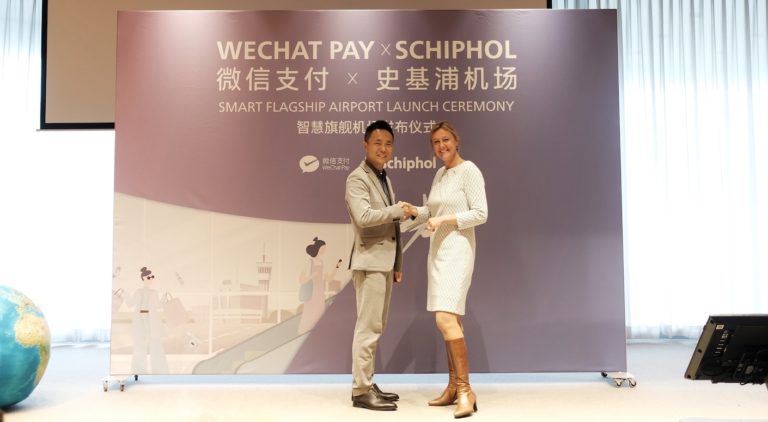
Amsterdam Schiphol becomes WeChat Pay’s first ‘Flagship Smart Airport’ in Europe

by Mark Lanemarklanebusiness@gmail.com

Source: ©The Moodie Davitt Report

NETHERLANDS. Amsterdam Airport Schiphol is partnering with WeChat to provide Chinese passengers with a range of bespoke services from the social media app, responding to demand from an increasingly important passenger group. In doing so, it has become WeChat Pay’s first ‘Flagship Smart Airport’ in Europe.

The number of Chinese passengers at Schiphol has been rising significantly every year, with more than 500,000 departing Chinese passengers in 2018.

Dave Fan, Senior Director of WeChat Pay and Tanja Dik, Director Consumers Products & Services at Amsterdam Airport Schiphol, officially launch the new service.

The flagship consists of three services: WeChat Official Account, WeChat Mini Program and WeChat Pay in Store.

The Amsterdam airport’s Mini Program provides practical airport access information, and also offers online shopping services, covering a wide range of products such as beauty, fashion, watches & jewellery and Dutch souvenirs.

Customers can order and pay for their goods using WeChat Pay, and collect at the airport, saving them the time of finding products and queuing to pay.

Through the app, Chinese tourists will also receive coupons for preferential currency exchange rates and store discounts.

In addition to online shopping options, Chinese passengers can also find specific information about their trip, such as flight details, and benefit from 24/7 customer service.

Amsterdam Airport Schiphol Director of Consumer Products & Services Tanja Dik said: “We are keeping a close eye on digital trends and innovations in order to keep optimising the travel and passenger experience at Schiphol.

“We are extremely proud to be the first airport in Europe to offer our Chinese passengers all the conveniences of WeChat.

“By means of this collaboration, we are offering a travel and shopping experience that is tailored to the needs of Chinese passengers, with convenience as our top priority.’’

Schiphol Airport has set up WeChat Pay experience zones to provide assistance to Chinese travellers.

WeChat Pay Senior Director Dave Fan said that the launch of the WeChat Pay Flagship Smart Airport at Amsterdam Schiphol is “another important milestone for WeChat Pay to establish its ecosystem in Europe”.

He added: “From this hub on the European continent, we will continue to deepen the application of WeChat Pay’s smart solutions in all walks of life across the region.

“We will bring Chinese innovation to the rest of the world, allowing Chinese tourists to travel abroad and enjoy the smart lifestyle they do at home.”

WeChat has almost 1.1 billion active users worldwide, of which 800 million have banks cards linked with WeChat Pay.

source : https://www.moodiedavittreport.com/amsterdam-schiphol-becomes-wechat-pays-first-flagship-smart-airport-in-europe/

Airport Luggage Cart Market 2019

Airport Luggage Cart Market 2019 – Airport Passenger Services (APS), Bombelli, Caddie, NOWARA, Wanzl Metallwarenfabrik GmbH

Global Airport Luggage Cart Market research report comprises innovative tool in order to evaluate overall scenario of Industry along with its opportunities, and supporting strategic and tactical decision-making. Report analyzes changing trends and competitive analysis which becomes essential to monitor performance and make critical decisions for growth and development. It also provides market information in terms of development and its capacities. In addition, the report evaluates key market aspects, comprising capacity utilization rate, revenue, price, capacity, growth rate, gross, production, consumption, supply, export, market share, cost, import, gross margin, demand, and much more.

Get Free Sample Copy of Report Here : https://www.glamresearch.com/report/global-airport-luggage-cart-market-by-product-type–44421/#sample

Report contains revenue numbers, product details, and sales of the major firms. Additionally, it provides breakdown of the revenue for the global Airport Luggage Cart market. It shares a forecast of the estimated time period. Strategies implemented by top players of this market are also involved in the report along with their business overview. Airport Luggage Cart market report moreover contains strengths and restraints of market. It examines the industry in terms of revenue and volume.

source : http://industryreports24.com/279882/airport-luggage-cart-market-2019-airport-passenger-services-aps-bombelli-caddie-nowara-wanzl-metallwarenfabrik-gmbh/

14 body scanners at Changi

SourceURL:https://www.thestar.com.my/news/regional/2019/05/28/14-body-scanners-at-changi/ 14 body scanners at Changi – Asean+ | The Star Online

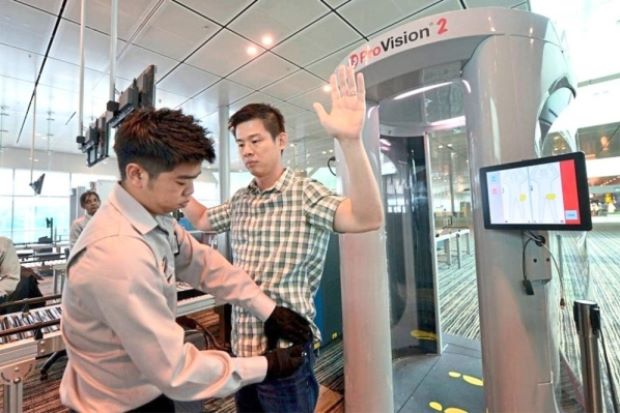
Singapore: Travellers at Changi Airport can expect to walk through body scanners more often with 14 machines now installed across the four terminals, as part of moves to boost security amid increasing threat levels.

Body scanners that are able to detect items concealed under clothing within a few seconds also help to reduce screening time, allowing busy airports like Changi to process travellers quickly and efficiently, experts said.

Terminal 4, which has four scanners, was the first to introduce the machines when it opened in October 2017.

Since then, another 10 body scanners have been progressively installed at the other three terminals, Changi Airport Group told The Straits Times.

At T4 – a test bed for the latest technologies – there are also 10 CT X-ray machines.

These allow hand luggage to be screened without travellers having to remove laptops from their bags.

With body scanners that are increasingly being used by major airports, security personnel – often located in a room away from the screening stations – are alerted when an item is detected on a traveller.

A simple outline of a body is generated to indicate where the object is.

The alert is conveyed to officers on the ground who then perform further checks on the particular traveller.

While body scanning technology has been around for more than a decade, earlier models were rejected due to privacy and health concerns.

At Changi Airport, the first trials were done as early as in 2008.

To mitigate privacy concerns, body scanners used at Changi and other airports do not detail the person’s actual shape – just an outline.

The machines also use millimetre wave technology to detect both metallic and non-metallic items.

The technology is certified safe and poses no known health and safety risks as it utilises a low-power non-ionising form of electromagnetic technology, experts say.

The amount of electromagnetic radiation emitted is many times smaller than that emitted by a mobile phone, they add.

While there continues to be resistance from certain groups, primarily in the US, it has not stopped security agencies from pushing the technology through.

Such scanners, they say, are critical to airport security and could have, for example, detected British terrorist Richard Reid.

Better known as the Shoe Bomber, he had attempted to detonate an explosive device packed into his shoes while on an American Airlines flight from Paris to Miami in 2001.

Other passengers managed to subdue him.

Apart from the US and Singapore, many other countries, including India and New Zealand, have also announced plans to install body scanners at airports.

Supporting the move, Ong Kok Leong, group general manager of security firm Apro Asian Protection, said body scanners that no longer reveal body contours are in fact less intrusive than pat-downs.

Changi should also get more CT scanners for hand luggage, he said.

“One of the most dreaded experiences in travelling is having to empty laptops and other electronic devices from handheld luggage and repacking them.

“With CT scanners, this will be necessary only on a case-by-case basis if the scanner detects suspicious items in the luggage.

“The ability to generate 3D images will also significantly reduce the number of false positives,” Ong said.

Wider deployment of new technology will not only improve security levels at Changi and other airports, but it will also make the screening process far less stressful for the majority of travellers, he said. — The Straits Times/Asia News Network

Source : https://www.thestar.com.my/news/regional/2019/05/28/14-body-scanners-at-changi/


Airport advisor : the customer experience mob app

This app gives #travelers the unique Opportunity to tell #airportsowners

how they feel about their services : #Parking #Dutyfree #Customs #policecontrol #luggage #airlines and many other services.

In less than 2 minutes they can share their #passengerexperience, #customerexperience and help #airportowners to improve their #servicesoffer

By posting comments, photos…

In 14 languages for more than 16 services available at airports

Free for #Ios

https://itunes.apple.com/us/app/airports-advisor/id1204560216?l=fr&ls=1&mt=8

and #Android

https://play.google.com/store/apps/details?id=com.airportsadvisor

Airports can become members and get their #CSV regarding their comments by buying a membeship.

So easy…

More details for airports can be obtained by contacting :

contact@kouikagency.com

or follow their activity on Facebook : https://www.facebook.com/AirportAdvisors/

On Twitter : https://twitter.com/AirportAdvisor1

On Instagram : https://www.instagram.com/airportadvisor/?hl=fr