KLM latest to drop onboard duty free as airlines explore new ways to boost ancillary revenues

KLM Royal Dutch Airlines has announced that it will no longer offer duty free items for sale on its European flights from July 2019, and on intercontinental flights from January 2020. As a result of new developments such as the rise of e-commerce, the airline states that sales onboard no longer meet customer needs. The airline is currently exploring alternative forms of travel retail.

Miriam Kartman, Executive Vice President, KLM Inflight Services, said: “Because the current sales process no longer meets today’s customer requirements, we have decided, after extensive deliberation, to bring this to an end. As a result, passengers on our European flights will no longer be able to buy tax-free articles onboard from July 2019 and from January 2020 on our intercontinental flights.”

She added: “We will shortly be launching several pilot projects to this end. Customer convenience and a wide range of products are central to this.”

Rise of connectivity and e-commerce

According to a m1nd-set Generation report, airline duty free/travel retail sales are expected to experience an annual decline of -1.5% between 2016 and 2025, highlighting the need for a new approach to boost revenues.

Indeed, KLM is the latest in a list of major carriers to drop inflight duty free. Others who have taken this approach in recent years include United Airlines, American Airlines, Delta Air Lines, Qantas and LATAM.

While American and Delta claimed that they made their decisions based on disagreements with vendors, others are steering away from the traditional duty free trolley approach due to growing competition from online and airport shopping.

The rise of inflight connectivity is also a major factor, as more airlines are seeking to become digital retailers. Finnair already offers shopping services through its Nordic Sky platform, while a number of airlines are also exploring an e-commerce model, such as AirAsia with its inflight e-marketplace OURSHOP and Singapore Airlines’ omni-channel e-commerce platform.

Improved onboard connectivity also opens up new opportunities for partnerships with leading e-commerce and streaming services, such as Amazon, as well as startups that are bringing forward new solutions to reinvent the shopping experience.

Startups present new ancillary revenue opportunities

One such company, SKYdeals, a member of the FTE Startup Hub, has created a ‘Shoppertainment’ solution, which offers passengers connected to Wi-Fi access to a catalogue of last-minute offers on services depending on their destination. These include activities, entertainment, hotels, airport transfers, as well as a selection of products.

The solution has already been adopted by Air France on its long- and medium-haul flights equipped with Wi-Fi connectivity. “Inflight retail has two fantastic assets: passengers’ data and a captive audience with a lot of time to kill,” said CEO and co-founder of SKYdeals, Julien Sivan.

The question then lies in how airline retail can become more attractive, perhaps even more so than what mainstream digital/e-commerce retailers can offer. Indeed, as Sivan points out, the big differentiator here is data. Airlines really need to put their data to work to be able to create personalised experiences and offers, which would improve customer satisfaction, strengthen brand loyalty and increase profitability.

Inflight connectivity, e-commerce and airlines’ willingness and ability to become fully-fledged retailers are among the topics that will be discussed at this year’s Future Travel Experience Ancillary event, which will take place in Istanbul on 18-20 June 2019. The show is free to attend for airlines and low-cost for airports.

source : https://www.futuretravelexperience.com/2019/03/klm-drops-onboard-duty-free-explores-digital-travel-retail-solutions/?utm_source=Future+Travel+Experience+Newsletter&utm_campaign=56389dc0f7-fte_nl_150319&utm_medium=email&utm_term=0_c306aa3edf-56389dc0f7-90811369

Major expansion of facial recognition planned at US airports

15 Mar 2019 by Robert Curley

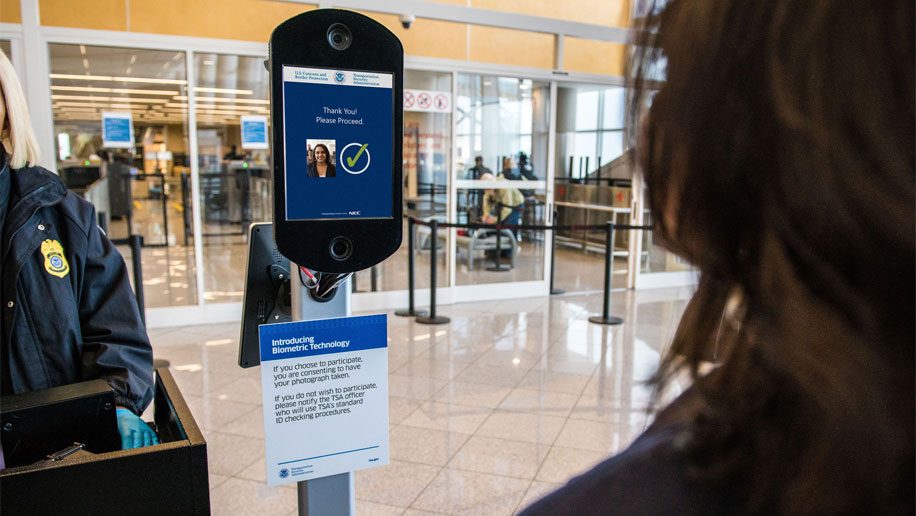
Delta biometrics at TSA gates

The Trump administration wants to see facial recognition technology used to identify travellers in the 20 largest US airports, BuzzFeed News reports.

A directive sets the goal of using the biometric technology to identify almost all international travellers at those airports by 2021, including US citizens.

The US Customs and Border Protection agency (CPB) is tasked with implementing facial recognition to identify 100 million travellers annually and on 16,300 international flights weekly.

Critics say that federal agencies are taking shortcuts in their rush to get the system into place. For example, CPB has set no formal limits on how the data collected during facial identification can be used, for example.

And the agency did not put its proposed rules out for public review prior to beginning implementation, as required by law.

“I think it’s important to note what the use of facial recognition [in airports] means for American citizens,” said Jeramie Scott, director of EPIC’s Domestic Surveillance Project.

“It means the government, without consulting the public, a requirement by Congress, or consent from any individual, is using facial recognition to create a digital ID of millions of Americans.”

CPB officials characterized the technology as a “convenience” that would benefit the flying public and denied that there are privacy concerns regarding how the data will be used.

In recent months US carriers including Delta and American Airlines have launched biometric initiatives at US airports.

source ! https://www.businesstraveller.com/business-travel/2019/03/15/major-expansion-of-facial-recognition-planned-at-us-airports/

Robot valets are now parking cars in one of France’s busiest airports

Stanley Robotics says its self-driving valets are more efficient than their human equivalents


Next time you head to the airport in France there might be a robot waiting to pick up your car. French firm Stanley Robotics has been trialling its self-driving robot valets for a few years, and this week started its first full-time service at France’s Lyon-Saint-Exupéry airport.

The system works like this. Customers park their cars in special hangars where the vehicles are scanned to confirm their make and model. Then, one of Stanley’s robots — which are essentially self-driving forklifts named “Stan” — drives in, slides a platform underneath the vehicle, lifts it up, and carries it away and parks it.

Stanley Robotics say its system uses space much more efficiently than humans, fitting 50 percent more cars into the same area. This is thanks in part to the robots’ precision driving, but also because the system keeps track of when customers will return. This means the robots can park cars three or four deep, but then dig out the right vehicle ready for its owner’s return.

“We call it a valet parking robot because people just need to drop off their car at the entrance of the car park and then they can basically leave and catch a flight,” the co-founder and COO of Stanley Robotics, Stéphane Evanno, told Airport Technology in 2017. “[The robot uses] the same technology as self-driving cars; is able to scan its environment at any time, and react to anything that would be in the way.” Grid View

© Rambaud / Alpaca pour Stanley

source : https://www.theverge.com/2019/3/15/18200292/robot-valet-parking-airport-stanley-robotics-france-lyon

Is digital the new infrastructure?

Will Squires explains how data and new technology is helping airports meet the growing demand for air travel

Will Squires BW 2019

According to the International Air Transport Association (IATA), demand for air travel is expected to almost double by the year 2037, with passenger numbers set to reach 8.2 billion. How do we ensure that our airport infrastructure is capable of handling this demand? And more importantly, how can our infrastructure be improved to meet the demand in an affordable and sustainable way?

If we were to create new infrastructure to meet this demand it would cost an estimated $1.3 trillion according to McKinsey Global Institute. What if technology could help us alleviate some of these costs, so instead of building new we get better at maximising what we have? As part of the New Experience in Travel and Technologies (NEXTT) programme, SNC Lavalin’s Atkins supported IATA in a cost-benefit analysis to understand the potential impact of emerging technology on the aviation sector.

The programme compared the implementation of technology in airport infrastructure to a ‘do nothing’ scenario, which would see airports respond to the increasing demand on infrastructure with physical actions, rather than using technology.

The results were clear: the transformational impact of technology when delivered in a coordinated, holistic way as described by NEXTT could deliver significant, long-term benefits. With a $130 billion investment to implement the technology, airports, airlines and passengers could see a present value benefit that would greatly outweigh the fee, of around $1.8 trillion. In particular, the key drivers for cost savings could be found through the implementation of improved data sharing, analytics and processing, and automation.

So what does this mean for airports, airlines and passengers? Through a coordinated and collaborative approach to upgrades, all key stakeholders will benefit. For example:

Airports:

By making the most of their current assets through the NEXTT vision, our cost benefit analysis estimated optimisation of existing terminal capacity could lead to a reduction in demand for new global terminal infrastructure of up to 65%. This reflects a culmination of technologies, such as passenger automation, more efficient routing and wayfinding leading to a reduction in the need for extensive waiting areas, and the ability to more precisely move individuals through terminal infrastructure.

Savings can also be made thanks to increased staff productivity, allowing airports and airlines to meet demand through augmenting their existing staff with technology. Through improved data processing activities, such as providing passengers with their flight information on mobile devices, staff can be redeployed to more productive tasks. Further efficiencies can arise from automating the likes security searches and aircraft turnaround activities.

Airlines:

The optimisation of airport functions through better data, smarter technology and automation of manual processes can lead to significant benefits. Through better global understanding of aircraft movements, the number of aircraft take-offs and landings per hour could drastically improve to be closer to each airport’s capacity. Better systems to manage loading, baggage location and transfer connections, will lead to fewer flight delays and subsequently a flight crew cost saving of 10%. Streamlining these processes will also lead to an improved passenger experience, which is critical for airlines to stay competitive as other modes of transport improve (e.g. emerging technologies such as Hyperloop).

Passengers:

The NEXTT vision demonstrates a number of time-saving benefits for passengers. According to our study, a mix of data and automation technologies could reduce the wait time at the gate by up to 50%. Automated baggage drop-off points could accrue a further 5% in time saving, while the introduction of an off-airport baggage deliveries could halve the baggage pick-up time. With biometric control points and passenger pre-vetting, the time spent in passenger control could be reduced by a massive 80%.

The passenger benefits of automation are already being realised by projects such as PASS2, an Atkins-developed biometric technology that allows passengers to move through the airport without needing to queue for manual checks. Relying on facial recognition technology, the system is currently used at Heathrow for self-boarding gates and pre-security checks, with further use of the system being implemented to speed up the passenger process at every point of departure, from check-in to take-off.

Our findings indicate that the benefits of integrating connected technology into the airport, the airline processes and the passenger journey would greatly outweigh the cost required for installation. And with the NEXTT vision relying on technology that has already been invented and observed to streamline processes, the impact of new technologies could grow to be even greater than imagined.

source : https://www.building.co.uk/communities/is-digital-the-new-infrastructure/5098391.article

How is AI being used to improve airport security?

As passenger numbers rise, airports will struggle to cope. Here, Bethan Grylls explores how AI is being used to enhance security.

By 2037, The International Air Transport Association (IATA) predicts that worldwide passenger numbers will have doubled, reaching over 8billion. This will place immense pressure on airports not just in terms of capacity, but in processing passengers securely and safely.

Nick Whitehead, head of strategic partnerships at Aurora-AI, which specialises in artificial intelligence (AI) solutions, believes that airports will have to rely on technology to offer more intuitive ways of processing rising numbers of passengers, but without compromising safety.

“Technology has always been a key part of the security implementation for airport and air travel,” he said. “X-ray machines and now CT scanners, metal detectors and body scanners are all common place in security checks.”

ID checks are also seeing improvements through the implementation of automation.

“Machines are consistent,” Whitehead pointed out. “They don’t get bored or change performance based on an individual’s mood. They’re also quick and able to process larger volumes of people. This leaves the security officers free to do what humans do best – monitor behaviour.”

In an effort to support and improve security, Aurora has developed a number of AI solutions. Among them is Face Recognition which has been used at Heathrow and Manchester airports.

“This technology is required in terminals 2 and 5 and at Heathrow and Terminal 3 at Manchester to separate International and Domestic travellers who share the same terminal space. All Domestic passengers must verify using our Face Recognition or they cannot depart on a Domestic Flight. This prevents boarding pass swaps whilst people wait for their aircraft after clearing security,” explained Whitehead.

“Machines are consistent. They don’t get bored or change performance based on an individual’s mood.” – Nick Whitehead

The technology has certainly improved over the last three years, with matching performance reducing errors rates by more than 95 per cent, according to Whitehead. This could potentially lead to a system by which identification of passengers can be achieved without presenting a boarding pass.

The development platform that Aurora used to enhance Face Recognition has also been introduced to other security related tasks. For example, identification of a passenger during the security checks to enable “differentiated” security for passengers of interest; classification of threat objects in X-Ray images; and detection of anomalous traffic on local area networks.

Next generation imaging

Aurora is now supporting Sequestim, a company looking to commercialise next generation terahertz (THz) imaging technology for security screening applications.

The two came together as part of the Future Aviation Security Solutions (FASS) programme – a Government funding scheme looking to improve passenger experience and safety – where they showcased a new type of body scanner.

Sequestim was responsible for the capture of images and Aurora built (trained) an AI (set of neural networks) to detect objects carried by people beneath their clothing.

Once the camera was built, a large set of images were captured and used to train the AI to differentiate the objects within the image. The final solution delivers the image capture and detection at around 4-6 frames per second (fps), meaning objects – and potential threats – can be detected without the need for the passenger to stand still.

The technology removes the need to divest outer clothing and personal items, while also reducing false positive detection rates when compared to the existing generation of full body security scanners, Whitehead explained.

The technology uses a series of mirrors to surround the person as they enter the detection area. The camera (or detector) moves in a figure of eight and is pointed at a single mirror which is also scanning backwards and forwards. That mirror is positioned so it is facing four other mirrors. As the individual walks through, the machine captures images from multiple angles.

The camera takes the form of an array of superconducting detectors, called Kinetic Inductance Detectors, which are extremely sensitive to photons in the millimetre-wave part of the spectrum.

“At these wavelengths, clothes are semi-transparent. The body emits radiation at these wavelengths and appears brighter than the background against which we image the person – simply because the body is hotter than the background. The images we generate are essentially temperature maps,” said Ken Wood, sales and marketing director for Sequestim. “Any object, regardless of its material composition, shows up as a shadow against the body.”

The passive imaging technology also has the added benefit of removing the necessity to expose passengers to electro-magnetic radiation.

According to Wood, the camera possesses two critical qualities: the speed and detail of imaging.

The images are both comprehensive and processed quickly, which mean the scanner can gather information from moving targets and is capable of differentiating between objects of different shapes and sizes.

Wood continued: “In order to achieve this, we cool our detectors to a fraction of a degree above absolute zero, which only a few years ago would have required equipment far too delicate and complicated to operate in an airport. Our technology also includes cryogenic engineering that we have developed ourselves to simplify this cooling. The machine operates using only an electrical power supply, and we can monitor and control it remotely.”

This image is converted to a grey scale (0-256). The AI then scans the image using a small window and generates a score for each. This array of scores is then assessed against a threshold to determine if a threat has been detected.

The high resolution of the image, although aiding the process, also presented challenges for Aurora.

“During the first phase, the images were more ‘rough and ready’. We had a fairly simple approach where the AI was identifying whether a person was carrying a mobile or not – 98 per cent of all images were classified correctly,” said Whitehead. “When the image resolution improved, there was a lot more data to process and we had to accomplish this in near-to-real-time.

“We met these challenges with promising solutions by the end of phase two development,” Whitehead confirmed. “Results showed a strong correlation of threat detection greater than 95 per cent with less than 5 per cent false alarm.”

The scanner converts the image to grey scale. The AI then generates a score for each and assesses this against a threshold to detirmine if there’s a threat

The body scanner remains at prototype stage, but was deployed at Cardiff airport for a two-week, real-life trial. “For some objects the results were near-perfect,” said Whitehead. “But more difficult objects, for example a knife, presented challenges when ‘seen’ side on rather than blade on.” In order to progress, Whitehead explained that Aurora is looking to approach AI training differently. “We’re mostly going to use images where the person has no threat attached to them [e.g. a knife] and teach the system to discriminate an image that doesn’t conform to that normal appearance, rather than have the system classify the objects it sees.”

Future developments

Whitehead believes there is a wide application for the camera technology and one which he sees happening before its implementation within airport security.

“Using a much larger lens, the technology could be used to scan much larger objects, for example a lorry. This could be used to determine whether or not there is a heat signature that looks like a person hiding in the back,” he suggested.

As for other forthcoming projects, Aurora will be releasing “Bio-Secure”, a technology designed to enable manufacturers of security lanes to identify passengers and relate that identity to the trays they use to divest their belongings for the X-ray machine.

Expansion of the Face Recognition solution is also underway, with Heathrow looking to use the technology now at every stage of the departing passenger’s journey.

The belief is this could help to reduce the average passenger’s journey time by up to a third.

source : http://www.newelectronics.co.uk/electronics-technology/how-is-ai-being-used-to-improve-airport-security/213116/

Innovation Showcase – Spring 2019

Committed to digital innovation, airports across Europe are introducing breakthrough technologies to create a better travel experience for all passengers. Report by Marta Dimitrova

Heathrow Airport using Aira app to support visually impaired passengers

The free-to-use Aira app connects passengers directly to a trained professional agent for advice on navigating through Heathrow and assists with finding specific locations – including gates, special assistance facilities, retail outlets and restaurants.

London Heathrow Airport has partnered with technology company Aira to offer visually impaired passengers on-demand, personalised assistance via the Aira app.

Access to the app and its established network allows passengers to enhance their independence throughout their journey at Heathrow and forms part of the airport’s multi-million pound investment to improve the journeys of all passengers regardless of their requirements.

The free-to-use app connects passengers directly to a trained professional agent for advice on navigating through Heathrow and assists with finding specific locations – including gates, special assistance facilities, retail outlets and restaurants. It will also provide live information on news affecting their journey.

The app can be accessed by pre-loading it on mobile phones and an agent is available to provide guided assistance on demand upon arrival at Heathrow. Alternatively, passengers can also pre-book special assistance through their airline and seek information on the app at the same time.

Jonathan Coen, Director of Customer Relations and Service, Heathrow Airport, comments: “We are transforming the assistance service we provide to our passengers and empowering them to be as independent as possible when they are travelling through Heathrow. We have already invested £23 million in an upgraded contract with our special assistance partner, OmniServ, and introducing new equipment, training and technology to help improve our service. Aira takes us one step further – and will deliver a better travel experience for the 6,000 passengers each year that would otherwise feel less independent and less prepared when they begin their journey via Heathrow.”

Manchester Airport becomes first UK airport to trial 5G network

The dedicated 5G-enabled ‘blast pod’ at Manchester Airport’s Terminal 1 allows travellers to test the new super-fast network.

Manchester Airport has become the first UK airport to offer 5G network access as part of a trial by Vodafone. Vodafone has installed a dedicated 5G-enabled ‘blast pod’ at Manchester’s Terminal 1 that allows travellers to test the new super-fast network for downloading films or TV boxsets on their mobile devices up to four times faster than 4G.

During the trial passengers can visit Vodafone’s special 5G ‘blast pod’ and are given a free Entertainment Pass on streaming service Now TV. Travellers can download an episode of the new series of Tin Star in 45 seconds and the whole series in six minutes and seven seconds – up to four times faster than 4G, which took 26 minutes and eight seconds.

“We are delighted to support Vodafone’s 5G trial at Manchester Airport,” says Brad Miller, Chief Operating Officer, Manchester Airport. “As we progress with the design and delivery of our £1 billion transformation programme, we are constantly exploring how new innovations and technology can be applied to improve the airport experience. As a business with a strong presence in our surrounding community, Vodafone was a natural partner for a trial project like this and we look forward to collaborating with them again in the future.”

Nick Jeffery, CEO Vodafone UK, adds: “5G, with its fast speeds and quick response times, will make that quick and easy, even in busy locations. We are proud to be the first provider to bring 5G to an airport and will be adding more major travel hot-spots to our 5G network throughout the year.”

KLM installs live hologram to connect passengers at Amsterdam, Oslo and Rio de Janeiro airports

The hologram bar connects people in real time by projecting them into the airport on the other side of the world.

KLM has launched a new ‘Take-Off Tips’ campaign, allowing passengers to exchange tips face-to-face through a live hologram. Using a live connection, customers can chat with a hologram of their counterparts, looking at each other directly.

Passengers at airports in Amsterdam, Oslo and Rio de Janeiro can use the service to share local travel tips and cultural insights. “In our industry it is such a joy to be able to bring people together time and time again, we rejoice this in our latest campaign themes and ‘Take-Off Tips’ is no exception,” says Natascha van Roode, Head of KLM Marketing Communication. “We continuously strive to find means to enable contact between customers, including new technologies to create memorable experiences.”

The hologram bar connects people in real time by projecting them into the airport on the other side of the world.

Munich Airport trials pop-up business cabin in Terminal 2

The MeetingCab concept was developed by NapCabs, and will be tested for a one-year pilot phase at Munich Airport.

Munich Airport has started a trial of an innovative MeetingCab in Terminal 2, providing passengers with the opportunity to have a quiet business meeting. Located in the north of the terminal on the Schengen level, near Gate G 06, the soundproof MeetingCab offers passengers seclusion for confidential discussions or phone calls. The cabin can be accessed quickly and easily via a credit card and has space for four people to sit around a meeting table.

Users can access network connections and several electric power outlets, and can draw the curtains for privacy. Use of the cabin costs €15 for the first 30 minutes and €5 for every additional half-hour. The MeetingCab concept was developed by NapCabs, and will be tested for a one-year pilot phase.

Nice Côte d’Azur becomes first French airport to bring detailed terminal maps to Apple Maps

Indoor positioning gives passengers an instant view of where they are within the terminal, which helps them get to where they need to go next.

Nice Côte d’Azur Airport has become the first airport in France to bring detailed terminal maps to Apple Maps, providing the airport’s 14 million annual passengers with a powerful new tool to navigate through the airport.

Using Apple Maps on their iPhone or iPad, passengers can plan their journey through the airport in advance of their flight, including finding nearby restaurants, shops, baggage claim, security checkpoints, and restrooms.

Indoor positioning gives passengers an instant view of where they are within the terminal, which helps them get to where they need to go next.

The Nice Côte d’Azur Airport terminal maps in Apple Maps will be updated regularly to ensure accuracy, including when new stores and locations open.

“We are not only proud to be the first airport in France to offer this live, multilingual geolocation solution to our passengers – we are also convinced that it is essential to provide an increasingly seamless and effortless digital experience for connected travellers who want it,” says Dominique Thillaud, Chairman of the Board, Aéroports de la Côte d’Azur.

source : http://www.airport-business.com/2019/03/innovation-showcase-spring-2019/

China Duty Free Group to open its first downtown Hong Kong travel retail store

HONG KONG. China Duty Free Group (CDFG) is to open an exclusive perfumes and cosmetics multi-brand store in the new extension of Citygate Outlets in Tung Chung.

Tung Chung is a new town on Lantau Island. Citygate Outlets is a shopping and dining complex in Tung Chung’s centre, offering a wide array of branded boutiques featuring discounted prices. It is hugely popular with cross-border shoppers.

The store, covering over 10,000sq ft, will be the travel retail giant’s first store in downtown Hong Kong. The opening is tentatively planned for June, with confirmation of the date to follow.

Citygate Outlets, which offers a wide range of famous international brands at discounted prices, is hugely popular with cross-border shoppers. [Picture: Baidu.com]It will be home to a range of internationally-renowned brands including Estée Lauder, Lancôme, Clé de Peau, La Mer, Guerlain, Givenchy, Giorgio Armani, YSL, Tom Ford and Refa. The store will offer tourists and locals a wide selection of perfumes, cosmetics and beauty devices.

Customers will also be able to participate in CDFG’s exclusive membership programme and enjoy its numerous promotional offers.

(Above and below) Charles Chen pictured earlier today during his outstanding presentation at TFWA’s China’s Century conference, where he revealed that CDFG would be opening several downtown stores in Mainland China, Macau and Hong Kong with international locations possibly to follow.

Charles Chen tells conference moderator John Rimmer (TFWA Managing Director) about his aspirations for travel retail development.

CDFG President Charles Chen commented: “We are excited with the vast potential which the expanded Citygate Outlets has to offer and grateful to the landlord for their confidence placed in us.

“We promised to deliver an exciting shopping experience leveraging on our global strength and resources particularly in the area of marketing to complement the comprehensive outlet shopping experience of Citygate Outlets.”

CDFG said that the leverage it has from its own resources and those of its parent company will strengthen its retail presence in Hong Kong and Macau.

In 2017, CDFG, in partnership with French company Lagardère Travel Retail, successfully won the bid for the Hong Kong International Airport (HKIA) duty free liquor, tobacco and gourmet foods concession, marking an important milestone for the company’s business strategy. It trades at HKIA under the Duty Zero banner.

The company also has existing business at Macau International Airport store (in partnership with King Power Group HK) and recently announced a downtown duty free store in Macau.

source :
by Martin Moodie

martin@moodiedavittreport.com

Source: ©The Moodie Davitt Report

The World’s Most, Least Relaxing Airports

Inside of Germany's Cologne Bonn Airport

PHOTO: Inside of Germany’s Cologne Bonn Airport. (photo via Marina113/iStock Editorial/Getty Images Plus)

Germany’s Cologne Bonn Airport boasts the distinction of being the world’s most relaxing airport, according to new research by MyVoucherCodes.

The U.K.-based discount deal website recently analyzed more than 80 of the world’s busiest airports, reviewing factors such as queue time rating, lounge costs, on-time performance and passenger numbers, among others.

Cologne Bonn Airport earned an impressive 9.5 out of 10 for on-time performance, a four out of five for queue times rating and 8.2 out of 10 in passenger sentiment. The airport was also recognized for its quality of service, receiving 7.8 out of 10.

Japan’s Kansai International Airport, Stuttgart Airport in Germany, Athens International Airport and the ever-expanding Singapore Changi Airport round out the top five most relaxing airports in the world.

Helsinki Airport, Zurich Airport, Qatar’s Hamad International Airport, Brasilia International Airport in Brazil and India’s Rajiv Gandhi International Airport also ranked inside the top 10 for most relaxing.

San Francisco International Airport is the most relaxing in the U.S., according to MyVoucherCodes’ research, checking in at number 31 on the list of 81 airports. Meanwhile, New York City’s John F. Kennedy International Airport ranks 45th, followed by Seattle-Tacoma International Airport (46th), Las Vegas’ McCarran International Airport (47th) and George Bush Intercontinental Airport in Houston (48th).

San Francisco International Airport
PHOTO: San Francisco International Airport. (photo via Manakin/iStock Editorial/Getty Images Plus)

Los Angeles International Airport (52nd), Miami International Airport (59th), Denver International Airport (60th), Boston’s Logan International Airport (63rd), Orlando International Airport (69th) and Newark Liberty International Airport (75th) all rank among the 30 least relaxing airports worldwide.

Perhaps unsurprisingly, the country’s two busiest airports, Chicago’s O’Hare International Airport and Hartsfield-Jackson Atlanta International Airport came in third to last and second to last, respectively. Only London Stansted Airport fares worse for relaxation.

The main hall inside Hartsfield-Jackson Atlanta International Airport
PHOTO: The main hall inside Hartsfield-Jackson Atlanta International Airport. (photo via SeanPavonePhoto/iStock Editorial/Getty Images Plus)

Click here to view the complete list of the world’s most and least relaxing airports and to see how each fare in every key category.

source : https://www.travelpulse.com/news/airlines/the-worlds-most-least-relaxing-airports.html

US airports infrastructure: extensive investment necessary

Airports Council International-North America (ACI-NA) has reiterated what has become an annual call for the US government to invest USD100 billion into airports urgently or risk falling behind other countries.

Bearing in mind President’s Trump’s comment on the U.S.’s ‘Third World’ airports in the run-up to the 2017 Presidential Election, overall they already have fallen further behind. ACI-NA also called for an adjustment in the Passenger Facility Charge to enable airports to build more facilities.

Some changes have taken place in the way that U.S. airports are financed and administered since the Trump Administration took office. This report looks at what those changes were, and weren’t, while majoring on the ACI-NA funding demand and whether that sort of money is needed as urgently as the organisation thinks.

Our Analysis Reports are only available to CAPA Members. CAPA Membership provides exclusive access to in-depth insights on the latest developments in the aviation and travel industry, developed by our team of dedicated analysts located in Europe, North America, Asia and Australia.

Each report offers a fresh perspective on the latest industry trends and is available online or via the CAPA mobile app, with customisable alerts to help you stay informed and identify new business opportunities.

CAPA Membership also provides access to our full suite of tools, including a tailored selection of more than 400 News Briefs every weekday and comprehensive data and analysis on thousands of companies around the world.

source and membership here : https://centreforaviation.com/analysis/reports/us-airports-infrastructure-extensive-investment-necessary-459331