The organization behind a drone testing air corridor at Griffiss International Airport in Rome announced Thursday it has successfully integrated the services of five companies into a system for validating unmanned air traffic control systems.
Northeast UAS Airspace Integration Research said the integration “opens the doors for companies from across the globe to come to Central New York, test their drone technologies and help build an interoperable, global, UTM (unmanned traffic management) system.
Each service suppliers bring their unique expertise in live flight tracking, real-time situational awareness, flight data exchange mechanisms, analytics, UAS traffic management. They are:
AirMap, ANRA, AGI/OneSky, Thales and Unifly.
Together, the service suppliers use the two dominant unmanned traffic-management models, the U.S. National Aeronautics and Space Administration’s and the European U-Space Model. Habing both at the test site means both can be tested independently and a way for both to coexist can be developed.
The test site consists of ground facilities and an air corridor between Griffiss and Syracuse where drone-control systems can be tested and validated, with the goal of building a system for drones like that of pilots-on-board aircraft.
“Having multiple UAS service suppliers leveraging our command and control infrastructure at the test site allows for any company to test their drone technology, regardless of the platform or service supplier,” said Tony Basile, chief operations officer at NUAIR.
“These partners provide capabilities that allow the New York UAS Test Site to collect mission data, test cross-communications between platforms and allows a wider range of operators to use our facilities and advance the UAS industry.”
A mock up of the ad rejected by YVR. Photo: OpenMedia/Twitter
Passing through international security can be a daunting process, especially when a traveler is unsure of their rights.
But one group is criticizing Vancouver International Airport after its ads aiming to demystify the process by pointing travellers to information on digital privacy rights were rejected.
OpenMedia, a Vancouver-based internet privacy group, says it tried to place an ad at the Canada Line’s YVR station, which the airport has authority over.
The ads promote the group’s website, borderprivacy.ca, which was made in partnership with British Columbia Civil Liberties Association and provides resources in multiple languages outlining rights on having digital devices searched at the border and how to submit a complaint if those rights are violated.
The website also links to a petition seeking change to these search laws.
Victoria Henry, a rights campaigner at OpenMedia who has led this particular campaign, told the Richmond News they were surprised to see the ads rejected.
“There were a lot of different directions we could have taken the ad in, you know we could have said something really outrageous…it simply informs people about their rights at the border,” Henry said.
“This is a huge issue for a lot of people and a lot of people in Canada and folks who are crossing our border just don’t know anything about these rules and some of the vulnerabilities and potential privacy violations they could be facing.”
The key issue, Henry explained, is that the laws haven’t been updated in quite some time, but cellphone use has increased significantly.
“Most people would barely hand over their phone to a good friend, much less a border agent who kind of wants to come through and a take a look at all the information on there,” she said.
“The fact is the laws that govern these kind of searches are just so out of date. They haven’t been meaningfully changed to reflect how much information we carry on our phones now.”
YVR explained to the News by email that they felt the ad “pitted two groups against each other and it also has potential to add undue stress to the travel experience.”
The airport also stated that it “aims to be non-political” and felt the link to a petition was problematic.
For Henry, however, asking for change from the government is a key part of the group’s campaign.
“I think that’s a big freedom of expression issue and I don’t think that everyone would agree that the airport should have rejected (the ad) for that reason,” she said.
“But ultimately why I personally wouldn’t change that is because I think that knowing your rights is only half of the equation…the real way people can actually protect themselves is to challenge these laws.”
YVR added that they provide their own resource website on passenger rights at www.yvr.ca/passengerrights and advertises this site on its digital signage throughout the airport.
Regardless of YVR’s rejection, Henry said OpenMedia hopes the ads will run on other areas of public transit.
As shared on borderprivacy.ca, BCCLA’s guide for Electronic Devices Privacy Handbook can be seen here.
The TSA Is Reworking Its New Body Scanners Because They Were Too Revealing
Scott Olson/Getty Images
A new full-body airport security scanner is being revamped after Transporation Security Administration (TSA) officials deemed that the machine was capable of seeing a bit too much.
According to Quartz, a new TSA full-body scanner was sent back to its manufacturer because its “privacy filters” are lacking. Basically, the machines are capable of a visual strip search that exposes all body parts — with no filter for what might be considered private.
The machine was in its “demonstration planning phase” when the TSA’s Chief Counsel noted that the machine had “privacy risks,” according to documents obtained by Quartz. The machine has gone back to the manufacturer who is working on “enhanced privacy software” to fix the issue and keep the TSA in compliance with federal regulations.
The document does not further detail the status of the body scanners. The TSA did not immediately respond to Travel + Leisure’s request for comment.
The scanners are a part of the TSA’s push to create “Better screening, Faster,” which the administration refers to as FLEx (for Future Line Experience).
In its official stance on the issue, the ACLU says, “It produces strikingly graphic images of passengers’ bodies, essentially taking a naked picture of air passengers as they pass through security checkpoints. It is a virtual strip search that reveals not only our private body parts, but also intimate medical details like colostomy bags.”
To improve baggage management many airlines and airports have introduced tracking at key points in the journey, including check-in, loading onto the aircraft, transfers and arrival.
The SITA 2019 Baggage IT Insights has highlighted how airlines that are adding tracking at more points of the baggage journey are witnessing a huge improvement in bag delivery globally.
Results showed that where tracking is done at check-in and loading onto the aircraft, the rate of improvement is as high as 66 per cent.
Over the past year, an increasing number of airlines and airports have started to introduce tracking at key points in the journey – check-in, loading onto the aircraft, transfers and arrival – to improve baggage management and further reduce the chances of a bag being mishandled.
Peter Drummond, Director of Baggage at SITA, said: “While the mishandling rate has started to plateau over the past few years, this comes against a continued growth in passenger numbers and their bags. In 2018, 4.36 billion travellers checked in more than 4.27 billion bags. More bags makes things more challenging. Everyone across the industry needs to look beyond the process and technology improvements made in the past decade and adopt the latest technology such as tracking to make the next big cut in the rate of mishandled bags.”
Transferring baggage from one aircraft, or airline, to another remains a pinch point in the journey and in 2018 it was again the main reason for bags being mishandled. Transfer bags accounted for 46 per cent of all mishandled bags.
Ahmed Juma Al Shamsi, Acting Chief Operations Officer at Abu Dhabi Airports, said: “For our passengers the timely delivery of baggage is key to ensuring a seamless passenger experience and therefore an area in which we continue to make further improvements. Looking forward, baggage tracking is fundamental to driving more accurate bag delivery not only at Abu Dhabi International Airport but across the entire passenger journey. We have led the way with the introduction of tracking on arrival and we have already seen significant improvements.”
Over the past decade, the total number of mishandled bags per annum has plummeted 47 per cent from 46.9 million in 2007 to 24.8 million in 2018, while the annual bill footed by the industry has shrunk by 43 per cent to $2.4 billion, down from $4.22 billion in 2007.
Drummond added: “Transfer is by far the most difficult stage to track a bag as there are multiple airlines and airports involved. However, data from this year’s report shows that tracking at key points in the journey, such as transfers, will go a long way to eliminating mishandling and will allow airlines and their passengers to keep tabs on where their bags are at every step of the way.”
JTV is the venture capital subsidiary of JetBlue Airways. Vantage
is an investor, developer and manager of airports around the world.
La Guardia in New York, Midway International in Chicago and airports in Cyprus, Jamaica, Canada and the Bahamas are in the Vantage network of facilities.
JTV created its International Partnership Program in July 2018 with Air New Zealand as the launch partner. The program is intended to bring together like-minded companies that are embracing emerging technologies and working with startups to improve travel.
JTV says it will work with the two partners to “improve efficiencies in shared infrastructure and processes and enhance the end-to-end travel journey for customers around the world.”
“We’re very excited to welcome Vantage to our International Partnership Program and look forward to ideating together to create the airport and travel experiences of the future,” says Amy Burr, managing director of operations and partnerships at JTV.
“It’s powerful to bring together different stakeholders of
the industry to information share and collaborate at an earlier stage in the
innovation process.”
As a program partner, Vantage will also have access to
Silicon Valley’s startup scene. The company has housed its director of
innovation partnerships in JTV’s office in Silicon Valley.
“In our 25-year history, Vantage has always embraced
different ways of making airports better, so this partnership is an important
evolution in our growth as a company committed to innovation,” says Wes Porter,
vice president of innovation at Vantage Airport Group.
“The opportunity to work with like-minded partners to
improve the travel journey through new and emerging technologies is exciting
for Vantage as we seek to enhance the experience of the more than 57 million
guests that travel through our airport network every year.”
Vantage is also working with JetBlue Airways to develop the carrier’s
terminal expansion at New York’s John F. Kennedy International Airport.
JTV plans to announce other travel and hospitality providers joining the international innovation program over the coming months.
The Global Airport Luggage Cart Market Report provides Insightful information to the clients enhancing their basic leadership capacity identified with the worldwide Airport Luggage Cart Market business, including market dynamics, segmentation, competition, and regional growth. Each section of the report reveals critical information about the global Airport Luggage Cart market that could be used to ensure strong growth in the coming years. All of the segments included in the report are studied on the basis of different factors such as Airport Luggage Cart market share, consumption, revenue, and growth rate. The global Airport Luggage Cart market is valued at million US$ in 2018 is expected to reach million US$ by the end of 2025, growing at a CAGR of during 2019-2025.
Research Report provides in-depth information and professional study of Airport Luggage Cart Industry. The regional analysis provided in the research study offers a complete study on the growth of the global Airport Luggage Cart market in different regions and countries. Readers are also provided with comprehensive competitive analysis, which includes a detailed profiling of leading Manufactures operating in the global Airport Luggage Cart market. The report has a dedicated section for market dynamics where market influence factors, Airport Luggage Cart market growth drivers, restraints, challenges, trends, and opportunities are broadly discussed.
The Major Players Covered in this Report: Airport Passenger Services (APS), Bombelli, Caddie, NOWARA, Wanzl Metallwarenfabrik GmbH, Conair, Forbes Group, Kantek, Scharlau & More.
Get a Sample PDF Report: https://www.reportsmonitor.com/request_sample/411239
By the product type, the market is primarily split into 3-wheel Cart 4-wheel Cart
By the end users/application, this report covers the following segments Civil Airport Business Airport
Regional Analysis For Airport Luggage Cart Market:
North America (United States, Canada, and Mexico) Europe (Germany, France, UK, Russia, and Italy) Asia-Pacific (China, Japan, Korea, India, and Southeast Asia) South America (Brazil, Argentina, Colombia, etc.) Middle East and Africa (Saudi Arabia, UAE, Egypt, Nigeria, and South Africa)
Market Segments:
The global Airport Luggage Cart market is segmented on the basis of a type of product, application, and region. The analysts authoring the report provide a meticulous evaluation of all of the segments included in the report. The segments are studied keeping in view their market share, revenue, market growth rate, and other vital factors. The segmentation study equips interested parties to identify high-growth portions of the global Airport Luggage Cart market and understand how the leading segments could grow during the forecast period.
Grab Your Report at an Impressive Discount! Please click Here@ https://www.reportsmonitor.com/check_discount/411239
Reasons to buy:
In-depth analysis of the market on the global and regional level.
Major changes in market dynamics and competitive landscape.
Segmentation on the basis of type, application, geography, and others.
Historical and future market research in terms of size, share, growth, volume & sales.
Major changes and assessment in market dynamics & developments.
Industry size & share analysis with industry growth and trends.
Emerging key segments and regions
Key business strategies by major market players and their key methods.
The research report covers size, share, trends and growth analysis of the Airport Luggage Cart Market on the global and regional level.
Table of Contents:
Study Coverage: It includes key manufacturers covered, key market segments, the scope of products offered in the global Airport Luggage Cart market, years considered, and study objectives. Additionally, it touches the segmentation study provided in the report on the basis of the type of product and application.
Executive Summary: It gives a summary of key studies, market growth rate, competitive landscape, market drivers, trends, and issues, and macroscopic indicators.
Production by Region: Here, the report provides information related to import and export, production, revenue, and key players of all regional markets studied.
Profile of Manufacturers: Each player profiled in this section is studied on the basis of SWOT analysis, their products, production, value, capacity, and other vital factors.
This report considers the below mentioned key questions:
Q.1. What are some of the most favorable, high-growth prospects for the global Airport Luggage Cart market? Q.2. Which products segments will grow at a faster rate throughout the forecast period and why? Q.3. Which geography will grow at a faster rate and why? Q.4. What are the major factors impacting market prospects? What are the driving factors, restraints, and challenges in this Airport Luggage Cart market? Q.5. What are the challenges and competitive threats to the market? Q.6. What are the evolving trends in this Airport Luggage Cart market and the reasons behind their emergence? Q.7. What are some of the changing customer demands in the Airport Luggage Cart Industry market? Q.8. What are the new growth prospects in the Airport Luggage Cart market and which competitors are showing prominent results in these prospects? Q.9. Who are the leading pioneers in this Airport Luggage Cart market? What tactical initiatives are being taken by major companies for growth? Q.10. What are some of the competing products in this Airport Luggage Cart market and how big of a threat do they pose for loss of market share by product substitution? Q.11. What M&A activity has taken place in the historical years in this Airport Luggage Cart market?
For More Details On this Report: https://www.reportsmonitor.com/report/411239/Airport-Luggage-Cart-Market
To conclude, the Airport Luggage Cart Industry report mentions the key geographies, market landscapes alongside the product price, revenue, volume, production, supply, demand, market growth rate, and forecast, etc. This report also provides SWOT analysis, investment feasibility analysis, and investment return analysis.
Contact Us Jay Matthews Direct: +1 513 549-591481 (U.S.) +44 203 318 2846 (U.K.) Email:sales@reportsmonitor.com
It has been suggested that national authorities should obtain guidance on the requirements for airports to implement anti-drone technologies.
At Airports Council International (ACI) World Annual General Assembly (WAGA) – held on 4 April 2019 in Hong Kong – China unanimously expressed its position on mitigating the threat of unwanted drones.
It was made clear that the industry needs to take measures to protect themselves and national authorities and local law enforcement agencies were encouraged to take responsibility for the preparation and enforcement of anti-drone measures.
The resolution provides a basis for airport action and appeals for coordinated measures together with governments and other concerned parties. Based on advice from national authorities, it was proposed that these parties establish a ‘Concept of Operations’ and ‘Standard Operating Procedures’ for anti-drone measures at airports.
Moreover, it was suggested that national authorities should obtain guidance on the requirements for airports to implement anti-drone technologies. The requirements should be based on a risk-and-impact assessment considering local conditions and operational requirements.
Furthermore, the security risks associated with the malicious use of drones, as part of the airport Security Risk Assessment, were placed under scrutiny. The assessment should take into account different possible motivations for unlawful drone use including terrorism, activism and espionage.
The resolution makes recommendations for good practices such as coordinating with drone industry experts to understand the latest developments, as well as providing training to airport operational personnel on policies and procedures on the operation of authorised and unauthorised drones.
ACI World Director General, Angela Gittens, commented: “The recent drone-related disruption at airports in Europe, and the potential impact of drones on airport safety and operations, have raised significant questions for operations around the world and their preparedness to handle situations like this. This resolution encourages collaboration among all industry stakeholders to find solutions to this challenge. By sharing experience and lessons learned on anti-drone measures and drone related incidents, best practice can be adopted across the industry.”
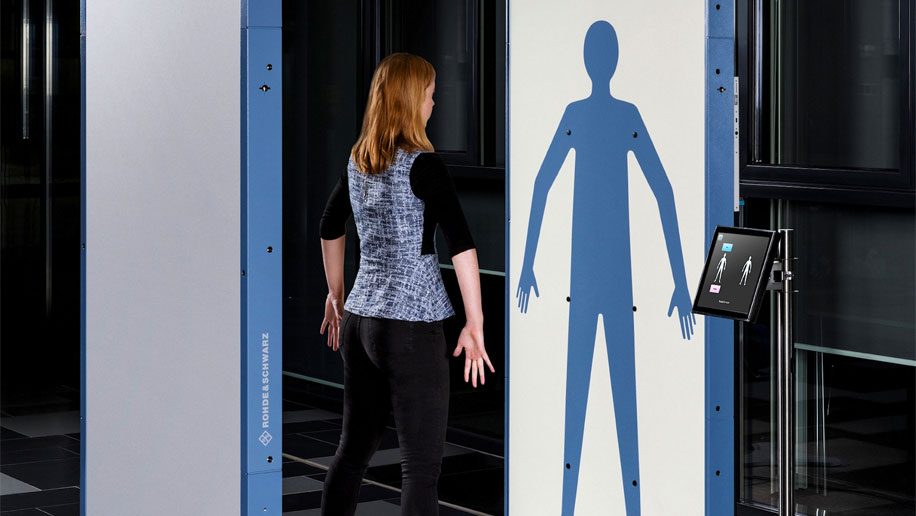
Manchester Airports Group will install new security scanners across its portfolio that it says will speed up operations, increase safety and improve the passenger experience.
The company operates Manchester, London Stansted and East Midlands airports. The Rohde and Schwarz scanners will initially be rolled out at Stansted this month, with 100 machines installed at the airports over the coming years.
“The new scanners aim to put passengers at ease, featuring a more relaxed pose position, a more open design and a faster scan time,” said Frank Mackel, VP Europe at Rohde and Schwarz.
“The new scanners also benefit security staff, giving them greater visual access to passengers.”
Manchester Airport recently opened a new pier at terminal 2 as part of its £1 billion transformation programme.
This year it is also set to launch a pay-to-enter terminal with speedier luggage processing and security channels, complimentary food and drink and car transfers to the aircraft.
Terrorists and criminals can access drone technology just as easily as anyone else Credit: Drew Angerer/Getty
A top UN official has warned that last year’s drone chaos at Gatwick Airport could be just the start of what criminals, terrorists and assassins could do with the technology.
Irakli Beridze, head of robotics and artificial intelligence (AI) at the UN agency devoted to researching crime prevention, told the Telegraph that governments need to take the threat of drones “extremely seriously”.
Airborne or ground-based drones, he said, could be used for a range of purposes such as assassinations, terrorist attacks, simple theft or deliberate economic disruption.
“What happened at Gatwick is just a glimpse of what could happen worldwide, on a massive scale,” Mr Beridze said, speaking to the Telegraph at the Applied AI Conference in San Francisco.
“In Gatwick it was a remotely controlled drone, but this could happen in multiple locations simultaneously. And if we apply autonomous technology to the drones, it might be even harder to find, even harder to fight and harder to find solutions to it.
“I don’t think we are there yet, but I think that technology is getting close to it. We should be taking this threat extremely seriously, and we should be finding solutions to it sooner rather than later – as soon as possible.”
Asked to consider a theoretical scenario in which terrorists program multiple drones with image recognition software to seek out and attack members of a specific ethnic group or gender, Mr Beridze said: “I think the scenario is plausible.
He also said he could not rule out the use of drones by protest groups to cause disruption, such as the Extinction Rebellion protest against climate change which has occupied Parliament Square, Oxford Circus and Waterloo Bridge in London and led to more than 500 arrests.
Mr Beridze is the head of the Centre for AI and Robotics at Unicri, a UN agency which researches emerging criminal methods and advises member states on how to fight them. He was speaking at the Applied AI Conference in San Francisco.
The reported sighting of a drone at Gatwick Airport shut down all air traffic for 33 hours last December, delaying or cancelling around 1,000 flights and trapping thousands of people in the airport just days before Christmas.
That case involved no direct attacks, but drones have also been used by terrorist groups such as Isil and Hizbollah in Syria as well as, allegedly, by Houthi rebels in Yemen. Last year two drones carrying explosives were used in an attempt to assassinate the president of Venezuela, Nicolas Maduro.
A Telegraph investigation found in January that just one of Britain’s major outdoor sports facilities had fully adopted technology to track and shut down hostile drones in their airspace.
In most instances, you’ll read where specific cities or municipalities are the ones lauded for their efforts in using smart infrastructure to solve problems from air quality and temperature monitoring, to everyday traffic. But this is where history needs to be corrected.
The epicentre of smart technology doesn’t quite originate at the city level – but at the airport. Yes, your local airport.
Smart airports have always been the first to embrace technologies necessary for operating efficiently, meeting passenger requirements and providing for traveller safety.
Many airports pioneered the adoption of free WI-FI networks or the use of Bluetooth, NFC, LiDAR and the Internet of things (IoT) for the safety and benefit of their travelling customers.
While the larger ‘smart city’ initiative has recently captured our attention, any real, broad-based change has been relatively slow to develop.
But that has not been the case at airports, particularly in 2018 – which saw dozens of US airports applying innovative traveller-assist technologies making them the real pioneers in this exciting smart world.
As an example, Baltimore/Washington International Thurgood Marshall Airport (BWI) and the Indianapolis International Airport (IND) have both installed a smart technology that uses LiDAR sensors (pulsed laser light beams) to capture insights into how travellers move through their terminals.
Using insights generated by these innovative solutions, these airports are now able to assess TSA checkpoint queuing in real time and intelligently adjust to or plan for changes to pedestrian traffic flows that improve the passenger journey and minimise ‘time-to-gate’.
This is just one of several examples of how digital transformation is making a measureable impact on the airport experience. Yet, despite their success and growing momentum for using smart technology, airports have been cast as Tenzing Norgay, the fast-follower to smart cities.
Well, here’s a different, more accurate perspective on the evolution of smart cities: Smart airports have been and will increasingly be the pioneers and innovators in this exciting new world.
Smart cities have much to learn by the practical solutions being introduced at airports, from biometrics to smart passenger flow management. Airports provide a living, critical and vibrant caldron for innovation and learning about what really works and can be extended to the broader city environment.
Airports are the blueprint that cities and municipalities can and should be following more closely. They are the nucleus, not the microcosm. And like Tenzing Norgay, they are doing much of today’s heavy lifting; adding more smarts to so many areas of their operations.
Illustrating this point is Honeywell’s Smart Building Score, the first-of-its-kind global index designed for the comprehensive assessment of any building.
It’s Middle East survey showed that airports are leading the way for smart buildings in the region compared with other surveyed industries (hotels, hospitals, office and residential buildings, education and retail facilities).
Airports scored the highest across all verticals, leading in all categories that are considered to make a building smart – green, safe and productive – scoring an average of 80 out of a possible 100.
According to the report, the Smart Airports market is expected to grow to $25.9 billion globally by 2025.
MarketWatch.com notes that a “surge in air-traffic and passengers opting for air travel, increasing IT investments in airport infrastructure, increasing adoption of internet of things (IoT), and rising demand for real-time information are major factors driving growth for this market globally.
“In addition, new functions such as crowd management, digital navigation, smartphone integration, energy management, optimum utilization of capacity and resources, better travel experience are expected to further fuel the rapid climb of the smart airports market.”
Yes, this is just the beginning for smart technology and its many applications. Lux Research, an innovation research and advisory firm, has issued a report that sugests the world will deploy one trillion sensors by 2020. That’s a lot of data capture.
But if you really want to be at the forefront of the smart technology buzz, look no further than a major airport near you, it’s probably a lot smarter than you think. • Sam Kamel is the CEO of iinside. He has experience as an entrepreneur, Fortune 100 executive, team builder, change agent, innovator, strategist and successful dealmaker.